When you click on links to various merchants on this site and make a purchase, this can result in this site earning a commission. Affiliate programs and affiliations include, but are not limited to, the eBay Partner Network.
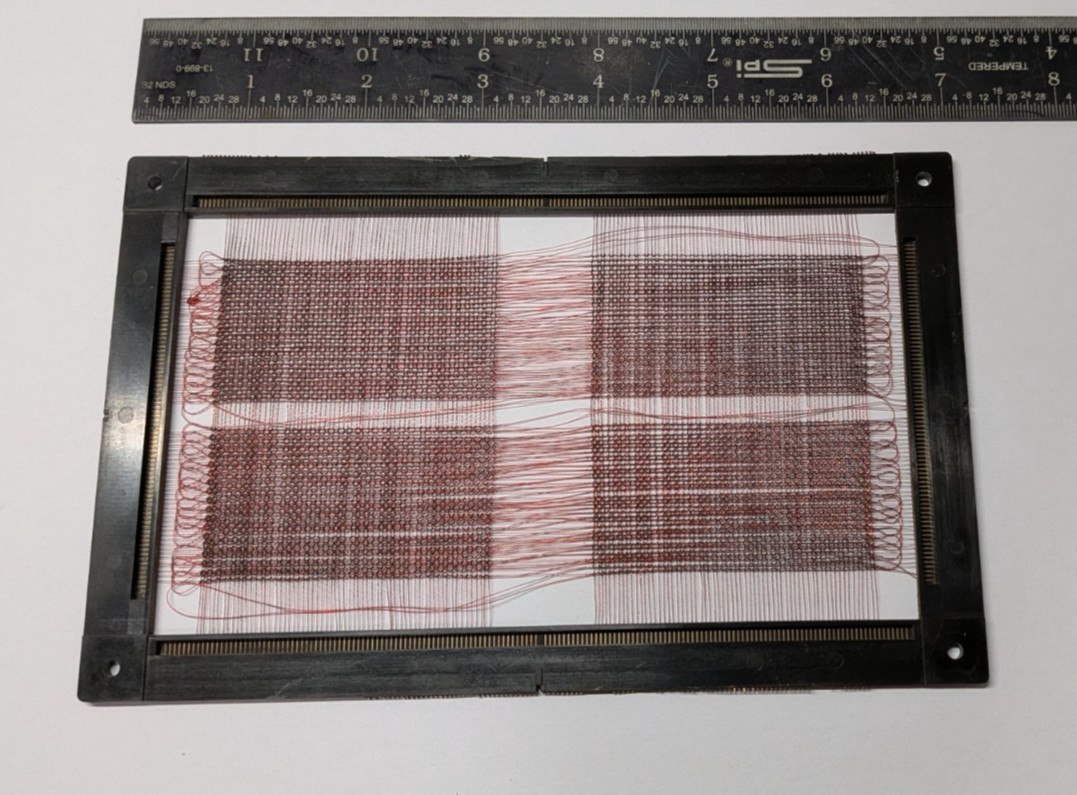
Here is a core memory plane from an IBM System 360 Model 20 which was introduced in 1964 and was the lowest cost and best selling member of the System/360 family.
This memory plane is organized as 4 rectangular blocks, each with a 64 by 128 core array, or 8192 bits per section, for a total of 32768 bits. This is equivalent to 4K bytes of storage.
IBM System/360 computers used magnetic core memory,made from thousands of tiny donut-shaped ferrite rings. Each ring stored onebit of information by being magnetized in one of two directions. The cores werearranged in precise rows and columns, and extremely fine wires were threadedthrough the holes in the cores. The wires formed a grid that allowed thecomputer to select individual cores for reading and writing. Because the coreswere so small and the wiring was so intricate, manufacturing the memoryrequired specialized machinery, fixtures, and highly skilled workers whoessentially “wove” the memorytogether.
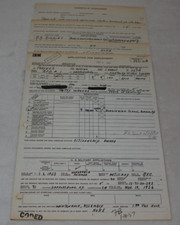
After the core planes werewired, they were carefully inspected and electrically tested for defectivecores, broken or misplaced wires, and other problems. Multiple planes were thenstacked together to create a memory module capable of storing complete computerwords. IBM invested heavily in improving the manufacturing process becauseSystem/360 required much more memory, at much higher density, than earliercomputers. The resulting core memory was expensive and labor-intensive tomanufacture, but it was reliable, retained information when power was removed,and was a critical technology that helped make the System/360 family practical.
Another example of this memory is held by the Smithsonian National Museum of American History, artifact ID number1987.0466.06