When you click on links to various merchants on this site and make a purchase, this can result in this site earning a commission. Affiliate programs and affiliations include, but are not limited to, the eBay Partner Network.
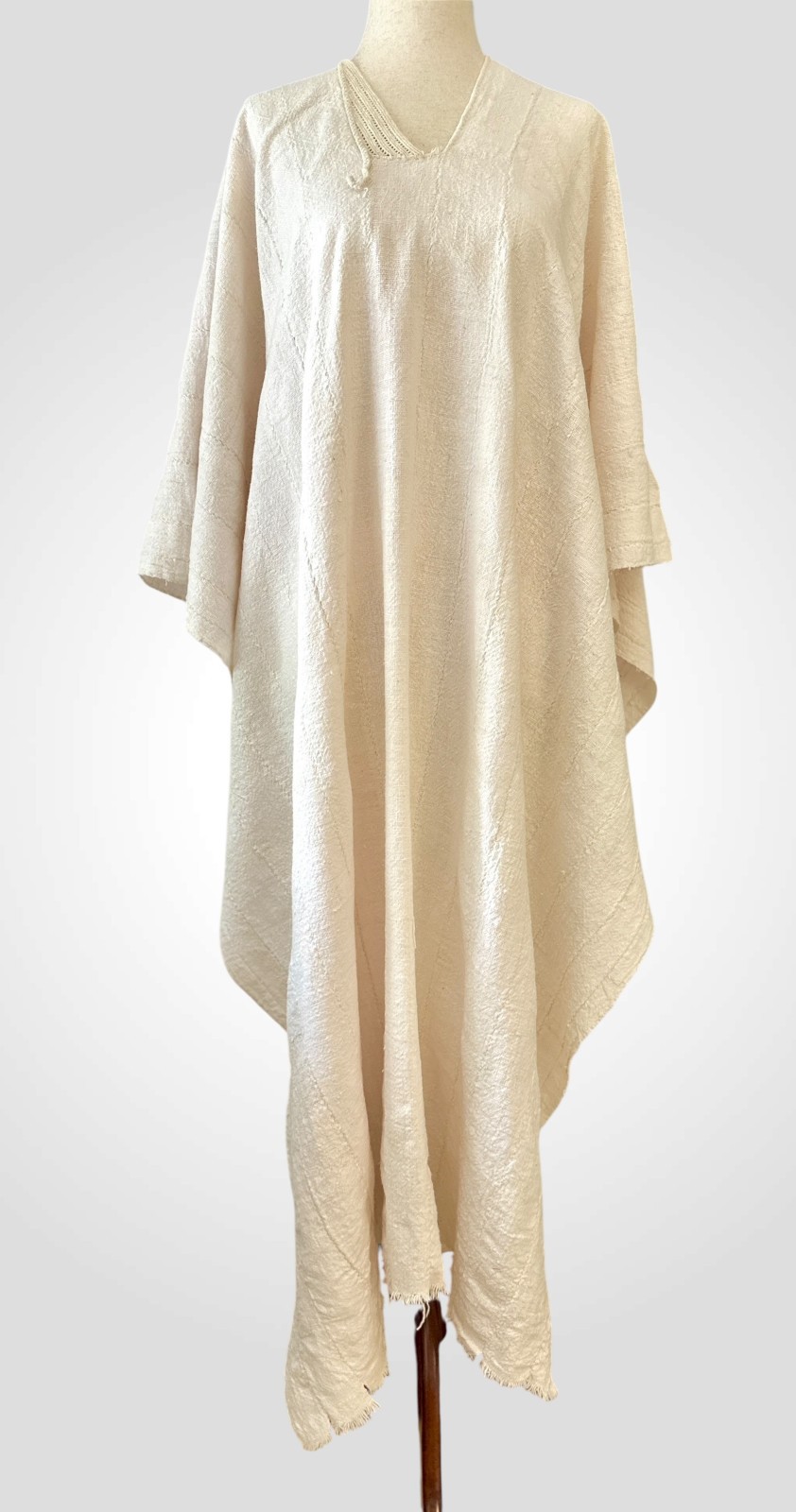
Exceptional antique West African handwoven cotton robe, attributed to theHausa/Nupe textile tradition of northern Nigeria and likely dating to the late19th or early 20th century, approximately c. 1890–1920.
Known as a riga in Hausa and related to thebroader West African tobe/boubou tradition, this remarkable garment isconstructed almost entirely from narrow strips of handwoven natural cotton. Thecomplete textile measures approximately 43 1/2 inches wide by 104 inches longand is folded horizontally at the shoulders to form a robe approximately 52inches long.
The 43 1/2-inch width is assembled fromapproximately 19 individual handwoven bands, each roughly 2 1/4 inches wide.The narrow strips are joined together by hand, creating subtle vertical linesacross the garment. The irregular yarn, weave and strip construction arecharacteristic of traditional narrow-band West African weaving.
The neck opening is cut into the folded clothand beautifully finished by hand with understated cream-on-cream embroidery,openwork and a braided tie. A small semicircular embroidered panel reinforcesand decorates the back neckline. The reverse reveals the hand stitching andtraditional construction particularly well.
The enormous rectangular form produces adramatic draped silhouette when worn, while requiring remarkably little cuttingof the labor-intensive handwoven cloth. The lower edges retain their softlyfringed/raw woven character.
The robe has been carefully laundered andpresents beautifully. Considering its probable age, it is in very good antiquecondition. There are irregularities in the handspun/handwoven cloth, handstitching and edges consistent with traditional manufacture and considerableage. Please examine the detailed photographs, including the interior necklineand close-ups of the narrow-band construction.
An unusually understated example of WestAfrican textile artistry. Although visually simple, producing a garment likethis required spinning cotton, weaving numerous extremely narrow bands, joiningthem individually by hand, constructing the robe and embroidering the neckline.
Attribution: Northern Nigeria, Hausa/Nupetextile tradition
Garment type: Riga / tobe / boubou-type robe
Date: Probably late 19th to early 20thcentury, approximately 1890–1920
Material: Handwoven cotton
Construction: Approximately 19 narrowhandwoven strips, hand joined
Overall textile dimensions: Approximately 431/2 inches wide x 104 inches long
Approximate worn length: 52 inches
Color: Natural cream / unbleached white
No maker's label or provenance is present, sogeographic and cultural attribution is based upon construction, narrow-bandweaving, form and embroidery.
Keyword tags: Hausa riga, Nupe robe, Nigerianrobe, Nigeria textile, African robe, antique African, West African, Hausatextile, Nupe textile, tobe robe, boubou robe, narrow strip weave, strip woven,handwoven cotton, handspun cotton, African textile, ethnographic textile,tribal textile, antique textile, African clothing, traditional dress,ceremonial robe, prestige robe, natural cotton, cream cotton, hand embroidered,folk textile, museum textile, textile collector, c1900 clothing, 19th centuryAfrican, early 20th century, Islamic Africa, Nigerian art, African art,ethnographic art