When you click on links to various merchants on this site and make a purchase, this can result in this site earning a commission. Affiliate programs and affiliations include, but are not limited to, the eBay Partner Network.
no california shipping
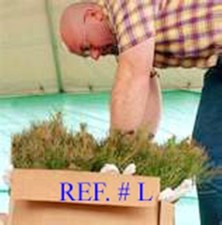
Georgia Deep South Eastern White Pine BlueRidge Smokey Mountain Grown QTY-15 WHITE PINE SEEDLINGS 6\" -8\" INCHES TALL
Pine, White Pinus strobus
A hardy, valuable tree. Clustered soft blue-green needles. Ideal screen or windbreak. Likes moist, well-drained soils. Grows 50\'- 80\' with a 20-40\' spread in the landscape. (zones 3-8)
Try this tree in your yard:
Zones 3 - 8
Hardiness Zones: Zones 3 - 8
Evergreen
Type of tree:
The White Pine falls into the following type(s): Evergreens
50\' - 80\' High
Mature Height:
The White Pine grows to be 50\' - 80\' feet in height.
20\' - 40\' Spread
Mature Spread:
The White Pine has a spread of about 20\' - 40\' at full maturity.
Fast Growth
Growth Rate:
This tree grows at a fast growth rate. About Growth Rate
“Rate of growth refers to the vertical increase in growth unless specified differently. Rate, as is true for size, is influenced by numerous variables such as soil, drainage, water, fertility, light, exposure, ad infinitum.
“The designation slow means the plant grows 12” or less per year; medium refers to 13 to 24” of growth per year; and fast to 25” or greater.”
Full Sun
Sun:
This pine does well in full sun, partial shade.
Various Soils
Soil:
Well-drained, moist, acidic, dry, wet soils
Oval Shape
Shape:
This pine has oval, pyramidal shape.
More Info
Attributes:
The ease of transplanting and rapid growth of the White Pine tree make it an ideal candidate for landscape and windscreen applications. Wildlife that eat the seeds range form chickadees and game birds to rabbits and black bears. White Pines are widely used as Christmas trees and are still very important as a lumber source.
Description:
A hardy, valuable tree. Clustered soft blue-green needles. Ideal screen or windbreak. Likes moist, well-drained soils. Grows 50\' to 80\' with a 20-40\' spread inthe landscape, up to 135\' or more in the wild. (zones 3-8)
Wildlife Value:
White pine seeds are favored by black bears, rabbits, red squirrels, and many birds, especially red crossbills. While potentially damaging to the trees, the bark is eaten by mammals such as beavers, snowshoe hares, porcupines, rabbits and mice. White pines provide nesting sites as well for many birds, including woodpeckers, common grackles, mourning doves, chickadees and nuthatches.
History/Lore/Use:
The Eastern White Pine tree has been referred to as \"the monarch of the forest.\" Some that greeted the first settlers reached a height of 250 feet with diameters of 6 feet. They were a bonanza for England in colonial times, as they met a vital military and commercial need for sailing ship masts. Since the colonists were rapidly using up the existing supply of trees close to the ocean that were large enough for masts, the Royal Navy appealed to Parliament. As a result, in 1691 Great Britain imposed the first of the so-called \"broad arrow\" acts, so named because of the axe mark placed on the reserved trees by the king\'s men, that reserved these trees for the English government. Growing resentment to the crown\'s appropriation of the choicest White Pines helped precipitate the Revolutionary War, and the first flag of the revolutionary forces even had a White Pine as its emblem.
Moisture:
Does best in moist soil conditions, but can tolerate dry, rocky ridges to bogs.
Leaves:
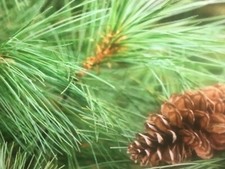
The leaves are spiral shaped, flexible, five needles, 2 to 5 inches long.
Flower Color:
Pink; yellow; nondescript.
Bloom Time:
April-May.
Fruit Description:
The fruit is an elongated cone, 6 to 8 inches long, dry, brown.