When you click on links to various merchants on this site and make a purchase, this can result in this site earning a commission. Affiliate programs and affiliations include, but are not limited to, the eBay Partner Network.
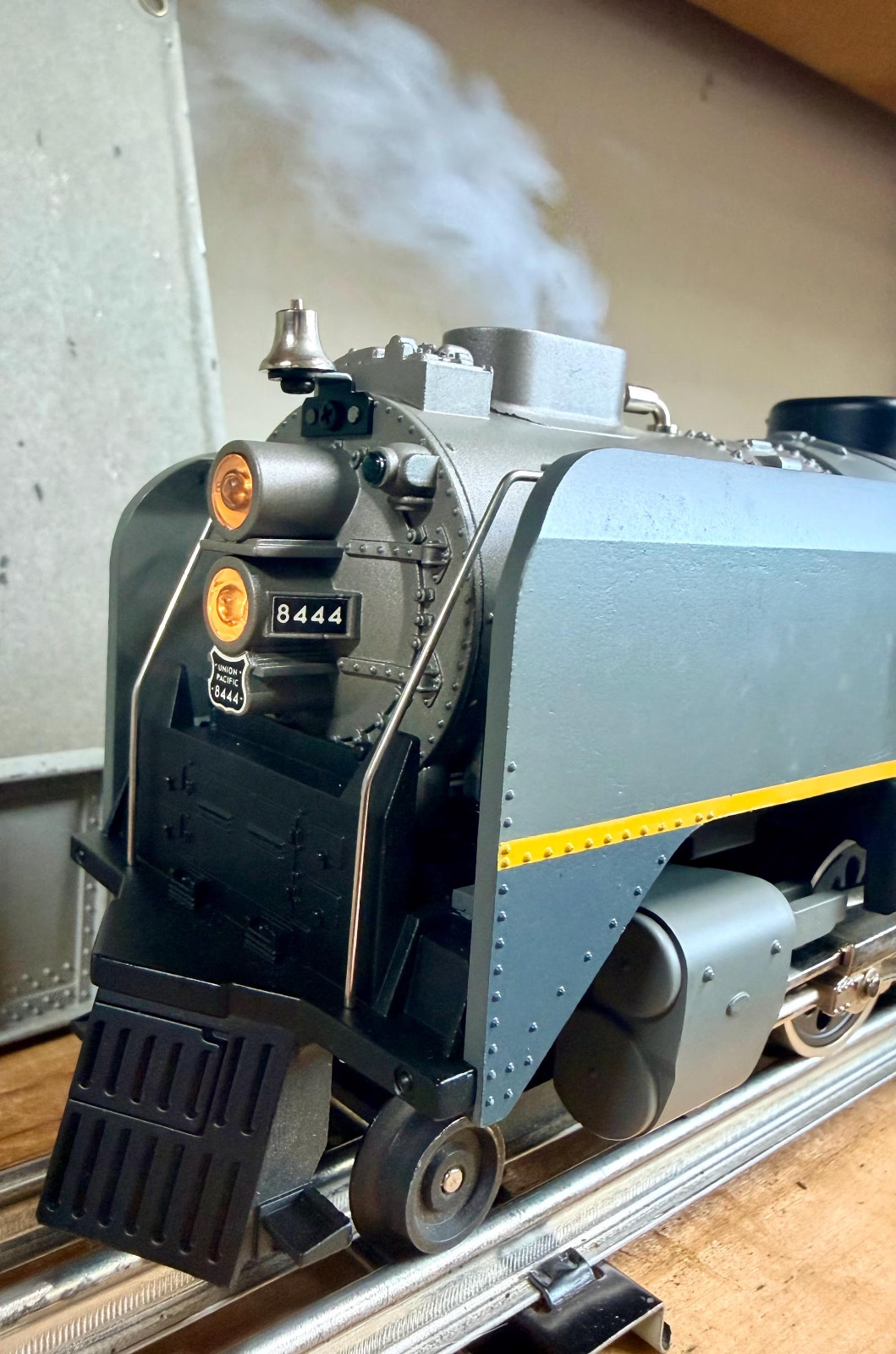
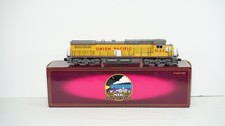
This Locomotive is a Factory Preproduction Sample aquired from MTH. It has variations from the production version. See pictures and video for further details. After market packaging-no box. Serviced, tested and new BCR installed to ensure reliable operation. ProtoSound board reset to Factory original. A truly unique and impressive UP Northern with prolific smoker.
Die-Cast Metal Chassis - Authentic Paint Scheme - Metal Wheels and Axles - Precision Flywheel Equipped Motor - Locomotive Speed Control - Metal Handrails and Decorative Bell - Decorative Metal Whistle - Boiler Fins - Operating ProtoSmoker System - Die-Cast Boiler and Tender Body - Constant Voltage Headlight - Die-Cast Truck Sides -ProtoSound-BCR-Unit Measures:22 3/4\" x 2 5/8\" x 3 5/8\" - Operates On O-31 Curves
In 1937, power was personified in the image of the FEF 4-8-4 Northern. This Alco-built locomotive was a Union Pacific favorite. Its 4-8-4 wheel configuration had long been a favorite of railroads that required big powerful, heavy engines that, despite their size and weight, could muscle heavy loads at efficient speeds. Also known as the \"Mighty 800s,\" because of their cab numbers, these locomotives were one of the finest examples of what a 4-8-4 was capable of. These FEFs saw lots of heavy passenger service, but were also used in fast freight, high-tonnage runs. The engines were designed to exhibit and average speed of 100 miles per hour. Fresh out of the Alco shops, one of the first UP FEFs was called on to head a 1,000-ton Association of American Railroads test train. It ran the train between Omaha and Grand Island, NE, reaching 89 miles per hour on its westward trip and topping at 102 on the trip home.
Did You Know? The FEF stands for Four-Eight-Four, a nickname Union Pacific gave the locomotives because of their wheel configuration.