When you click on links to various merchants on this site and make a purchase, this can result in this site earning a commission. Affiliate programs and affiliations include, but are not limited to, the eBay Partner Network.
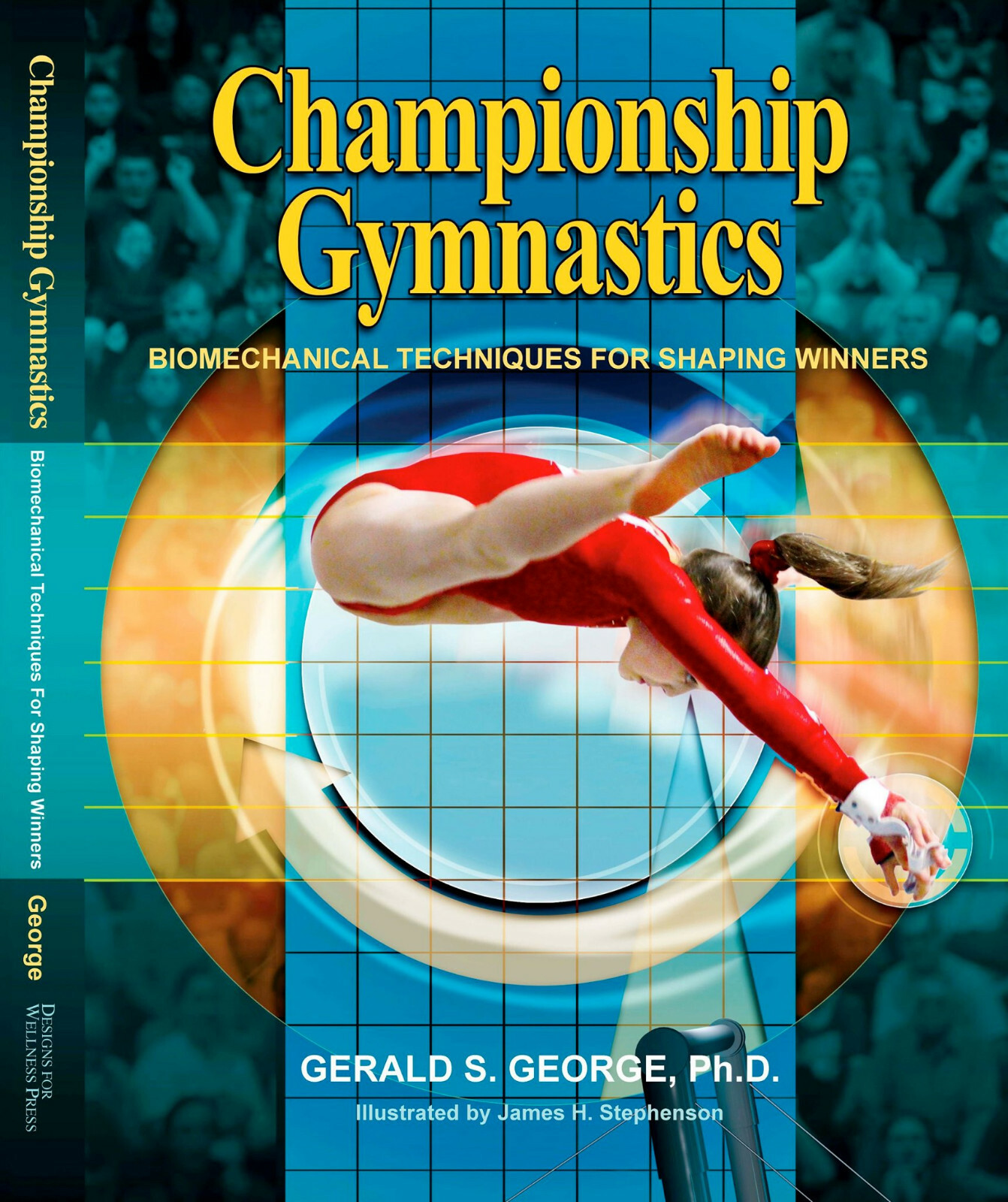
THIS BRAND NEW-CONDITION BOOK IS SOLD DIRECTLY BY THE PUBLISHER.Championship Gymnastics represents an entirely new approach to the study and understanding of gymnastics movement. It is the only textbook on the market that bridges the gap between theory and practice. Whether you are a gymnastics performer, teacher, coach, or even a judge, this textbook seamlessly weaves together the “science” of biomechanics with the “art” of gymnastics movement.
Rather than laboring on complex physics formulas, fundamental principles of biomechanics are clearly explained and presented in layman’s terms. Easy to read and expertly illustrated, readers are guided effortlessly through a “conceptualization process” for developing ideal movement patterns. The book includes 140 technical illustrations by noted artist and gymnastics coach Jim Stephenson. Gymnastics skills are described clearly and illustrated progressively to demonstrate that “similarities” in gymnastics movement patterns far outweigh “differences.” As a result, seemingly complex gymnastics skills are reduced to simple, easy-to-understand patterns of motion.
Aside from the highly acclaimed Biomechanics of Women’s Gymnastics published in 1980 (authored by Dr. George), Championship Gymnastics is the only textbook in gymnastics that bridges the gap between theory and practice. Its breadth and depth of content are sufficiently complete to eclipse that of any competing gymnastics book in the world.
In Chapter 1, the concept of “ideal modeling” is introduced as a unique tool for shaping movement potential in gymnastics skills. Ten basic factors affecting success in gymnastics are introduced from the practical applications perspective.
Chapter 2 presents five unique conceptual principles that can and should be employed to identify, refine and ultimately maximize gymnastics skill execution.
Chapter 3 (the handstand) demonstrates and emphasizes that proper mechanics and training of the handstand is the common denominator to successful learning of all gymnastics skills.
Chapters 4, 5 and 6 (swing, impact and rotation) systematically develop, progressively illustrate and clearly explain the 3 fundamental components that characterize all gymnastics movements from a “practical applications perspective.”
Chapter 7 (patterns of motion) covers the entire spectrum of core movement patterns in gymnastics. Innovative, yet easy-to-understand, concepts for mastering body shape inform readers of “what constitutes correct movement patterns and why.” And Chapter 8 (concepts of training) provides a clear and compelling training overview that explains “how to get there.” Rather than recommending specific training protocols, readers are guided through an understanding of the underlying principles for achieving high levels of flexibility and power. Armed with this perspective, gymnasts and coaches can design training programs that are specific to the unique needs of each individual performer.
The remaining Chapters 9, 10, 11 and 12, apply these movement concepts to each of the four Olympic events for women (floor exercise, balance beam, vault, and uneven bars). Each chapter carefully explains and accurately illustrates critical movement components that separate the champion from the would-be Gymnastics:
Biomechanical Techniques for Shaping Winners
FOREWORD
I. INTRODUCTION TO GYMNASTICS TECHNIQUE
The Ideal Model Concept
A Systems Approach
Factors Affecting Success
- Gymnastics—A Long and Winding Road
- All Systems GO
- Mastery of Basic Skills
- Persistent Use of Repetitions
- Use of Appropriate Skill Progressions
- Learning versus Performance
- Skill Sequencing
- Compensatory Techniques—The Achilles Heel
- Sureness of Execution
- Psychological Readiness—The Ultimate Domain
II. BASIC CONCEPTS FOR REFINING GYMNASTICS MOVEMENT
Five Movement-Refining Principles
1.Amplitude Principle
A.External Amplitude
B.Internal Amplitude
2.Segmentation Principle
3.Closure Principle
4.Peaking Principle
5.Diversification Principle
Fundamentals of Refined Movement
III. THE COMMON DENOMINATOR—THE HANDSTAND
The Handstand-Training Triad
1.Shape
2.Tension
3.Balance
A.The Sixth Sense
B.Counterbalancing versus On-Line Balancing
C.Stability, Equilibrium, and Balance
D.Hollowing the Shoulder Girdle
E.Body-Tilt Training Technique
Training Summary for the Handstand
IV. THE MECHANICS OF SWING
Internal and External Swing
1.Internal Swing
A.Transfer of Momentum
B.Kinetic Chain
2.External Swing
A.Descent Swing Amplitude
B.Conservation of Angular Momentum
3. Optimizing Swing Mechanics
A.Body Shape and Radius of Swing Rotation
B.Ascent Swing Amplitude
C.The Tangent-Release Principle
Fundamental Concepts of Swing
V. THE MECHANICS OF IMPACT
Leg Impact and Take-Off
1.Trajectory
A.Maximizing Lift
B.Optimizing the Angle of Input for Take-Off
2.Angular Momentum
A.Transferring Momentum from Part to Whole
B.Altering the Direction of Take-Off
C.Converting Horizontal Motion into Rotary Motion
3.The Trajectory–Angular Momentum Relationship
4.The Angle of Input
Hand Impact and Repulsion
1.Shoulder Girdle Action
Leg Impact and Landing
1.Landing Techniques
2.The Angle of Touch-Down
Similarities in Movement Patterns
Fundamental Concepts of Impact
VI. THE MECHANICS OF ROTATION AND TWISTING
Somersault Rotation
Twist Rotation
Fundamental Techniques of Twisting
Biaxial Rotation—Twisting Somersaults
1.The On-Ground Twist Initiation Technique
A.Advantages of On-Ground Twist Initiation
B.Disadvantages of On-Ground Twist Initiation
2.The Body-Extension Twist Initiation Technique
A.Advantages of Body-Extension Twist Initiation
B.Disadvantages of Body-Extension Twist Initiation
3.The Body-Tilt Twist Initiation Technique
A.Resulting Direction with Body-Tilt Twist Initiation
B.Advantages of Body-Tilt Twist Initiation
C.Disadvantages of Body-Tilt Twist Initiation
Arm-Wrap Techniques for Twisting
Twist Direction for Somersault Skills
Turn Direction for the Round-Off
Fundamental Concepts of Rotation and Twisting
VII. PATTERNS OF MOTION
Mastery of Body Shape
Fundamental Concepts of Body Shaping
1.Flexion—Forward Bending
2.Extension—Backward Bending
3.Flexion—Forward Bending in Long-Hang Swing Position
4.Extension—Backward Bending in Long-Hang Swing Position
5.Repetitive Forward/Backward Bending
Patterns of Motion—The Kinetic Chain
1.Kinetic Chain Sequence for Take-Offs and Landings
2.Kinetic Chain Sequence for Tucking/Opening Forward Somersaults
3.Kinetic Chain Sequence for Tucking/Opening Backward Somersaults
4.Kinetic Chain Sequence for Closing/Opening Swing-Oriented Skills
Breaking the Kinetic Chain
Fundamental Concepts of Patterned Movement
VIII. CONCEPTS OF TRAINING
Flexibility
1.Constraints on Joint Flexibility
2.Range of Motion in the More Critical Joint Areas
3.Flexibility Training Protocols
A.Static Flexibility Training
B.Dynamic Flexibility Training
4.Specificity for Flexibility Training
5.Flexibility Training Intensity
Power
1.Specificity for Power Training
2.Resistance Techniques
A.Increasing the Rate of Movement
B.Changing Body Position Relative to the Ground
3.Additional Core Power Training Examples
A.Running and Jumping
B.Frontal (Flexor) Muscles
C.Pull-Through Exercise
D.Core Muscle Training
4.Power Training Intensity
The Training Pyramid
Fundamental Concepts of Flexibility Training
Fundamental Concepts of Power Training
IX. CONCEPTS OF FLOOR EXERCISE
Three-Dimensional Space
The Spring Floor
Fundamental Tumbling Concepts
- Dynamic Tension
- Maximum Horizontal Velocity at Impact
- Accelerating the Rotation
- Sounding the Rhythm
- Rapid Inversion of the Total Body Unit at Input
- The Snap-Up
A.Rotary Motion at Input
B.Mechanics of the Snap-Up
- Standing Tall and Skimming the Stone
- Shoulder Girdle Range and Power
- Whipback Handspring—Skewing the Curve
- Kinesthetic Awareness—Eye of the Storm
X. CONCEPTS OF BALANCE BEAM
In-Line Space
Fundamental Balance Beam Concepts
- Mastering Skills at Ground Level
- Training the Core
- Stacking the Vertebrae
- Strong Ankles/Wrists and Pliable Feet/Hands
- The Cross-Extensor Reflex
- Follow-Through to Completion
- Focusing on the Target
- Consistent Environmental Perspective
- Progressions and Repetitions
- Smoothing the Transitions
XI. CONCEPTS OF VAULTING
Fundamental Vaulting Concepts
- Minimizing the Board Setting
- The Staircase Effect
- Maximizing the Run-Up Distance
- Training for Sprint Speed
- Hitting the Mark
- Board-Impact Techniques
- Take-Off and Pre-flight
- Hand Impact and Repulsion
- Shaping the Post-flight Trajectory
- Sounding the Rhythm
XII. CONCEPTS OF UNEVEN BARS
Fundamental Uneven-Bars Concepts
- Swinging—A Closed-Loop System of Kinesthetic Awareness
- Dancing with the Bars
- The Elastic-Ruler Concept
- Keeping the Giant in the Swing
- The Circumduction Technique
- The Handstand Arrival—A Litmus Test for Excellence
- Timing the Release
- Tapping the Release
- The Bottoming Effect
- The Slingshot Technique
REFERENCES AND SUGGESTED READING
INDEX