When you click on links to various merchants on this site and make a purchase, this can result in this site earning a commission. Affiliate programs and affiliations include, but are not limited to, the eBay Partner Network.
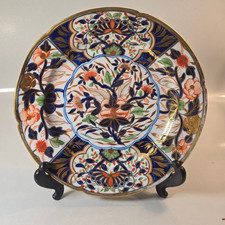
DescriptionAn authentic piece of early 19th-century English ceramic artistry, this antique bone china cabinet plate is decorated in the traditional Imari style. Emerging from the global fascination with imported Japanese porcelain from the Arita region, prominent British manufactories like Derby and Spode adapted these classic patterns for Regency-era society, combining regional English craftsmanship with historic eastern aesthetics.The plate features an intricate hand-painted design executed in a palette of deep cobalt blue, vibrant rust-orange iron red, and soft green highlights. The central medallion features a stylized tree and floral motif, surrounded by alternating paneled sections and fan-shaped lappets decorated with delicate blossoms. Heavy, hand-applied gilt accents frame the panels and trail through the foliage, adding a reflective quality to the surface. The plate features a lightly scalloped rim edged entirely in gold gilding.
- Culture/Origin Area: English / British
- Date/Age: Regency Era, circa 1810–1830
- Materials: Fine Bone China / Porcelain
- Decor: Hand-Painted Imari Pattern with Gilt Accentuation
- Diameter: 8.5 inches
- Weight: 12.3 ounces
- Markings: Black hand-written fraction \"5 / 15\" marked on a remnant piece of tan paper tape or old label adhering to the lower reverse rim.
Condition Description
The plate is in well-preserved antique condition with no visible cracks, chips, or restoration work present on either the front face or reverse side. The close-up view confirms strong enamel colors and intact structural glaze. Fine micro-scratching, minor stray paint specks from original production, and age-appropriate surface wear are present on the hand-applied gold gilding tracking lines and outer scalloped border.Disclaimer
I am not an appraiser. All identifications regarding maker, materials, historical style, date, culture, and naming conventions are research-based opinions made entirely in good faith using the visible features of the item. Buyers are kindly encouraged to review all photographs carefully, do their own due diligence, and come to their own conclusions prior to offerding or purchase.