When you click on links to various merchants on this site and make a purchase, this can result in this site earning a commission. Affiliate programs and affiliations include, but are not limited to, the eBay Partner Network.
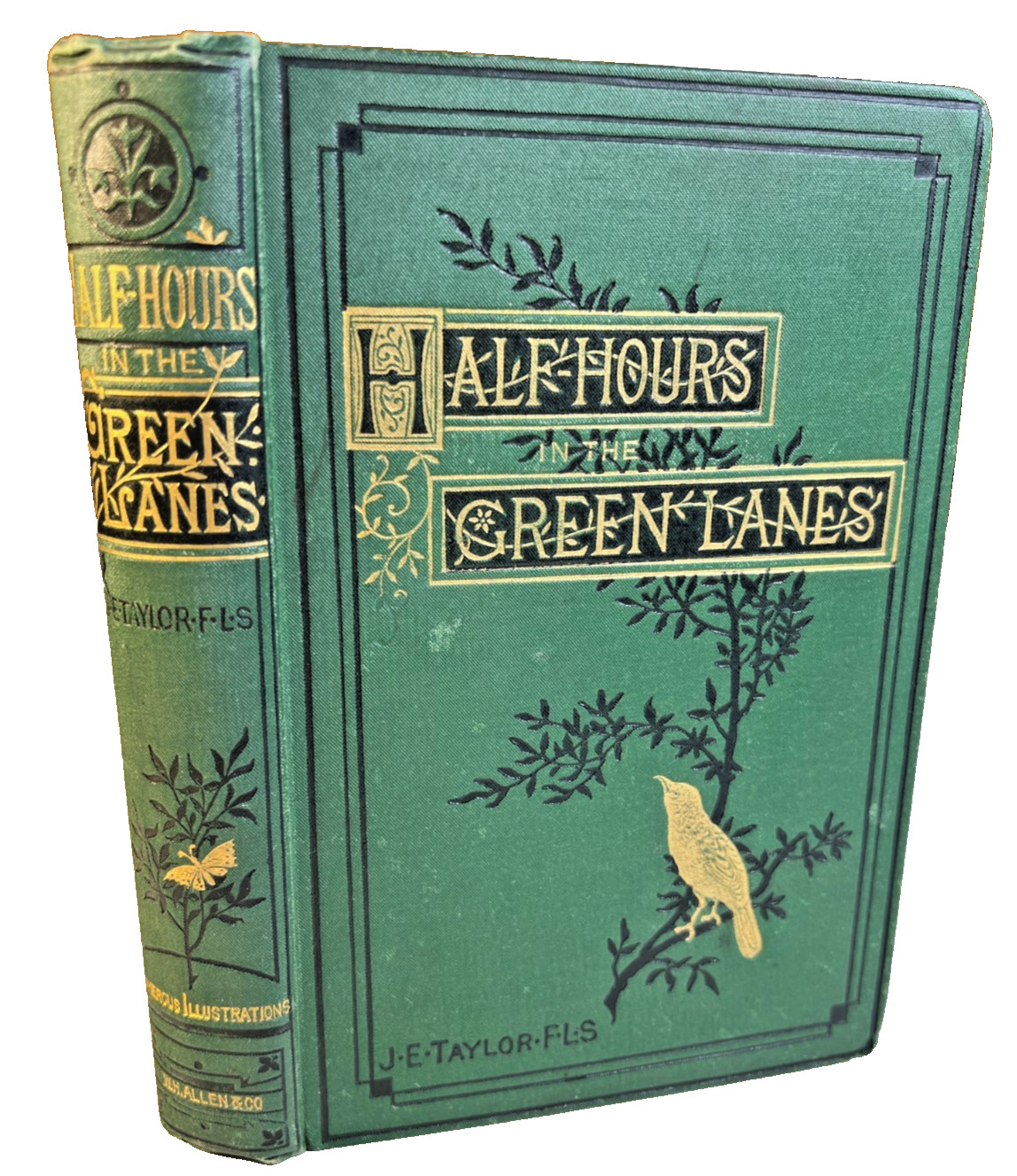
ANTIQUE 1884 “Half-Hours In The Green Lanes” J.E. Taylor Victorian Nature Book Gilt
A beautiful and wonderfully preserved Victorian natural history volume from 1884, bound in its original deep green cloth with striking black and gilt decoration throughout. Half-Hours in the Green Lanes: A Book for a Country Stroll by J. E. Taylor captures the late Victorian obsession with nature study, field observation, microscopy, butterflies, mosses, fungi, ponds, birds, and quiet exploration of the countryside.
The cover alone is a work of art — richly embossed with gilt lettering, botanical motifs, a perched bird, and butterfly imagery that practically glows against the green cloth. Inside are numerous illustrations and charming period typography throughout.
This is the kind of book that sat beside oil lamps, microscopes, pressed flowers, and curiosity cabinets while Victorian readers wandered hedgerows collecting specimens in an age before radio, airplanes, or electric convenience. A true aesthetic object from the golden age of amateur natural science.
About the Book
Title: Half-Hours in the Green Lanes: A Book for a Country Stroll
Author: J. E. Taylor, F.L.S., F.G.S.
Edition: Sixth Edition
Publisher: W. H. Allen & Co.
City: London, England
Date: 1884
J. E. Taylor was a respected Victorian science writer and lecturer associated with the explosion of public interest in geology, microscopy, botany, and evolutionary science during the late 19th century. His books helped introduce ordinary readers to the natural world in a highly approachable, almost poetic way.
The initials after his name matter:
- F.L.S. = Fellow of the Linnean Society
- F.G.S. = Fellow of the Geological Society
That was Victorian shorthand for: “this man seriously wandered around looking at moss with authority.”
Victorian Context
By 1884:
- Charles Darwin’s ideas were reshaping science and religion.
- Microscopes had become fashionable household instruments.
- Nature walks and specimen collecting were a major pastime among the educated middle class.
- London was lit by gaslight, horse-drawn traffic filled the streets, and Jack the Ripper’s crimes were only a few years away.
- The telephone was still a novelty.
- Electricity was just beginning to enter public life.
Books like this were part education, part entertainment, and part escape from the rapidly industrializing Victorian world.
Illustrations & Content
Contains numerous natural history illustrations including:
- Butterflies
- Mosses
- Pond life
- Fungi
- Birds
- Wildflowers
- Microscopic organisms
- Country landscapes and natural specimens
The engraved butterfly plates are especially attractive and highly displayable.
Condition
A remarkably attractive survivor overall.
- Original green decorative cloth binding
- Strong gilt and black cover decoration
- Binding remains solid
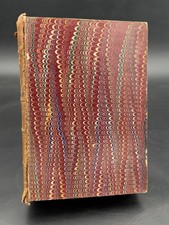
- Pages generally clean
- Light scattered foxing typical of age
- Minor edge and corner wear
- Includes a pressed leaf still tucked within the pages — a wonderfully atmospheric little time capsule from some long-ago reader
Displays beautifully on a shelf, especially among Victorian natural history, cottagecore, dark academia, botanical, or curiosity cabinet collections.
Collector Appeal
This book checks a surprising number of collector boxes:
- Victorian natural history
- Decorative gilt binding
- Botanical & entomology interest
- Cottagecore / dark academia aesthetics
- Antique illustrated books
- Bird & butterfly collectors
- Curiosity cabinet décor
- Primitive science & microscopy history
Honestly, the cover alone sells it. Victorian publishers knew exactly how to seduce someone into buying a book about lichens.