When you click on links to various merchants on this site and make a purchase, this can result in this site earning a commission. Affiliate programs and affiliations include, but are not limited to, the eBay Partner Network.
Ancient Near Eastern / Iron Age Bronze Foliate Spearhead / Javelin Point (Circa 10th–6th Century BC) Authentic
Authenticity NoticeThis artifact is certified authentic and will be accompanied by a Certificate of Authenticity and Provenance. All professional inventory is vetted through recognized platforms to ensure legal standing.
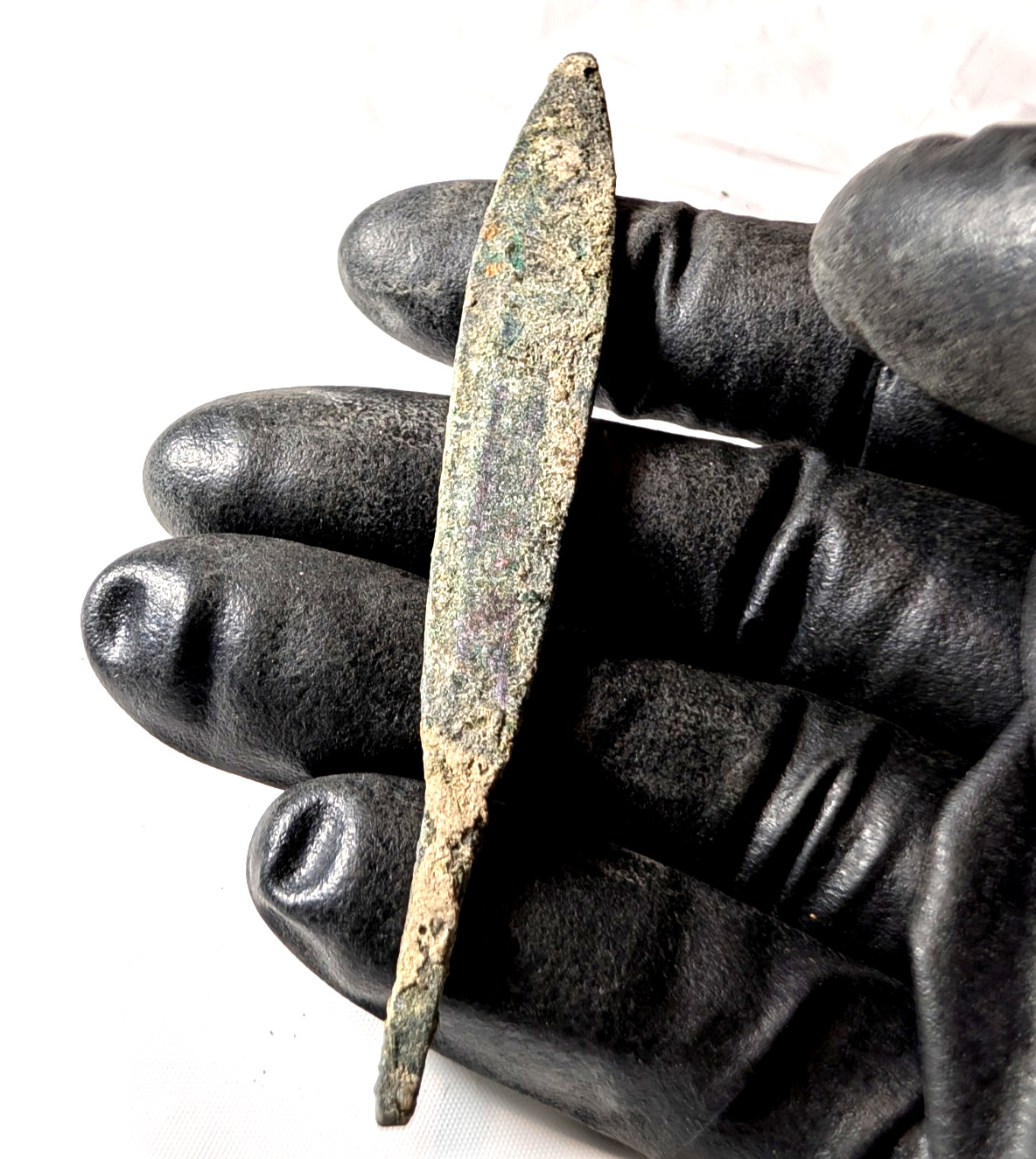
DetailsObject: Bronze Lanceolate / Foliate Javelin Point or Heavy ArrowheadCulture: Iron Age Near East / Aramean & Neo-Assyrian SphereDate: Circa 1000–550 BCMaterial: Bronze (Copper-alloy)Form: Cast bronze leaf-shaped (lanceolate) weapon point featuring a low central structural rib, smooth tapering edges, and a square-sectioned tang for shaft insertionDimensions: Approx. 90 mm (9 cm) lengthRegion: Ancient Levant / Syro-Mesopotamian Region
Iconographic & Typological AnalysisThis substantial bronze weapon point represents Iron Age military equipment from the Aramean city-states and contemporary Levantine conflicts.The artifact features a long, leaf-shaped blade with a prominent, flattened central midrib that provides structural rigidity during impact. The blade transitions seamlessly into a long, tapering rectangular tang designed to be hafted directly into a wooden shaft and bound:
Foliate Form & Armor Penetration: The lanceolate profile with a thickened central core allowed for exceptional aerodynamic stability and deep penetration against padded leather or early bronze scale armor.Javelin vs. Heavy Arrowhead Typology: Measuring 9 cm (90 mm) in length, its size places it at the functional boundary between a heavy armor-piercing projectile (shot from a heavy composite bow) and a light throwing javelin (pilum / dart) utilized by infantry skirmishers.Cast in solid bronze, the piece preserves its original balanced geometric form, showcasing master casting and cold-hammering along the cutting edges.
Overview and Historical ContextDuring the Iron Age II period (c. 1000–550 BC), the Aramean kingdoms across Syria and the northern Levant frequently engaged in military conflicts and trade exchanges with neighboring Canaanite, Phoenician, and Neo-Assyrian empires. Tanged foliate bronze points were the standard, highly effective ballistic weapons of mobile archery units and light infantry skirmishers operating along the trade corridors and fortified city-states of the Ancient Near East.
Authenticity CheckDisplays a authentic archaeological surface featuring an olive-green malachite patina with localized areas of dark cuprite and earthy mineralized soil deposits.Natural surface micro-pitting, minor edge smoothing, and authentic oxidation layer consistent with millenia of burial in arid Near Eastern soil.Solid single-piece ancient casting showing genuine hand-finishing, clear tang transition, and complete structural integrity.
Comparable ExamplesThe British Museum, London: Accession No. 132048 (Collection of Iron Age bronze tanged arrowheads and javelin points from Syria and the Levant).The Israel Museum, Jerusalem: Iron Age weaponry collection (Bronze leaf-shaped tanged points from Levantine sites).The Metropolitan Museum of Art, New York: Accession No. 61.12.1 (Ancient Near Eastern bronze tanged weapon points, 1st millennium BC).
ConditionVery fine archaeological condition. Complete, solid, and intact, preserving its full original length, crisp midrib geometry, complete hafting tang, and a stable, attractive green patina.
A1