Heat.net Store Home
|
1916 WWI German Feldpost Card Bayer Res Feldlazarett 1 Chateau Photo to Berlin For Sale

When you click on links to various merchants on this site and make a purchase, this can result in this site earning a commission. Affiliate programs and affiliations include, but are not limited to, the eBay Partner Network.

1916 WWI German Feldpost Card Bayer Res Feldlazarett 1 Chateau Photo to Berlin:
$25.00
⚠️ IMPORTANT NOTE REGARDING EXHIBIT GRAPHICS: The historical routing maps, geographic overlays, and enhanced composite visuals featured in this listing are custom-designed digital graphics created exclusively for this online presentation. They are intended to provide deep provenance and tell the social history of the cover. No physical prints or digital files are included with the purchase of the physical philatelic item unless explicitly stated.\"Digital Exhibit Graphic Only – Not Included in Purchase, but you are more than welcome to download the images directly from and print them out for your records!\" 1916 WWI German Western Front Feldpostkarte with Original Château Photo – Bayer. Reserve-Feldlazarett Nr. 1 (I. bayer. Res. Korps) to Berlin-Charlottenburg Item Overview An exceptional, well-documented World War I German military medical Feldpost card paired with its original sepia photographic print showing the requisitioned French/Belgian château serving as the military field hospital. Sent by Lieutenant Hantke of the Royal Bavarian 1st Reserve Field Hospital while stationed on the Western Front, addressed back home to Theodor Hantke in Berlin-Charlottenburg. Postal Markings & Identification Postmark: Crisp strike of circular field post cancel: POSTAMT d. I. BAYER. RES. KORPS a / 12 4 16 (April 12, 1916). Unit Cachet: Sharp, rectangular two-line sender address rubber stamp in violet: Feldpostadresse des Absenders: / Bayer. Res. Feldlazarett ... / Feldpost I. bayer. Res. Korps. Handwritten Date: Inscribed at upper center by the sender on 2. IV. 16 (April 2, 1916). Stationery: Official pre-printed German military postcard format (Feldpostkarte), imprint along left margin: \"Radiotinto\" von Brend\'amour, Simhart & Co., München. Accompanying Photo: Original period sepia albumen/silver print depicting the historic multi-turreted French/Belgian château utilized by the Bavarian medical unit, showing military personnel outside the entrance.
Historical & Unit Background Unit: Bayer. Reserve-Feldlazarett Nr. 1 (Royal Bavarian 1st Reserve Field Hospital), attached directly to the I. bayer. Reserve-Korps (6th Army / 6. Armee under Crown Prince Rupprecht of Bavaria). Sector: In April 1916, the I Royal Bavarian Reserve Corps occupied static frontline trenches in the Artois sector north of Arras, France. Role: Reserve field hospitals were mobile rearward medical units tasked with immediate surgical intervention, stabilizing severe casualties, and coordinating hospital rail transport (Lazarettzüge) back to Germany. Officers and medical personnel commonly commandeered local historic estates and châteaux to provide shelter, operating rooms, and recovery wards.
Transit & Destination Route: Written on April 2, 1916, in the field hospital lines behind the Artois front, stamped at the Corps Post Office on April 12, and transported via military field post rail (Bahnpost) through Aachen/Cologne across Germany. Destination: Addressed to Herrn Theodor Hantke, Berlin-Charlottenburg, Bleibtreustr. 19. Bleibtreustraße was an affluent residential boulevard just off the Kurfürstendamm in the independent city of Charlottenburg (incorporated into Greater Berlin in 1920). Postage: Transported post-free under official Imperial wartime military privileges (Feldpost).
Condition Card: Very Fine. Clean, unrestored condition with sharp postal strikes and clean manuscript in brown ink. Minor light toning consistent with age. Photograph: Sharp focus and good tonal contrast with intact margins and corners. Please inspect high-resolution scans for exact centering, strikes, and edge details.
Market Context Standard WWI German Feldpost cards are very common, but Bavarian medical corps items (Reserve-Feldlazarett) accompanied by clear visual documentation of the hospital location/château command a solid premium among Western Front and military medical history collectors. In clean condition with crisp postal markings. Sender & Sender Unit Context Unit: Bayer. Reserve-Feldlazarett Nr. 1 (Royal Bavarian 1st Reserve Field Hospital), attached to the I. bayer. Res. Korps (I Royal Bavarian Reserve Corps) under the 6th Army (6. Armee). Frontline Sector (April 1916): In April 1916, the I Royal Bavarian Reserve Corps was deployed in the static trench warfare of the Artois and Flanders sectors near Arras and Neuville-St. Vaast (northern France).
Receiver & Domestic Context Home Front Setting: Charlottenburg was an affluent, independent city directly west of Berlin (later annexed into Greater Berlin in 1920). Bleibtreustraße, situated just off the Kurfürstendamm, was a fashionable, high-density residential boulevard. By April 1916, urban centers like Berlin were facing severe home-front challenges, including strict rationing and meat shortages, making routine domestic correspondence from frontline family members crucial reassurance.
Country & Historical Background Postal Route: Written on April 2, 1916, and postmarked by the Corps Field Post Office (POSTAMT d. I. BAYER. RES. KORPS) on April 12, 1916. It traveled via military courier rail directly from the Artois front through Aachen and across central Germany to the Berlin military postal distribution center free of postage Route & Transit Breakdown Point of Origin (April 2, 1916): Written at Bayer. Reserve-Feldlazarett Nr. 1 (Royal Bavarian 1st Reserve Field Hospital). In April 1916, this medical unit was operating behind the static trench lines of northern France (Artois / Flanders sector north of Arras, under Crown Prince Rupprecht’s 6th Army), billeted in the requisitioned French château shown in the photograph. Postal Acceptance (April 12, 1916): Handed over to the corps postal service and postmarked by POSTAMT d. I. BAYER. RES. KORPS a (Feldpostamt of the I Royal Bavarian Reserve Corps). The 10-day span between letter composition (2. IV. 16) and date stamping (12. 4. 16) reflects routine batch collections from rearward medical facilities or local military censorship clearance. Trunk Transit & Rail Head: Transported by military field post rail (Bahnpost) eastward out of occupied northern France and Belgium via the main military rail artery through Aachen / Cologne into Germany. Domestic Rail & Distribution: Conveyed across northern/central Germany on the Imperial rail network directly to the central military post office in Berlin. Among the millions of standard field postcards dispatched from the Western Front during the Great War, few capture both the administrative machinery and the physical reality of rearward medical service as vividly as this April 1916 Feldpostkarte. Paired with an original period photograph of a requisitioned French château, the card bridges the gap between official military bureaucracy and personal domestic correspondence, offering an intimate window into the operations of the Royal Bavarian Army in northern France. The postcard originated from Bayer. Reserve-Feldlazarett Nr. 1 (Royal Bavarian 1st Reserve Field Hospital), a mobile medical establishment attached directly to the I. bayer. Reserve-Korps. Under the overall command of Crown Prince Rupprecht’s 6th Army, this corps occupied a notoriously volatile sector in the Artois and Flanders borderlands north of Arras. While the front lines churned under persistent artillery bombardments and localized trench raids, medical installations had to be organized just far enough behind the lines to avoid direct bombardment while remaining close enough to triage incoming waves of casualties. To achieve this, the German medical corps systematically commandeered aristocratic civilian estates, manor houses, and châteaux. The accompanying sepia photograph preserves the specific physical setting of this facility: an imposing stone château adorned with gothic turrets and climbing ivy, framed by broad estate grounds. Figures in field uniform stand at its threshold, a stark juxtaposition of imperial Prussian and Bavarian military personnel occupying a peaceful French country seat. Within these walls, drawing rooms and grand salons were converted into operating theaters, antiseptic wash stations, and recovery wards where emergency surgery was performed before the wounded could be stabilized and transferred by dedicated hospital trains (Lazarettzüge) to base hospitals in Germany. The sender, Lieutenant Hantke, penned his brief greeting on April 2, 1916, heading the card with a clear reference to his unit. As was customary in imperial field post administration, a rectangular two-line purple unit cachet was applied to authenticate the sender\'s military status: Feldpostadresse des Absenders: Bayer. Res. Feldlazarett ... Feldpost I. bayer. Res. Korps. Ten days later, on April 12, 1916, the item was formally processed through the corps\' mobile postal branch, receiving a crisp, circular cancellation reading POSTAMT d. I. BAYER. RES. KORPS a. The ten-day interval between drafting and dispatch underscores the operational cadence of field hospitals, where mail was often batched during high-casualty intake periods or routed through unit-level military censors before entering the postal stream. From Artois, the card traveled post-free along the military railway arteries (Bahnpost) spanning German-occupied Belgium, passing through the transit hubs of Aachen and Cologne before crossing northern Germany to its final destination: Bleibtreustraße 19 in Berlin-Charlottenburg, addressed to Theodor Hantke. Charlottenburg, then an affluent independent municipality renowned for its elegant residential boulevards off the Kurfürstendamm, stood at the heart of the German home front. By the spring of 1916, urban civilian life was increasingly gripped by the strictures of wartime rationing and food shortages. For families like the Hantkes, a simple military postcard served as vital reassurance that an officer son or brother remained alive and accounted for, even as the attrition of the Western Front deepened. Together, the postal artifact and its visual counterpart provide a complete narrative arc of wartime communication. They anchor the macro-history of Bavarian military administration, postal routing, and wartime medicine to a tangible human reality—a tranquil French manor transformed into an emergency shelter, sending quiet word of survival homeward to Berlin.
⚠️ IMPORTANT NOTE REGARDING EXHIBIT GRAPHICS: The historical routing maps, geographic overlays, and enhanced composite visuals featured in this listing are custom-designed digital graphics created exclusively for this online presentation. They are intended to provide deep provenance and tell the social history of the cover. No physical prints or digital files are included with the purchase of the physical philatelic item unless explicitly stated.\"Digital Exhibit Graphic Only – Not Included in Purchase, but you are more than welcome to download the images directly from and print them out for your records!\"
Get your own free counter at Auctiva
Try Auctiva free for 30 days, no credit card required
|
|
Other Related Items:
Related Items: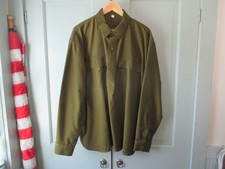
WWI US Army M1916 Wool Shirt X-Large Size 46 Repro $44.99
1916 WWI German Feldpost Card Bayer Res Feldlazarett 1 Chateau Photo to Berlin $25.00
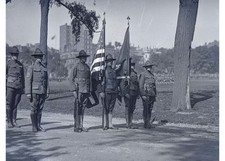
1916 WWI Harvard Students ROTC Preparedness Color Guard Glass Negative OOAK $200.00
|