When you click on links to various merchants on this site and make a purchase, this can result in this site earning a commission. Affiliate programs and affiliations include, but are not limited to, the eBay Partner Network.
Canvas Wall Art - Matte Finish with Hanging Hardware
High-quality canvas wall art with a matte finish. Each canvas includes back hanging hardware for convenient display. The frame is made from radiata pine sourced from renewable forests.
- Materials: Cotton and polyester composite (canvas), pine wood (frame)
- Finish: Matte coating designed for detailed, vibrant images
- Printing: Latex inks that are non-hazardous, non-toxic, and non-flammable
- Backing: Includes pre-installed hanging hardware
- Support: Soft rubber dots on bottom back corners for stability
- Frame: Radiata pine wood sourced from FSC-certified renewable forests
- Tolerance: Slight size deviations possible within ± 1/8 in (3.2 mm)
Care Instructions
- If dust collects, gently wipe with a clean, damp cloth
- Avoid using harsh cleaners or scrubbing the surface
Shipping & Handling
Each canvas print is securely packaged with protective materials to help prevent damage in transit. Tracking is included with all orders.
International buyers: please check local import regulations for canvas art before purchase.
Keywords: canvas wall art, matte canvas print, framed canvas, pine wood frame, wall decor, hanging canvas art, durable canvas print
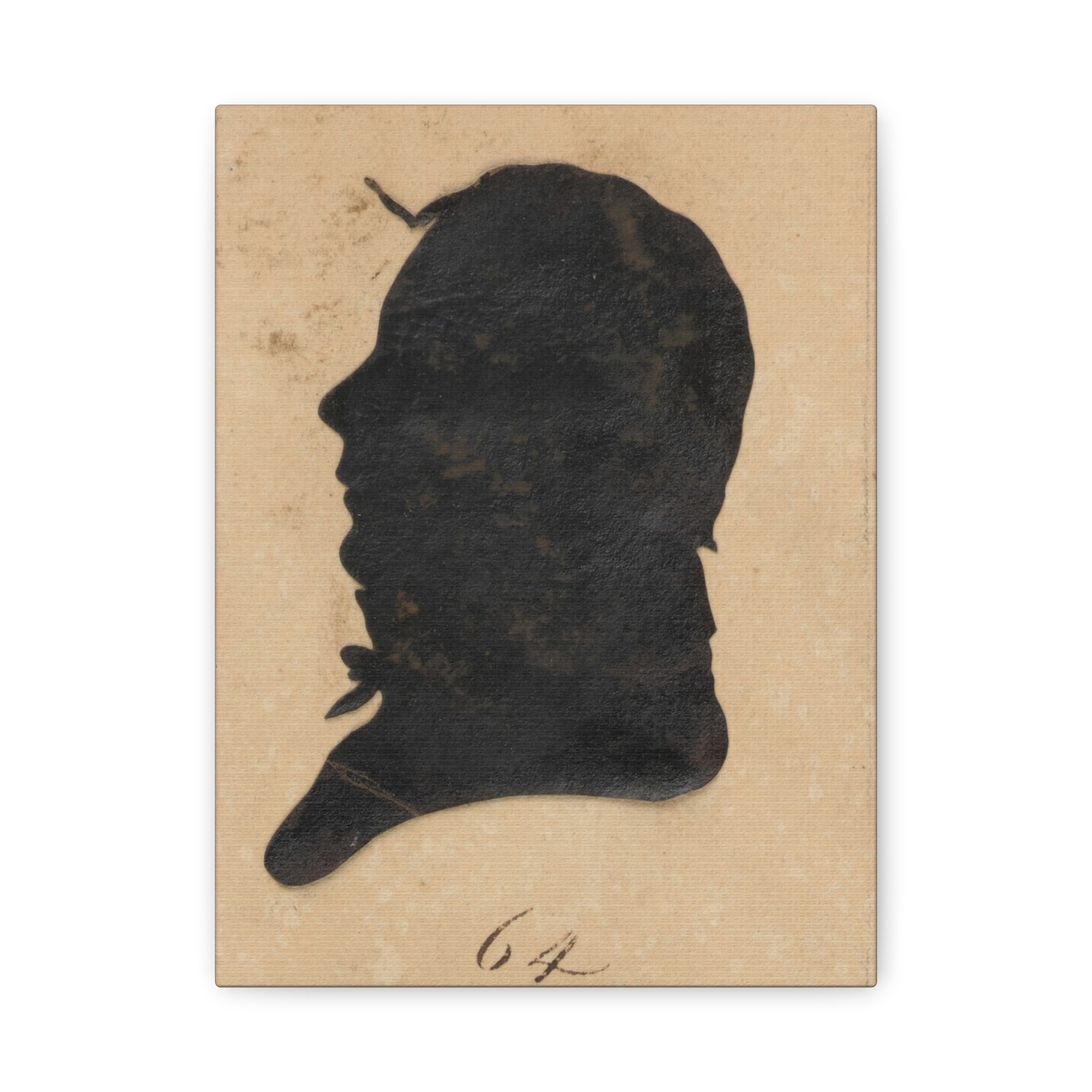
This historic artwork is a profile silhouette portrait created by the early American artist William Bache, depicting a gentleman identified as Mr. Barrymore. Crafted around 1803 to 1804, the piece captures the likeness of its subject through the traditional silhouette technique, which relied on precise outlines of shadow and form to record individual identity before the widespread availability of photography.
Portraits of this era served as intimate keepsakes and social currency, allowing sitters to project their status, refinement, and personal connections within polite society. The subject, Mr. Barrymore, represents the contemporary figures of the period whose lives and social engagements were preserved through the popular medium of profile likenesses, reflecting the tastes and fashions of early nineteenth-century portraiture.
William Bache was part of a tradition of itinerant and profile artists working in the United States, utilizing mechanical aids like the physionotrace or skilled freehand cutting to produce rapid, accurate likenesses.