Heat.net Store Home
|
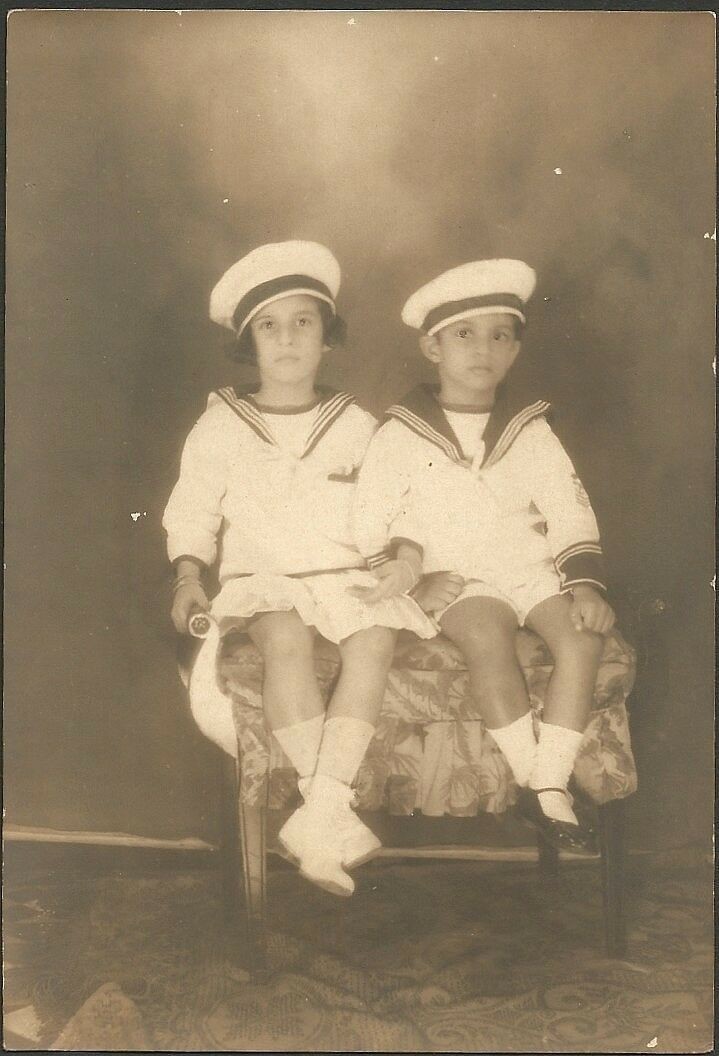
Vintage Photo J R D Tata As Child With Sister Sylla c 1910 Rare Tata Family For Sale

When you click on links to various merchants on this site and make a purchase, this can result in this site earning a commission. Affiliate programs and affiliations include, but are not limited to, the eBay Partner Network.

Vintage Photo J R D Tata As Child With Sister Sylla c 1910 Rare Tata Family:
$3000.00
Front of Photo: Studio portrait of two young children (J. R. D. Tata and his sister Sylla) dressed in matching sailor-style outfits, seated together on an upholstered studio bench. Back of Photo: Blank, matte archival paper backing with natural vintage aging and patina. Text / Markings: None printed on the reverse side. Historical Context & Significance J.R.D. Tata (Jehangir Ratanji Dadabhoy Tata): Born in 1904, J.R.D. Tata grew up to become one of India's most legendary industrialists, philanthropists, and the long-time chairman of Tata Sons. He was also a pioneering aviator who founded Tata Airlines (which later became Air India), earning him the title of the father of Indian aviation. The Tata Family: This rare, early childhood photograph captures J.R.D. Tata alongside his sister Sylla around 1910, during their formative years split between France (their mother's home country) and India. Collector Appeal: Original vintage photographs of early 20th-century Indian business royalty—especially of a figure as iconic as J.R.D. Tata—are exceptionally rare museum-grade pieces. They are highly sought after by collectors of Indian corporate history, vintage photography, and South Asian ephemera.
Recommended Keywords (SEO Tags) J.R.D. Tata photo, rare vintage Indian photograph, Tata family history, early 20th century portrait, children in sailor suits, Air India founder history, vintage South Asian ephemera, collectible Indian business history, antique studio Tata Group (/ˈtɑːtɑː/) is an Indian multinational conglomerate headquartered in Mumbai.[2][3] Established in 1868, it is India's largest conglomerate.[4]
Tata Group comprises numerous affiliate companies, with Tata Sons as the holding company and promoter. As of October 2025, there are more than 20 publicly listed Tata Group affiliate companies, with a combined market capitalisation of ₹31.17 trillion (US$320 billion).[5]
History
The Indian Institute of Science in Bangalore; foundation was laid by Jamsetji Tata along with Krishna Raja Wadiyar IV.
The Taj Mahal Palace Hotel in Mumbai is owned by Tata Group.During the cotton boom in Bombay triggered by the American Civil War, Jamsetji Nusserwanji Tata and his father became involved with the Asiatic Banking Corporation. However, when the market declined, the firm faced significant financial difficulties. In 1868, the family’s fortunes improved substantially after securing a share in a profitable contract to supply the commissariat for Napier's expedition to Abyssinia. Throughout his career, Tata remained focused on four major aspirations: establishing an iron and steel company, building a landmark hotel, founding a world-class educational institution, and developing hydroelectric power.
1868–1939In 1870, with ₹21,000 of capital, he founded a trading company.[6] Further, he bought a bankrupt oil mill at Chinchpokli and converted it into a cotton mill, under the name Empress Mill, which he sold for a profit after two years. In 1874, he set up another cotton mill at Nagpur named Empress Mill. During his lifetime, in 1903, the company opened the Taj Mahal Hotel at Colaba waterfront as the first hotel with electricity in British India.
After Jamsetji's 1904 death, his older son Dorabji Tata became chairman.[6] Sir Dorabji established the Tata Iron and Steel Company (TISCO), now known as Tata Steel in 1907. Marking the group's global ambitions, Tata Limited opened its first overseas office in London. Following the founder's goals, Western India's first hydro plant was brought to life, giving birth to Tata Power. Fulfilling yet another dream, the Indian Institute of Science was established, admitting its first group of students in 1911.
1938–1990
JRD Tata was chairman of Tata Group 1938–1991.JRD Tata was made chairman of the Tata Group in 1938. Under his chairmanship, the assets of the Tata Group grew from US$101 million to over US$5 billion. Starting with 14 enterprises, upon his departure half a century later in 1988, Tata Sons had grown to a conglomerate of 95 enterprises. These enterprises consisted of ventures that the company had either started or in which they held a controlling interest. New sectors such as chemicals, technology, cosmetics, marketing, engineering, manufacturing, tea, and software services earned them recognition.[7]
In 1932, Tata founded its airline, known as Tata Air Services (later renamed Tata Airlines and then Air India).[8] In 1953, the Government of India passed the Air Corporations Act and purchased a majority stake in the carrier from Tata Sons, though JRD Tata would continue as chairman until 1977.
In 1945, Tata Motors was founded, first focused on locomotives. In 1954, it entered the commercial vehicle market after forming a joint venture with Daimler-Benz. In 1968, Tata Consultancy Services was founded.
1991–2012
Ratan Tata, the former chairman of the company, led the acquisition of several companies by Tata Group.In 1991, Ratan Tata became chairman of Tata Group.[9] This was also the year of economic liberalization in India, opening up the market to foreign competitors.[10] During this time, Tata Group began to acquire several companies. Tata Group bought Tetley In February 2000. After that, it acquired Corus Group in 2007. The next year, the company's subsidiary Tata Motors launched the Tata Nano, presenting it as "the world’s most affordable car," and acquired Jaguar and Land Rover from Ford Motor Company.[11]
In 2017, Natarajan Chandrasekaran was appointed chairman. He was instrumental in restructuring business verticals and increasing promoter stake ownership in companies. Under his leadership, the group made acquisitions through insolvency law and investments in e-commerce, expanded its airline business by winning a offer for Air India, and completely bought Air Asia India. He has mentioned the future strategy is to focus on healthcare, electronics, and digital.[12] Tata-owned Air India got approval to acquire AirAsia India nearly two months after putting forth the proposal. The Competition Commission of India (CCI) approved the acquisition of the entire shareholding in Air Asia India by Tata-owned Air India.[13]
LeadershipThe chairman of Tata Sons is usually the chairman of the Tata Group. As of 2020, there have been seven chairmen of the Tata Group.
Jamsetji Tata (1868–1904)Sir Dorabji Tata (1904–1932)Sir Nowroji Saklatvala (1932–1938)JRD Tata (1938–1991)Ratan Tata (1991–2012)Cyrus Mistry (2012–2016)Ratan Tata (2016–2017)Natarajan Chandrasekaran (2017–present)[14]Affiliated companies
Tata Consultancy Services
Tata Motors Passenger Vehicles
Air India Limited
Taj Hotels by IHCL
Tata Communications
Tata Electronics
Tata Power
Tata Steel
Tata Chemicals
Tanishq by Titan
Tata Starbucks
Tata Consumer ProductsCompany Major subsidiaries Equity stakeAerospace and defenceTata Advanced Systems Tasec
100%Information technologyTata Consultancy Services (TCS) TRDDC
72.27%Tata Elxsi 42.22%SteelTata Steel Tata Steel NetherlandsTata Steel UKTata Steel ThailandTata Robins Fraser Ltd.(TRF)MjunctionJamshedpur FC32.46%Electrical and electronicsTata Electronics 100%Voltas Universal MEP Projects & Engineering Services
26.64%EnergyTata Power Tata Power SolarNelco Limited (50.04%)Maithon PowerTata Power Delhi DistributionTP Central Odisha DistributionTP Western Odisha DistributionTP Northern Odisha Distribution45.21%Engineering and constructionTata Projects 100%Tata Consulting Engineers 100%Real estateTata Housing 100%Tata Realty and Infrastructure 100%AutomotiveTata Motors Passenger Vehicles Tata TechnologiesFiat India Automobiles (50%)Jaguar Land Rover46.40%Tata Motors Tata DaewooTata HispanoTata Hitachi Construction Machinery (40%)Tata AutoComp Systems 100%Tata International Vehicle Applications 100%ChemicalsTata Chemicals Tata Chemicals EuropeRallis IndiaBritish SaltMagadi Soda CompanyTata Swach31.90%Retail and e-commerceTrent 32.45%Tata Digital BigBasket (68%)Tata 1mg (55%)Tata NeuTata CliqCromāTata nexarc100%Titan Company 25.02%Consumer goodsTata Consumer Products Tata myBistroTata Starbucks (50%)29.39%Financial servicesTata Capital 85.41%Tata Asset Management Tata Mutual Fund 100%Tata AIG 51%Tata AIA Life 51%Tata Investment Corp 68.51%Tourism and travelIndian Hotel Company Taj HotelsVivantaGinger38.43%TajAir 100%Air India Limited Air IndiaAir India ExpressAir India SATS Airport Services (50%)74.9%Telecom and mediaTata Communications Tata Communications Canada 31.90%Tata Teleservices 19.58%Tata Play 60%Tejas Networks 52.40%Trading and distributionTata International Group FeetscienceTagra100%Medical devicesTata Medical and Diagnostics 100%AcquisitionsFebruary 2000 – Tetley Tea Company, $407 million[15]March 2004 – Daewoo Commercial Vehicle Company, $102 millionAugust 2004 – NatSteel's Steel business, $292 millionNovember 2004 – Tyco Global Network, $130 millionJuly 2005 – Teleglobe International Holdings, $239 millionOctober 2005 – Good Earth CorporationDecember 2005 – Millennium Steel, Thailand, $165 millionDecember 2005 – Brunner Mond Chemicals, $10 millionJune 2006 – Eight O'Clock Coffee, $220 millionNovember 2006 – Ritz Carlton Boston, $170 millionJanuary 2007 – Corus Group, $12 billion[16]March 2007 – PT Kaltim Prima Coal (KPC) (Bumi Resources), $1.1 billionApril 2007 – Campton Place Hotel, San Francisco, $60 millionJanuary 2008 – Imacid Chemical Company, Morocco[17]February 2008 – General Chemical Industrial Products, $1 billionMarch 2008 – Jaguar Cars and Land Rover, $2.3 billionMarch 2008 – Serviplem SA, SpainApril 2008 – Comoplesa Lebrero SA, SpainMay 2008 – Piaggio Aero Industries, Italy (sold off in 2015)June 2008 – China Enterprise Communications, ChinaOctober 2008 – Miljo Grenland / Innovasjon, NorwayApril 2010 – Hewitt Robins International, United KingdomJuly 2013 – Alti SA, FranceDecember 2014 – Energy Products Limited, IndiaJune 2016 – Welspun Renewables Energy, IndiaMay 2018 – Bhushan Steel Limited, IndiaFebruary 2021 – BigBasket (68%) by Tata DigitalJune 2021 – 1mg (55%) by Tata DigitalOctober 2021 – Air India, Air India Express and 50% stake in Air India SATS, ₹180 billion (US$1.9 billion).January 2022 – Nilachala Ispat Nigam Ltd, $1.5 billionJune 2023 – Kaleyra, Inc by Tata Communications, $100 million.[18]January 2024 – Capital Foods (75%) by Tata Consumer Products, ₹51 billion (US$530 million)[19]July 2025 – Iveco Group by Tata Motors, €3.8 billion[20]Former companiesTata Interactive SystemsTata Oil Mills Company and its subsidiary Lakmé CosmeticsTata PetrodynePhilanthropyTata Group has helped establish and finance numerous research, educational and cultural institutes in India,[21][22] and received the Carnegie Medal of Philanthropy.[23]
In 2008, Tata Group donated US$50 million to Cornell University for "agricultural and nutrition programs in India and for the education of Indian students at Cornell."[24]
In 2010, Tata Group donated ₹2.20 billion (US$50 million) to Harvard Business School to build an academic and a residential building for executive education programmers on the institute's campus in Boston, Massachusetts.[25] The building, now known as Tata Hall,[26] is the largest endowment received by Harvard Business School from an international donor.[25]
In 2017, Tata Trusts gifted US$70 million to University of California, San Diego and also partnered with it in setting up Tata Institute for Genetics and Society (TIGS) to address issues in public health and agriculture. In recognition of the donation, the building which houses TIGS has been named Tata Hall.[27] It is also the largest international donation made to University of California, San Diego.[28][29]
In 2017, Tata Consultancy Services (TCS) donated a US$35 million grant to Carnegie Mellon University, the largest ever industry donation to the university, to collaborate on promoting next-generation technologies that will drive the Fourth Industrial Revolution, including cognitive systems and autonomous vehicles.[30]
In 2017, the Tata Football Academy won the offer to form the Jamshedpur FC, an ISL football club based in Jamshedpur, Jharkhand.[31]
In 2020, Tata Group donated ₹15 billion to PM Cares Fund to fight against COVID-19 pandemic in India.[32]
In 2024, the Tata Trusts' Small Animal Hospital in Mumbai was started by Ratan Tata to provide medical care for pets, including dogs, cats, and rabbits.[33]
Tata TrustsMost of the philanthropic activities of the group are carried out by various trusts incorporated by the members of the Tata family.
Sir Dorabji Tata Trust and Allied Trusts[34]Sir Dorabji Tata TrustLady Tata Memorial TrustJRD Tata TrustJamsetji Tata TrustTata Social Welfare TrustJN Tata EndowmentTata Education TrustRD Tata TrustThe JRD and Thelma J Tata TrustSir Ratan Tata Trust and Allied Trusts[35]Sir Ratan Tata TrustTata Education and Development TrustNavajbai Ratan Tata TrustBai Hirabai J. N. Tata Navsari Charitable InstitutionSarvajanik Seva TrustControversiesThe company has attracted controversy for reports of political corruption, cronyism,[36] theft,[37] mass killings,[38][39][a] and exploitation of its customers, Indian citizens,[38][43][44] and natural resources.[45][46]
Munnar, KeralaThe Kerala Government filed an affidavit in the high court alleging that Tata Tea had "grabbed" 3,000 acres (12 km2) of forest land at Munnar. The Tatas provided that they possessed 58,741.82 acres (237.7197 km2) of land, which they are allowed to retain under the Kannan Devan Hill (Resumption of Lands) Act, 1971, and there was a shortage of 278.23 hectares (2.7823 km2) in that. The Chief Minister of Kerala V.S. Achuthanandan, who vowed to evict all on government land in Munnar, formed a special squad for the Munnar land takeover mission and started acquiring back properties. However, the mission was aborted due to both influential landholders and opposition from Achuthanandan's own party.[47]
Kalinganagar, OdishaOn 2 January 2006, Kalinganagar, Tribal Orissa villagers protested against the construction of a new steel plant for Tata Steel on land historically owned by them. Some of the villagers had been evicted without adequate relocation. Police retribution was brutal: 37 protesters were injured and 13 killed, including 3 women and a 13-year-old boy. One policeman was hacked to death by a mob after police had opened fire on protestors with tear gas and rubber bullets. Family members of the deceased villagers later claimed that the bodies had been mutilated during post-mortem examinations.[38]
Supplies to Burma's military regimeIn December 2006, Myanmar's chief of general staff, General Thura Shwe Mann, visited the Tata Motors plant in Pune.[48] In 2009, Tata Motors announced that it would manufacture trucks in Myanmar. Tata Motors reported that these contracts to supply hardware and automobiles to Burma's military were subsequently criticised by human rights activists.[49][50]
Singur land acquisitionThe Singur controversy in West Bengal was a series of protests by locals and political parties over the forced acquisition, eviction, and inadequate compensation to those farmers displaced for the Tata Nano plant, during which Mamata Banerjee's party was widely criticised as acting for political gain.[51] Despite the support of the Communist Party of India state government, Tata eventually pulled the project out of West Bengal, citing safety concerns. Narendra Modi, then Chief Minister of Gujarat, made land available for the Nano project.[52]
On 31 August 2016, in a historic judgement, the Supreme Court of India set aside the land acquisition by the West Bengal Government in 2006 that had facilitated Tata Motors' Nano plant, stating that the West Bengal government had not taken possession of the land legally, and were required to repossess and return it to local farmers within 12 weeks without compensation.[53]
Dhamra Port, OdishaThe Port of Dhamara has received significant coverage, sparking controversy in India, and in Tata's emerging global markets.[54] The Dhamra port, an equal joint venture between Tata Steel and Larsen & Toubro, has been criticised for its proximity to the Gahirmatha Sanctuary and Bhitarkanika National Park by Indian and international organisations, including Greenpeace; Gahirmatha Beach is one of the world's largest mass nesting sites for the olive ridley turtle, and India's second largest mangrove forest, Bhitarkanika, is a designated Ramsar site, and critics claimed that the port could disrupt mass nesting at Gahirmtha beaches as well as the ecology of the Bitharkanika mangrove forest.[55][56] Tata Steel employed mitigation measures set by the project's official advisor, the International Union for Conservation of Nature (IUCN), and the company pledged to "adopt all its recommendations without exception" when conservation organisations asserted that a thorough environmental impact analysis had not been done for the project, which had undergone changes in size and specifications since it was first proposed.[57]
Proposed soda extraction plant in TanzaniaIn 2007, Tata Group joined forces with a Tanzanian company to build a soda ash extraction plant in Tanzania.[58] Environmental activists oppose the plant because it would be near Lake Natron, and it has a very high chance of affecting the lake's ecosystem and its neighbouring dwellers,[59] jeopardising endangered lesser flamingo birds. Lake Natron is where two-thirds of lesser flamingos reproduce.[60] Producing soda ash involves drawing out salt water from the lake, and then disposing the water back to the lake. This process could interrupt the chemical makeup of the lake.[58] 22 African nations signed a petition to stop its construction.[58]
Epic Systems trade-secret case judgementIn April 2016, a U.S. Federal grand jury awarded Epic Systems a $940 million judgement ($240 million in compensatory damages and $700 million in punitive damages) against Tata Consultancy Services (TCS) and Tata America International Corp. Filed 31 October 2014; the suit charged that a TCS employee had made "6,477 unauthorized downloads" while working at a hospital which "could be used to enhance Tata's competing product, Med Mantra."[37][61][62] In 2017, U.S. District Court Judge William Conley reduced the award to $420 million ($140 million in compensatory damages and $280 million in punitive damages) due to Wisconsin state law; the company stated that they would appeal the judgement, as "not supported by evidence presented during the trial and a strong appeal can be made to superior court to fully set aside the jury verdict.”[63] In 2020 the Seventh Circuit Court of Appeals affirmed the compensatory damages but recommended reducing the punitive damages to $140 million.[64] Epic further appealed this to the Supreme Court but certiorari was denied.[65]
2018 NCLT verdictIn July 2018, the National Company Law Tribunal (NCLT), which "adjudicates issues relating to Indian companies,"[66] issued a verdict in the company's favor on charges of mismanagement leveled in 2016 by ousted chairman, Cyrus Mistry.[67]
Radia tapesIn 2010, Tata Group was involved in the Radia tapes controversy, a political and corporate scandal involving lobbyist Niira Radia, whose public relations firm Vaishnavi Corporate Communications counted Tata among its most prominent clients alongside Reliance Industries.[68] The Income Tax Department recorded approximately 5,851 telephone conversations involving Radia over a period of 300 days in 2008–09, as part of investigations into alleged money laundering and tax evasion. The tapes were subsequently leaked to the press and published by Outlook and Open magazines, revealing Radia's role as an intermediary between major corporate houses, politicians, and senior journalists.
Ratan Tata, then chairman of the group, personally appeared in some of the recorded conversations with Radia.[69] In 2011, Ratan Tata filed a petition before the Supreme Court of India seeking to prevent certain conversations from being made public on grounds of privacy.[70] A counter-petition was simultaneously filed by the NGO Centre for Public Interest Litigation seeking full public disclosure of the transcripts. The Supreme Court subsequently placed privacy restrictions on state investigative agencies in relation to the tapes.
Tata Teleservices, a Tata Group subsidiary, was drawn into the broader 2G spectrum case, with the group contesting allegations of irregular spectrum allocation.[71] Radia subsequently closed Vaishnavi Corporate Communications in 2011 following the controversy.[72]
Apple iPhone 18 Pro LeakIn June 2026, Tata Electronics, an affiliate wholly owned by Tata Group, disclosed a cyberattack in which more than 630 GB of data was reportedly stolen, including sensitive documents related to Apple’s iPhone supply chain. Reuters reported that the leaked material included details on components and suppliers for the iPhone 18 Pro, while Apple said it was investigating the incident and working with Tata on long-term security measures.[73] The leaked Tata Electronics data reportedly included sensitive Apple supply-chain documents related to the iPhone 18 Pro, including information about components and suppliers. According to Reuters, the files described hundreds of parts, including chips on the main circuit board and elements used in the phone’s battery and cameras.[74]
See alsoList of companies of IndiaList of largest companies by revenueList of corporations by market capitalizationMake in IndiaForbes Global 2000Fortune India 500Pallonji MistryRadia tapes controversy
Tata Steel Limited is an Indian multinational steel company headquartered in Mumbai and is part of the Tata Group. Formerly known as Tata Iron and Steel Company Limited (TISCO), the company was established on 26 August 1907 in Jamshedpur.[3]
Tata Steel ranked 8th globally in crude steel production in 2024,[4] having an estimated annual capacity of 35 million tonnes and an output of 31.02 million tonnes. With a domestic crude steel production of 21.6 million tonnes, it is one of the largest steel producers in India.[5]
As of 2024, Tata Steel has employed approximately 78,300 people worldwide and operated in 26 countries, including key operations in India, The Netherlands, and the United Kingdom.[6]
History
Tata Steel's Jamshedpur plant at nightTata Iron and Steel Company (TISCO) was founded by Jamsetji Nusserwanji Tata and established by Sir Dorabji Tata on 26 August 1907. TISCO started pig iron production in 1911 and began producing steel in 1912 as a branch of Jamsetji's Tata Group.[7][8][9] During the First World War (1914–1918), the company maintained operations by supplying steel for the war effort in India.[10]
In 1920, TISCO and Burmah Shell formed the Tinplate Company of India Ltd (TCIL) as a joint venture; the entity was later renamed Tata Tinplate.[11] By 1939, TISCO operated the largest steel plant in the British Empire.[12]
The company launched a modernisation and expansion program in 1951, which was scaled in 1958 to reach a production capacity of 2 million metric tonnes per annum (MTPA).[7] By 1970, the company's workforce included approximately 40,000 employees in Jamshedpur and 20,000 in neighbouring coal mines.[8]
TISCO established a New York subsidiary, Tata Inc., in 1990. The company was renamed Tata Steel Ltd. in 2005.[13] In 2007, it acquired the UK-based Corus Group.[14]
In 2016, Tata Steel announced it would sell its UK business, including the Port Talbot Steelworks, due to losses and broader market conditions.[citation needed] As of November 2021, Tata Steel posted the highest profits within the Tata Group.[15]
In July 2019, the World Economic Forum added the Tata Steel Kalinganagar (TSK) plant to its Global Lighthouse Network, a designation for facilities utilizing advanced manufacturing technologies.[16][17] In May 2025, the company opened a new facility in Odisha, expanding Kalinganagar's annual capacity from 3 million to 8 million tonnes following a ₹27,000 crore investment.[18]
Nationalization attemptsThere have been two attempts to nationalize Tata Steel. In 1971, then-Prime Minister Indira Gandhi, tried to nationalize the company, but failed. In 1979, Prime Minister Morarji Desai attempted to nationalize the company again, encouraged by Industry Minister George Fernandes and Steel Minister Biju Patnaik. However, these efforts were halted following protests from labour unions.[8][19][20]
Labour welfareDuring the early 20th century, Tata Steel introduced several labour policies, including an eight-hour workday (1912), free medical care (1915), and schools for employees' children (1917). The company also established paid time off (1920), a provident fund (1920), and accident compensation (1920). Other measures included vocational training (1921), maternity benefits (1928), profit-sharing bonuses (1934), and a retirement gratuity 2004, Tata Steel acquired the steel-making operations of the Singapore-based NatSteel for S$486.4 million in cash.[23] At the end of 2003, NatSteel reported a turnover of S$1.4 billion and a pre-tax profit of S$47 million.[23] Following the acquisition's completion in 2005,[24][25] these operations were managed through a wholly owned subsidiary, NatSteel Asia Private Ltd.[23] At that time, NatSteel's finished steel capacity was approximately 2 million tonnes per annum.[25][26]
In 2005, Tata Steel acquired a majority stake in the Thailand-based Millennium Steel for $130 million. This included US$73 million for a 40% stake from Siam Cement and an offer for an additional 25% at 1.13 baht per share.[27][28] Renamed Tata Steel Thailand and headquartered in Bangkok,[29] the company was 68% owned by Tata Steel as of 31 March 2013.[30]
See also: Tata Corus acquisitionIn 2006, Tata Steel acquired Anglo-Dutch company Corus for £4.3 billion ($8.1 billion) at 455 pence per share.[31] On 19 November 2006, Brazil's Companhia Siderúrgica Nacional (CSN) issued a counteroffer of 475 pence per share, valuing the company at £4.5 billion ($6.04 billion). Tata raised its offer to 500 pence per share on 11 December 2006, but was quickly surpassed by a CSN offer of 515 pence per share, valuing the deal at £4.9 billion ($6.57 billion). On 31 January 2007, Tata Steel secured the acquisition with a final offer of 608 pence per share, valuing Corus at £6.7 billion ($12 billion).[32] At the time, Corus produced four times more steel annually than Tata Steel; Corus was the world's 9th largest producer, while Tata Steel was ranked 56th. The acquisition made Tata Steel the world's 5th largest steel producer.[31]
Tayo Rolls, formerly Tata-Yodogawa Limited, is a metal fabrication company based in Jamshedpur, India. Founded in 1968 as a joint venture between Tata Steel and Japan's Yodogawa Steels, it became a Tata Steel subsidiary in 2008. Tata Steel currently holds a 55.24% stake.[33][34]
In 2007, Tata Steel's Singapore subsidiary, NatSteel Asia Pte Ltd, acquired controlling interests in two Vietnamese rolling mills for $41 million. This included 100% of Structure Steel Engineering Pte Ltd (SSE Steel) and 70% of Vinausteel Ltd. The deal added a 250,000-tonne capacity bar/wire rod mill and a 180,000-tonne reinforcing bar mill to Tata's operations.[35][36]
Following insolvency proceedings initiated in July 2017, Tata Steel acquired Bhushan Steel through its subsidiary, Bamnipal Steel Ltd. The entity was renamed Tata Steel BSL. In 2021, Tata Steel amalgamated Bamnipal Steel and Tata Steel BSL, resulting in Tata Steel holding a 72.65% direct stake.[37][38][39]
In 2019, Tata Sponge Iron Limited acquired the steel division of Usha Martin Limited (UML) for ₹4,094 crore (US$430 million). The purchase included a 1.0 MnTPA specialty steel plant in Jamshedpur, an iron ore mine, a coal mine under development, and captive power plants.[40][41]
In 2022, Tata Steel Long Products (TSLP) acquired a controlling stake in Odisha-based Neelachal Ispat Nigam Ltd. for ₹12,100 crore (US$1.3 billion) after outofferding Jindal Steel and JSW Steel.[42]
On 25 February 2025, Tata Steel Limited invested $1,238 million (₹10,727 crore) to acquire 788.5 crore additional shares of its subsidiary, T Steel Holdings Pte. Ltd., maintaining its 100% ownership.[43][44]
Joint venturesIn 2006, Tata Steel and Australia's BlueScope Steel launched Tata BlueScope Steel Ltd., a joint venture for the manufacturing of pre-engineered steel products.[45]
In 2014, Tata Steel launched Jamshedpur Continuous Annealing and Processing Company Pvt Ltd. (JCAPCPL), a joint venture with Nippon Steel to produce continuous annealed products intended for the automotive industry. The plant had a capacity of 600,000 tons, and was set up with an investment of ₹2,750 crore (US$290 million). Tata Steel held 51% of the joint venture.[46]
AmalgamationIn 2022, the Tata Group completed the amalgamation of seven metal companies of the group into Tata Steel. The seven metal companies of Tata Group that merged into Tata Steel are Tata Steel Long Products Limited (TSLP), The Tinplate Company of India Limited (TCIL), Tata Metallics Limited (TML), TRF Limited, The Indian Steel & Wire Products Limited (ISWPL), Tata Steel Mining Limited (TSML) and S & T Mining Company Limited.[47][48]
SportsTata Steel is involved in the inception of the Tata Football Academy, TSAF Climbing Academy, Tata Archery Academy, Naval Tata Hockey Academy – Jamshedpur and Odisha Naval Tata Hockey High-Performance Centre, and is also the namesake of the Tata Steel Chess Tournament.[49][50]
OperationsTata Steel is headquartered in Mumbai, Maharashtra, India, and has its marketing headquarters at the Tata Centre in Kolkata, West Bengal. It has a presence in around 50 countries with manufacturing operations in 26 countries including India, Malaysia, Vietnam, Thailand, UAE, Ivory Coast, Mozambique, South Africa, Australia, United Kingdom, The Netherlands, France and Canada.[51]
Issues in EuropeSince Tata Steel's acquisition of Corus in 2007, Tata Steel's Europe unit faced issues from oversupply in the market, labour unions, inexpensive imports from Chinese steel makers, and pressure from regulators to decarbonize (green taxes), which forced Tata Steel to consolidate its businesses in Europe.[52][53]
In 2015, Tata Steel was looking to sell its facilities in Port Talbot, Hartlepool, Rotherham, and Stocksbridge, which were put on hold due to Brexit. In April 2016, Tata Steel's Long Products Europe Division located in Scunthorpe, England was sold to Greybull Capital LLP.[54] The unit was renamed as British Steel Limited.[55][56]
In February 2017, the company decided to sell its specialty division to Liberty House Group.[57]
In September 2017, ThyssenKrupp of Germany and Tata Steel announced plans to combine their European steel-making businesses. The deal will restructure the European assets of ThyssenKrupp and Tata Steel as an equal joint venture. The announcement estimated that the company would become Europe's second-largest steelmaker as a result of the merger, and planned for its future headquarters in Amsterdam.[58][59] However, in 2019, antitrust regulators of EU refused to accept deals citing reduction in competition.[60] In 2019 Tata Steel decided to sell some of its non-core business units in UK.[61]
In June 2020, the company requested £500 million in UK government support. Later in July media houses reported that the company proposed to transfer 50% of its stake in Port Talbot Steelworks to the UK Government, in return for capital injections amounting to £900 million.[62][63]
On 11 September 2024, Tata Steel UK announced that 2,500 jobs would be lost at the Port Talbot steelworks, despite a £500 million taxpayer-backed deal from the UK Government.[64]
In November 2020, SSAB of Sweden announced its intention to purchase Tata Steel's unit in IJmuiden, Netherlands. However, in 2021, SSAB backed out, citing technical and cost issues involved with the deal.[65][66]
In October 2021, Tata Steel Europe officially split its businesses into two independent entities, Tata Steel Netherlands and Tata Steel UK.[67]
In April 2022, Tata Steel announced that it would find alternative sources of coal for its steel production plants in the UK and the Netherlands after European nations stopped doing business with Russia in response to its invasion of Ukraine.[68]
Issues in Southeast AsiaIn January 2019, citing debt issues and consistent losses, Tata Steel decided to sell a 70 percent stake in its S.E. Asia business (NatSteel and Tata Steel Thailand) to China's state-owned HBIS Group for $327 million. However, the deal eventually fell through, with both companies citing regulatory issues.[69][70]
Later in 2019, Tata Group signed a memorandum of understanding with the Private Equity firm, Synergy Metals and Mining Fund for divestment of 70% shareholding in Tata Steel (Thailand) Public Company Ltd. (excluding NatSteel).[71]
In 2021, Tata Steel decided against divesting the Southeast Asian businesses, citing improvement in financials, including a reduction in total debt and an increase in the cash flow. This was confirmed through its regulatory filing, where Tata Steel reclassified its S.E. Asian assets from 'held for sale' to 'continuing operations'.[72]
In October 2021, Tata Steel announced the sale of its subsidiary, Natsteel Holdings Pte. Ltd to Top Tip Holding Pte, a Singapore-based steel and iron ore trading company. The deal was valued at $172 million (₹1,275 crore) and included two Singapore facilities and one Malaysian facility excluding the wire business in Thailand.[73]
Shareholders
This section needs to be updated. Please help update this article to reflect recent events or newly available information. (February 2026)As of 29 September 2023, the Tata Group held 33.90% shares in Tata Steel. 9.44% of its shares are held by private shareholders. Life Insurance Corporation of India is the largest non-promoter shareholder in the company with 10.89% shareholding.[30][74]
Shareholders Shareholding[30]Promoters: Tata Group companies 33.90%Insurance Companies 10.89%Individual shareholders 9.44%Foreign Institutional Investors 20.31%GDRs 5.06%Others 20.39%Total 99.99%The equity shares of Tata Steel[75] are listed on the Bombay Stock Exchange,[76] where it is a constituent of the BSE SENSEX index,[77] and the National Stock Exchange of India,[78] where it is a constituent of the S&P CNX Nifty,[79] the Global Depository Receipts (GDRs) are listed on the London Stock Exchange[80] and the Luxembourg Stock is a B2B e-commerce joint venture between Tata Steel and SAIL, established in 2001, that operates an online marketplace and e-sale services for industrial procurement, including steel.[83]
rivexa by mjunction - B2B Online Marketplace for Custom Manufacturing ServicesTata Steel ThailandTata Steel's subsidiary, Tata Steel (Thailand) Public Company Limited (SET: TSTH),[84] (formerly Millennium Steel Public Company Limited) is listed on the Stock Exchange of Thailand. Tata Steel Limited directly holds 67.90% through its investment arm T S Global Holdings Pte. Ltd.[85]
Tata TinplateThe Tinplate Company of India Limited (TCIL) is a subsidiary of Tata Steel. Founded in 1920, TCIL is India's oldest and current largest tinplate manufacturer. The company is described as having "pioneered the tinplate industry in India".[86] TCIL has a 70% market share in India and exports a fourth of its products outside India.[87][88]
In January 1920, the Burmah Oil and The Tata Iron & Steel Company (TISCO) jointly incorporated The Tinplate Company of India Limited (TCIL) to cater to the demand for tinplate that arose following World War I. Burmah contributed two-thirds of the startup capital and Tata the remainder. Burmah required tinplate for the cans used to hold the kerosene it produced.[89]
By November 1921, structural steel for the plant and machinery had been imported from the US and UK, and the plant was established at Golmuri, Jamshedpur, near the Tata Steelworks. The design was based on an Indiana rolling plant. In December 1922, the first hot dip tinning plant started operations.[86] By 1924, a total of six mills were in production, and the company was producing almost 40 percent of India's tinplate needs. In 1926, the level of production exceeded the country's imports for the first time.[89] The company's main competition was from tinplate imported from South Wales. In its early years, the company relied to a large extent on European 'covenanted' labor for supervisory and skilled roles, but this lessened over time as the skills of Indian workers developed. Just under 3,000 workers were employed in the late 1920s and early 1930s.[90]
With the outbreak of World War II, TCIL diversified into the manufacturing of untinned black plates used in Jettison tanks for the Royal Air Force. Also, TCIL took over the processing of steel from the sheet mills of Tata Steel to augment production.[citation needed][91]
TCIL agreed with Wean United Canada to switch to the Electrolytic Tinning Process. In 1973, an Electrolytic Tinning Line was commissioned with a capacity of 90,000 tons per annum to produce tinplate and tin-free steel. In 1996, TCIL established its first Cold Rolling Mill Complex with a capacity of 110,000 tons per annum, as part of a backward integration to reduce dependency on imported uncoated sheet steel coils, known as tin mill black plate (TMBP). In 2005, a printing and lacquering line was introduced as part of a forward integration to reduce supply chain inefficiencies. In 2007, mill capacity was more than doubled to 379,000 tons by the commissioning of a second Tinning Line; a second Cold Rolling Mill facility was added a year later. Production and sales reached 360,000 tons in 2018–19.[92]
In 2012, Tata Steel increased its shareholding in TCIL to 73.44% which currently stands at 74.96%.[93]
Through volumes, TCIL holds 70% market share in India and exports 25% of the production to Southeast Asia, Europe, and the Middle East.[88][92]
In August 2021, it announced its expansion plans, with an additional capacity of 300,000 tons per annum.[94]
In September 2022, it was announced that the company would be merged into Tata Steel.[95]
Environmental concernsThe Dhamra Port, a joint venture between Larsen & Toubro and Tata Steel near the Dhamra river in the Bhadrak district of Odisha, has received criticism from groups such as Greenpeace, the Wildlife Protection Society of India, and the National Fishworkers Forum for causing environmental harm to the local ecology.[96]
The port is located within five kilometres of the Bhitarkanika National Park, a Ramsar wetland of international importance that is home to a diversity of mangrove species, saltwater crocodiles, and avian species. It is also approximately 15 km from the turtle nesting ground of Gahirmatha Beach, and turtles have been found in the area immediately adjoining the port site. Beyond potential impacts on the nesting and feeding grounds of turtles, the mudflats of the port site are breeding grounds for horseshoe crabs as well as rare species of reptiles and amphibians.[97][98]
In response, the company stated that it had been working with the International Union for Conservation of Nature (IUCN) for guidance and assistance in implementing environmental standards and designing mitigation measures for potential hazards during construction and operation of the port.[99][100][101] The port began commercial operations in May 2011.[102]
Jehangir Ratanji Dadabhoy Tata (29 July 1904 – 29 November 1993) was a French-born Indian industrialist, and aviator, who was the chairman of Tata Sons and Tata Group from 1938 to 1991.
Born into the Tata family, he was the son of noted businessman Ratanji Dadabhoy Tata and his French wife Suzanne RD Tata. He is best known for being the founder of several industries under the Tata Group, including Tata Consultancy Services, Tata Motors, Titan Industries, Tata Salt, Voltas and Tata Airlines. In 1982, he was awarded the French Legion of Honour and in 1955 and 1992, he received two of India's highest civilian awards: the Padma Vibhushan and the Bharat Ratna. These honours were bestowed on him for his contributions to Indian industry.[1]
Early lifeSee also: Tata familyJehangir Ratanji Dadabhoy Tata was born on 29 July 1904 in Paris, France. He was the second child of notable Parsi Indian businessman, Ratanji Dadabhoy Tata, and his French wife, Sooni Tata (née Brière).[2] His father was the first cousin of Jamsetji Tata, a pioneer industrialist in India. He had one elder sister Sylla, a younger sister Rodabeh and two younger brothers Darab and Jamshed (called Jimmy) Tata. His sister, Sylla, was married to Dinshaw Maneckji Petit, the third baronet of Petits.
He spent much of his childhood in the erstwhile French Third Republic and the French language was his native language. He attended Lycée Janson-de-Sailly in Paris,[3] where one of the teachers there mistook him for an Egyptian and used to call him L'Égyptien. Tata's family also purchased a house on the beach in Neufchâtel-Hardelot where the family would sometimes live until 1917. Tata was also neighbors with Louis Blériot.[4]
Tata attended the Cathedral and John Connon School, Bombay. In 1917 he and his family moved to Yokohama, Japan and lived there for two years while he attended an American school.[5] When his father joined the Tata company he moved the whole family to London. During this time, JRD's mother died at the age of 43 while his father was in India and his family was in England.
After JRD's mother's death, Ratanji Dadabhoy Tata decided to move his family to India and sent JRD back to England for higher studies in October 1923. He attended a grammar school, and later enrolled at Cambridge University and was interested in studying engineering.
However, as a citizen of France, JRD had to enlist in the French Army for at least a year. In between grammar school and his time in the army, he spent a brief spell at home in Bombay. After joining the French Army he was posted into a regiment of spahis.[6] Upon discovering Tata could not only read and write French and English,[7] but could type as well, a colonel had him assigned as a secretary in his office. After his time in the French Army, Tata planned to return to Cambridge and complete his studies, but his father decided to bring him back to India and he joined the Tata Company.
In 1929, Tata renounced his French citizenship and became an Indian citizen. In 1930 Tata married Thelma Vicaji, the niece of Jack Vicaji, a colourful lawyer whom he hired to defend him on a charge of driving his Bugatti too fast along Bombay's main promenade, Marine Drive. The couple had no children. Previously he had been engaged to Dinbai Mehta, the future mother of The Economist editor Shapur Kharegat.
While he was born to a Parsi father, and his French mother converted to Zoroastrianism, JRD was agnostic. He found some Parsi religious customs like their funeral rites and their exclusiveness irksome. He adhered to the three basic tenets of Zoroastrianism, which were good thoughts, good words, and good deeds, but he did not profess belief or disbelief in God.[8]
CareerWhen Tata was in tour, he was inspired by his friend's father, aviation pioneer Louis Blériot, the first man to fly across the English Channel, and took to flying. On 10 February 1929, Tata obtained the first license issued in India.[9][10][11] He later came to be known as the "Father of Indian civil aviation". He founded India's first commercial airline, Tata Airlines in 1932, which became Air India in 1946, now India's national airline. He and Nevill Vintcent worked together in building Tata Airlines. They were also good friends. In 1929, JRD became one of the first Indians to be granted a commercial pilot licence. In 1932 Tata Aviation Service, the forerunner to Tata Airline and Air India, took to the skies.[citation needed] That same year he flew the first commercial mail flight to Juhu, in a de Havilland Puss Moth.[12]
He piloted India's first scheduled commercial air transport service in 1932.[13] It lifted off from Drigh in Karachi to Madras with JRD at the controls of a Puss on 15 October 1932.[14] JRD nourished and nurtured his airline baby through to 1953, when the government of Jawaharlal Nehru nationalised Air India along with several other private Airlines and appointed JRD as its first chairman. JRD continued as chairman for 25 years before being removed by Morarji Desai in 1978.
He joined Tata Sons as an unpaid apprentice in 1925. In 1938, at the age of 34, Tata was elected Chairman of Tata Sons making him the head of the largest industrial group in India. He took over as Chairman of Tata Sons from his second cousin Nowroji Saklatwala. For decades, he directed the huge Tata Group of companies, with major interests in steel, engineering, power, chemicals and hospitality. He was famous for succeeding in business while maintaining high ethical standards – refusing to bribe politicians or use the black market.
Under his chairmanship, the assets of the Tata Group grew from US$100 million to over US$5 billion. He started with 14 enterprises under his leadership and half a century later on 26 July 1988, when he left, Tata Sons was a conglomerate of 95 enterprises which they either started or in which they had controlling interest.
He was the trustee of the Sir Dorabji Tata Trust from its inception in 1932 for over half a century. Under his guidance, this Trust established Asia's first cancer facility, the Tata Memorial Centre for Cancer, Research and Treatment, Bombay in 1941. He also founded the Tata Institute of Social Sciences (TISS, 1936), the Tata Institute of Fundamental Research (TIFR, 1945), and the National Center for Performing Arts.
In 1945, he founded Tata Motors. In 1948, Tata launched Air India International as India's first international airline. In 1953, the Indian Government appointed Tata as Chairman of Air India and a director on the Board of Indian Airlines – a position he retained for 25 years. For his crowning achievements in aviation, he was bestowed with the title of Honorary Air Commodore of India.
Tata cared greatly for his workers. In 1956, he initiated a programme of closer 'employee association with management' to give workers a stronger voice in the affairs of the company. He firmly believed in employee welfare and espoused the principles of an eight-hour working day, free medical aid, workers' provident scheme, and workmen's accident compensation schemes, which were later, adopted as statutory requirements in India.
He was also a founding member of the first Governing Body of NCAER, the National Council of Applied Economic Research in New Delhi, India's first independent economic policy institute established in 1956. In 1968, he founded Tata Consultancy Services as Tata Computer Centre. In 1979, Tata Steel instituted a new practice: a worker being deemed to be "at work" from the moment he leaves home for work until he returns home from work. This made the company financially liable to the worker for any mishap on the way to and from work. In 1987, he founded Titan Industries. Jamshedpur was also selected as a UN Global Compact City because of the quality of life, conditions of sanitation, roads and welfare that were offered by Tata Steel.[15]
Support of emergency powers in 1975Tata was also supportive of the declaration of emergency powers by Prime Minister Indira Gandhi, in 1975. He is quoted to have told a reporter of the Times, "things had gone too far. You can't imagine what we've been through here—strikes, boycotts, demonstrations. Why, there were days I couldn't walk out of my house into the streets. The parliamentary system is not suited to our needs."[16]
Awards and honours
Tata on a 1994 stamp of IndiaTata received a number of awards. He was conferred the honorary rank of group captain by the Indian Air Force in 1948, was promoted to the Air Commodore rank (equivalent to Brigadier in the army) on 4 October 1966,[17] and was further promoted on 1 April 1974 to the Air Vice Marshal rank.[18] Several international awards for aviation were given to him – the Tony Jannus Award in March 1979, the Gold Air Medal of the Fédération Aéronautique Internationale in 1985, the Edward Warner Award of the International Civil Aviation Organisation, Canada in 1986 and the Daniel Guggenheim Medal in 1988.[19] He received the Padma Vibhushan in 1955. The French Legion of Honour was bestowed on him in 1983. In 1992, because of his selfless humanitarian endeavours, Tata was awarded India's highest civilian honour, the Bharat Ratna.[20] In his memory, the Government of Maharashtra named its first double-decker bridge the Bharatratna JRD Tata Overbridge at Nasik Phata, Pimpri Chinchwad.[21]
Following Prime Minister Indira Gandhi's 1975–1977 Emergency, in which she controversially pursued forced sterilizations as a form of population control, Tata built on these efforts by ordering Tata Steel to open nine family planning centers in 1984.[22] Employees and their non-employee partners were compensated for undergoing sterilization, and factory plant departments were awarded for achieving the lowest fertility rate.[23] While such incentives arguably violated the medical ethics principle of personal bodily autonomy, Tata was awarded the 1992 United Nations Population Award for his efforts.[20]
DeathTata died in Geneva, Switzerland of a kidney infection on 29 November 1993, at the age of 89.[24] He said a few days before his death: "Comme c'est doux de mourir" ("How gentle it is to die").[25]
Upon his death, the Indian Parliament was adjourned in his memory, an honour not usually given to persons who are not members of parliament. He was buried at the Père Lachaise Cemetery in Paris.
In 2012, Tata was ranked the sixth "The Greatest Indian" in an Outlook magazine poll, "conducted in conjunction with CNN-IBN and History18 Channels with BBC."[26]
Tata Sons Pvt. Ltd. is the holding company of the Tata Group, headquartered in Mumbai. It owns the bulk of shareholding in the affiliate companies of Tata Group, as well as its land holdings across India, tea estates and steel plants. It derives its revenue from dividends from these companies, and owns the Tata trademark registered in India and several other countries.[5]
Tata Sons was established as a trading enterprise in 1917, and engaged primarily in the overseeing of Tata Group's profits and structuring them into the right direction,[6] before moving from conducting businesses directly to becoming the principal holding company of Tata Group.[7] About 66% of its equity capital is held by philanthropic trusts endowed by members of the Tata family. The biggest two of these trusts are the Sir Dorabji Tata Trust and Sir Ratan Tata Trust.[8]
As of March 2025, Tata Sons' standalone assets stood at ₹175,000 crore (US$18 billion).[9]
HistoryNatarajan Chandrasekaran took over as Chairman of Tata Sons on 21 February 2017. The company also undertook conversion from a public limited company to a private limited one in 2017;[10][11] both these decisions were challenged in court by former chairman Cyrus Mistry.[12]
In December 2019, NCLAT declared the conversion, and by extension, Chandrasekaran's chairmanship, illegal and restored Mistry. On 10 January 2020, however, the Supreme Court stayed NCLAT's order;[13][14] in response, Mistry filed a cross appeal in the court, seeking explanations for anomalies in the NCLAT.[15] On 26 March 2021, the Supreme Court of India upheld Tata Sons' decision to sack Cyrus Mistry.[16]
In March 2024, speculation arose about Tata Sons preparing for an Initial public offering (IPO), potentially valuing the company at up to $96 billion, according to investment advisory firm Spark.[17][18]
In November 2024, Tata Sons reached an agreement with Singapore Airlines which saw Indian full-service carrier Vistara merge with Tata-owned Air India to form a single entity with an expanded network and broader fleet.[19]
In August 2026, Tata Sons Chairman N. Chandrasekaran announced he would serve out his term ending in February 2027 without seeking reappointment.[20] Following his decision, Sir Dorabji Tata Trust resolved to initiate the process of setting up a selection committee [21]. Tata Trusts is considering urgent legal action to take governance decisions regarding Tata Sons. This has also increased the pressure on the firm for succession and potential stock market listing [22].
SubsidiariesTata CapitalTata Capital Limited is an Indian financial and investment services company, based in Mumbai. It is a subsidiary of Tata Sons and has more than 700 branches across the country.[23] The firm offers consumer loans, wealth management, commercial finance, and infrastructure finance, among others.[24] It was established in 2007.[25]
In November 2025, Tata Capital secured USD 15.85 million from the Green Climate Fund (GCF) under the “BEACON INDIA” programme to support early-stage climate-tech start-ups in India. The initiative, implemented with SIDBI and TREC-STEP, includes an additional USD 3 million grant and Tata Capital’s own contribution of about USD 47.6 million, aiming to reduce over 1.1 million tonnes of CO₂ and benefit around 2.9 million people.[25]
Major holdingsListed companiesAs of 30 June 2025, Tata Sons' owns stakes in 15 listed companies:[26]
Company Stake (%) ValueIndian Hotels Company Limited 35.7 ₹39,295 crore (US$4.1 billion)Tata Chemicals 31.9 ₹7,617 crore (US$790 million)Tata Communications 14.1 ₹6,254 crore (US$650 million)Tata Elxsi 42.2 ₹14,165 crore (US$1.5 billion)Tata Consumer Products 28.7 ₹30,630 crore (US$3.2 billion)Tata Investment Corp 68.5 ₹23,478 crore (US$2.4 billion)Tata Motors 40.2 ₹103,131 crore (US$11 billion)Tata Power 45.2 ₹55,982 crore (US$5.8 billion)Tata Steel 31.8 ₹66,395 crore (US$6.9 billion)Tata Consultancy Services 71.7 ₹805,435 crore (US$84 billion)Titan Company 20.8 ₹68,310 crore (US$7.1 billion)Trent 32.5 ₹64,619 crore (US$6.7 billion)Tata Teleservices 19.6 ₹2,210 crore (US$230 million)Voltas 26.6 ₹12,475 crore (US$1.3 billion)Hemisphere Properties 8.3 ₹407 crore (US$42 million)Unlisted companiesTata Sons also holds stakes in a number of unlisted companies, including Tata Capital (92.83%),[27] Tata Projects (73.25%),[28] Tata Advanced Systems (100%),[29] and Air India (73.82%), among others.[4]
Board of directorsAs of September 2025, the Tata Sons board consists of six members:[30][31]
Position PersonnelExecutive Chairman Natarajan ChandrasekaranNon-Executive Director Venu SrinivasanDirector Noel TataIndependent Director Harish ManwaniIndependent Director Anita M. GeorgeExecutive Director Saurabh AgrawalShareholding patternSir Dorabji Tata Trust and Sir Ratan Tata Trust are the two biggest shareholders of Tata Sons, with a combined stake of over 50%,[8] while Pallonji Shapoorji Mistry was the largest individual shareholder.[32] Pallonji's father, Shapoorji Pallonji Mistry, was a prominent construction magnate who acquired a significant stake of Tata Sons in the 1930s initially from Framroze Edulji Dinshaw, and finally when JRD Tata's younger brother, Dorab, sold his shares in a fit of anger.[33][34] Pallonji's shareholding was divided equally between his two sons, Shapoor Mistry and Cyrus Mistry, who died in September 2022.[35]
Total equity shares: 404,146 (₹10 each)
Shareholder No of shares Shareholding percentage Part ofSir Dorabji Tata Trust 113,067 27.98 Tata TrustsSir Ratan Tata Trust 95,211 23.56 Tata TrustsSterling Investment Corporation Private Limited 37,122 9.19 Shapoorji Pallonji GroupCyrus Investment Private Limited 37,122 9.19 Shapoorji Pallonji GroupJRD Tata Trust 16,200 4.01 Tata TrustsTata Education Trust 15,075 3.73 Tata TrustsTata Social Welfare Trust 15,075 3.73 Tata TrustsTata Steel 12,375 3.06 Tata GroupTata Motors 12,375 3.06 Tata GroupTata Chemicals 10,237 2.53 Tata GroupRD Tata Trust 8,838 2.19 Tata TrustsTata Power 6,673 1.65 Tata GroupIndian Hotels Company 4,500 1.11 Tata GroupNoel Tata 4,060 1.00 Tata familyJimmy Naval Tata 3,262 0.81 Tata familyMK Tata Trust 2,421 0.60 Tata TrustsTata Industries Limited 2,295 0.57 Tata GroupTata Consumer Products 1,755 0.43 Tata GroupRatan Tata Endowment Foundation 1,684 0.42 Tata TrustsRatan Tata Endowment Trust 1,684 0.42 Tata TrustsTata International Limited 1,477 0.37 Tata GroupPiloo Minocher Tata 487 0.12 Tata familySarvajanik Seva Trust 396 0.10 Tata TrustsTata Investment Corporation 326 0.08 Tata GroupJimmy Minocher Tata 157 0.04 Tata familyVera Farhad Choksey 157 0.04 Tata familyShapoor Mistry 54 0.01 Shapoorji Pallonji familyFiroz Cyrus Mistry 27 0.00 Shapoorji Pallonji familyZahan Cyrus Mistry 27 0.00 Shapoorji Pallonji familyLeah Tata 2 0.00 Tata familyMaya Tata 2 0.00 Tata familyNeville Tata 2 0.00 Tata familyVirendra Singh Chauhan[36] 1 0.00 OthersSee also Companies portalForbes Global 2000Fortune India 500List of companies of IndiaList of corporations by market capitalizationList of largest companies by revenueMake in India
The Tata family is an Indian business family, based in Mumbai, India. The family company is Tata Sons, which is the main holding company of the Tata Group. About 66% of the stock in these companies is owned by various Tata family charitable trusts collectively called Tata Trusts, mainly the Sir Ratan Tata Trust & Allied Trusts, and the Sir Dorabji Tata Trust & Allied Trusts.[1] Approximately 18% of the shares are held by the Pallonji Mistry family, and the rest by various Tata sons.
The Tatas are a Parsis family and originally came to Mumbai from Navsari in the state of Gujarat. The founder of the family's fortune was Jamsetji Tata.[2]
Prominent membersJamsetji Tata (3 March 1839 – 19 May 1904), known as one of the fathers of Indian industries.[3] He and his wife Hirabai née Daboo were the parents of a daughter and two sons, being:Dhunbai Tata, daughter of Jamsetji and Hirabai Tata. Unwed.Sir Dorabji Tata (27 August 1859 – 3 June 1932), elder son of Jamsetji, Indian industrialist, philanthropist and 2nd Chairman of Tata Group. His wife, Meherbai Tata, was the maternal aunt of nuclear scientist Homi J. Bhabha. The couple did not have children.Sir Ratan Tata (20 January 1871 – 5 September 1918), younger son of Jamsetji, philanthropist and pioneer of poverty studies. The couple did not have children. After Ratanji Tata died, his wife, Navajbai Tata, adopted an orphan, Naval, who was the grand-nephew of her mother-in-law, and raised him as her own son. Incidentally, Naval was a Tata by birth, since he was born into a very distant branch of the same broader Tata family to which Jamsetji belonged.Naval Tata (30 August 1904 – 5 May 1989) adopted son of Navajbai Tata. His biological maternal grandmother, Cooverbai Rao née Daboo, had been the sister of Hirabai Tata née Daboo, wife of Tata Group founder Jamsetji Tata. Cooverbai Rao's daughter, Ratanbai née Rao, had married Hormusji Tata, who belonged to a distant branch of the broader Tata family. Their son Naval therefore carried the surname "Tata" by birthright. Following the early death of Hormusji, that family had fallen into poverty, and Ratanbai had briefly placed Naval in a Parsi orphanage. When the childless Navajbai Tata discovered that her husband's relatives were living in such poverty, she hastened to help them. She then became fond of the child Naval and, with Ratanbai's consent, she adopted him.[4] Naval Tata served as Director in several Tata companies, was a member of the ILO, and a recipient of Padma Bhushan. He married twice and had three sons.Soonoo née Commissariat, first wife of Naval Tata. Born into a Parsi family, she married Naval Tata with the approval of both his families (birth and adoptive). She bore Naval two sons, Ratan and the reclusive Jimmy, but the marriage was intensely unhappy and ended in divorce. The fact that none of her children ever married is attributed to the unhappiness they witnessed as children. As early as 1951, she married Jamsetji Jeejeebhoy, 6th Baronet.Ratan Naval Tata (28 December 1937 – 9 October 2024), 5th Chairman of the Tata Group, son of Naval Tata by his first wife Soonoo Commissariat.Jimmy Tata, son of Naval Tata by his first wife Soonoo Commissariat.Simone Tata née Dunoyer (2 March 1930 – 5 December 2025), second wife of Naval Tata. A French-speaking Swiss woman and a Catholic, she was twenty-six years younger than Naval Tata. She married him in 1955 and moved to Mumbai. She and Naval have one son, Noel Tata (b. 1957). She ran Lakmé Cosmetics and served as chairperson of Trent (Westside).[5]Noel Tata, chairperson of Trent, son of Naval Tata by his second wife Simone.Ratanji Dadabhoy Tata (1856–1926), one of the early stalwarts to serve the Tata Group. His father Dadabhoy Kawasji Tata was the brother of Jeevanbai, Jamsetji Tata's mother. Therefore Ratanji was a maternal cousin of Jamsetji and belonged to the broader Tata family. He married Suzanne Brière, a French Catholic, and had five children, including:JRD Tata (29 July 1904 – 29 November 1993), son of Ratanji Dadabhoy Tata by his wife Suzanne. As 4th Chairman of Tata Group, he pioneered Indian aviation and founded Tata Airlines (later known as Air India).Sylla Tata, daughter of Ratanji Dadabhoy and elder sister of J.R.D.
The Parsis or Parsees (/ˈpɑːrsiz/) are a Zoroastrian ethnic group in the Indian subcontinent.[5] They are descended from Persian refugees who migrated to the Indian subcontinent during and after the Arab-Islamic conquest of Iran in the 7th century, when Zoroastrians were persecuted by the early Muslims.[6][7] Parsis are the elder of the Indian subcontinent's two Zoroastrian communities, being culturally, linguistically, and socially distinct from Iranis (not to be confused with Iranians), Zoroastrians who migrated from Qajar-era Iran. The word Parsi is derived from the Persian language, and literally translates to Persian (پارسی, Pārsi).[8] Parsi communities have been created in Iran, India, Pakistan, Afghanistan, China, Bangladesh, Kazakhstan, Tajikistan, Sri Lanka, Uzbekistan, the United States, the United Kingdom, and Canada.[9]
Qissa-i Sanjan ("Sugar in the Milk") is the foundational legend explaining the integration of the Parsis into India, who found sanctuary mainly in Gujarat and Maharashtra, in the 7th-10th centuries. When King Jadi Rana feared his kingdom was full and could not accommodate them, a Parsi priest added sugar to a vessel of milk, demonstrating they would blend in and enrich the local culture without causing disruption.[10]
The Parsis became highly influential in trade, industry, culture, and philanthropy. Icons from the Parsis include Jamsetji Tata, Freddie Mercury, Homi Bhabha, Ardeshir Godrej, Shapoor Mistry, and Cyrus Poonawalla.
According to the 16th-century Parsi epic Qissa-i Sanjan, fleeing persecution, the Zarthushti (Zoroastrian) Persians, citizens of the Sassanian empire sought refuge in the Indian subcontinent. This migration from different parts of the Sassanian empire continued between the 8th century and the 10th century. The earliest of these migrants settled among the Hindus of present-day Gujarat after being granted refuge by Rajput King Jadhav Rana, the king of (Zarathushti Pantha) had served as Iran's state religion since at least the time of the Achaemenid Empire. However, the conquest of the Sasanian Empire by the Rashidun Caliphate marked the beginning of the Islamisation of Iran, which prompted much of the Zoroastrian-majority population to either convert to Islam or flee,[15] though a number of Iranian figures stayed in active revolt against the Rashidun army and the later Islamic caliphates for almost 500 years after the collapse of the Sasanian Empire.[16] Nevertheless, Zoroastrianism continued to decline, and most Iranians had become Muslims by the 10th century, shifting the concentration of the religion's followers away from the Iranian plateau for the first time in recorded history.
The Gujarati-speaking Parsi community accounts for the oldest sustained presence of Zoroastrianism in India, and is legally differentiated from the Dari-speaking Irani community on the basis of their origin (Sanjan and Navsari in Central Asia) and the era of their migration to the country.[17] Despite this legal distinction, the terms "Parsi" and "Zoroastrian" are commonly used interchangeably to denote both communities, which make up the world's largest Zoroastrian population. Notably, no substantial differences exist between Parsi and Irani religious principles, convictions, and customs.[18][19]
Definition and identityAccording to the Encyclopædia Britannica,
Parsi, also spelled Parsee, member of a group of followers in India of the Persian prophet Zoroaster. The Parsis, whose name means "Persians", are descended from Persian Zoroastrians who emigrated to India to avoid religious persecution by the Muslims. They live chiefly in Mumbai and in a few towns and villages mostly to the south of Mumbai, but also a few minorities nearby in Karachi (Pakistan) and Chennai. There is a sizeable Parsee population in Pune as well in Bangalore. A few Parsee families also reside in Kolkata and Hyderabad. Although they are not, strictly speaking, a caste, since they are not Hindus, they form a well-defined community. The exact date of the Parsi migration is unknown. According to tradition, the Parsis initially settled at Hormuz on the Persian Gulf but finding themselves still persecuted they set sail for India, arriving in the 8th century. The migration may, in fact, have taken place as late as the 10th century, or in both. They settled first at Diu in Kathiawar but soon moved to South Gujarāt, where they remained for about 800 years as a small agricultural community.[20]Parsis from India, c. 1870The term Pārsi, which in the Persian language is a demonym meaning "inhabitant of Pārs" and hence "ethnic Persian", is not attested in Indian Zoroastrian texts until the 17th century. Until that time, such texts consistently use the Persian-origin terms Zartoshti "Zoroastrian" or Vehdin "[of] the good religion". The 12th-century Sixteen Shlokas, a Sanskrit text in praise of the Parsis,[21] is the earliest attested use of the term as an identifier for Indian Zoroastrians.
The first reference to the Parsis in a European language is from 1322, when a French monk, Jordanus, briefly refers to their presence in Thane and Bharuch. Subsequently, the term appears in the journals of many European travelers, first French and Portuguese, later English, all of whom used a Europeanized version of an apparently local language term. For example, Portuguese physician Garcia de Orta observed in 1563 that "there are merchants ... in the kingdom of Cambaia ... known as Esparcis. We Portuguese call them Jews, but they are not so. They are Gentios." In an early 20th-century legal ruling (see self-perceptions, below), Justices Davar and Beaman asserted (1909:540) that "Parsi" was also a term used in Iran to refer to Zoroastrians.[22][23] notes that in much the same way as the word "Hindu" was used by Iranians to refer to anyone from the Indian subcontinent, "Parsi" was used by the Indians to refer to anyone from Greater Iran, irrespective of whether they were actually ethnic Persian people. In any case, the term "Parsi" itself is "not necessarily an indication of their Iranian or 'Persian' origin, but rather as indicator – manifest as several properties – of ethnic identity".[24] Moreover, if heredity were the only factor in a determination of ethnicity, the Parsis would count as Parthians according to the Qissa-i Sanjan.[23]
The term "Parseeism" or "Parsiism", is attributed to Abraham Hyacinthe Anquetil-Duperron, who in the 1750s, when the word "Zoroastrianism" had yet to be coined, made the first detailed report of the Parsis and of Zoroastrianism, therein mistakenly assuming that the Parsis were the only remaining followers of the religion.
Some older texts also refer to Parsis as "Persees".[25][26][27]
In addition to above, the term "Parsi" (Persian) existed even before they moved to India:
The earliest reference to the Persians is found in the Assyrian inscription of Shalmaneser III (c. 854-824 BC).Darius the Great (521-486 BC) establishes this fact when he records his Parsi ancestry for posterity, "parsa parsahya puthra ariya ariyachitra", meaning, "a Persian, the son of a Persian, an Aryan, of Aryan family" (Inscription at Naqsh-i-Rustam, near Persepolis, Iran).In Outlines of Persian History, Dasturji Hormazdyar Dastur Kayoji Mirza, Bombay 1987, pp. 3–4 writes, "According to the Pahlavi text of Karnamak i Artakhshir i Papakan, the Indian astrologer refers to Artakhshir (Sasanian king, and the founder of the Empire) as khvatay parsikan 'the king of the Persians'.Herodotus and Xenophon, the two great historians who lived in the third and fourth centuries BC, referred to Iranians as Persians.[28]OriginIn ancient Persia, Zarathushtra taught that good (Ohrmazd) and evil (Angra Mainyu) were opposite forces and the battle between them is more or less evenly matched. A person should always be vigilant to align with forces of light. According to the asha or the righteousness and druj or the wickedness, the person has chosen in their life they will be judged at the Chinvat bridge to grant passage to Paradise, Hammistagan (A limbo area) or Hell by the bridge remaining wide for a righteous soul and turning narrow as a sword for the wicked. A personified form of the soul that represents the person's deeds takes the adjudged to their destination and they will aoffere there until the final apocalypse. After the final battle between good and evil, every soul's walk through a river of fire ordeal for burning of their dross and together they receive a post resurrection paradise. The Zoroastrian holy book, called the Avesta, was written in the Avestan language, which is closely related to Vedic Sanskrit.
The Qissa-i Sanjan is a tale of the journey of the Parsis to India from Iran. It says they fled for reasons of religious freedom and they were allowed to settle in India thanks to the goodwill of a local prince. However, the Parsi community had to aoffere by three rules: they had to speak the local language, follow local marriage customs, and not carry any weapons. After showing the many similarities between their faith and local beliefs, the early community was granted a plot of land on which to build a fire temple. [citation needed]
As an ethnic community
Wedding portrait, 1948Over the centuries since the first Zoroastrians arrived in India, the Parsis have integrated themselves into Indian society while simultaneously maintaining or developing their own distinct customs and traditions (and thus ethnic identity). This in turn has given the Parsi community a rather peculiar standing: they are mostly Indians in terms of national affiliation, language and history, but not typically Indian in terms of consanguinity or ethnicity, cultural, behavioural and religious Navjote ceremony (rites of admission into the Zoroastrian faith)The definition of who is, and is not, a Parsi is a matter of great contention within the Zoroastrian community in India. It is generally accepted that a Parsi is a person who:
(a) is directly descended from the original Persian refugees, and(b) has been formally admitted into the Zoroastrian religion, through the navjote ceremony.In this sense, Parsi is an ethno-religious designator, whose definition is of contention among its members, similar to the identity question among Jews.
Some members of the community additionally contend that a child must have a Parsi father to be eligible for introduction into the faith, but this assertion is considered by most to be a violation of the Zoroastrian tenets of gender equality and may be a remnant of an old legal definition of the term Parsi.
An oft-quoted legal definition of Parsi is based on a 1909 ruling (since nullified) that not only stipulated that a person could not become a Parsi by converting to the Zoroastrian faith but also noted:
the Parsi community consists of: a) Parsis who are descended from the original Persian emigrants and who are born of both Zoroastrian parents and who profess the Zoroastrian religion; b) Iranis [here meaning Iranians, not the other group of Indian Zoroastrians] professing the Zoroastrian religion; c) the children of Parsi fathers by alien mothers who have been duly and properly admitted into the religion.[30]
This definition was overturned several times. The equality principles of the Indian Constitution void the patrilineal restrictions expressed in the third clause. The second clause was contested and overturned in 1948.[31] On appeal in 1950, the 1948 ruling was upheld and the entire 1909 definition was deemed an obiter dictum – a collateral opinion and not legally binding (re-affirmed in 1966).[28][32]
Population
This section needs to be updated. Please help update this article to reflect recent events or newly available information. (October 2024)See also: List of countries by Zoroastrian populationHistorical population of Parsis in IndiaYear Pop. ±% p.a.1872 69,476 — 1881 85,397 +2.32%1891 89,904 +0.52%1901 94,190 +0.47%1911 100,096 +0.61%1921 101,778 +0.17%1931 109,752 +0.76%1941 114,890 +0.46%1971 91,266 −0.76%1981 71,630 −2.39%2001 69,601 −0.14%2011 57,264 geographical distribution of modern and ancient Parsis in India and Pakistan.[44]According to the 2011 census of India, there are 57,264 Parsis in India.[45][46] According to the National Commission for Minorities, there are a "variety of causes that are responsible for this steady decline in the population of the community", the most significant of which were childlessness and migration.[47]
The Parsi population increased by 233 between 2013 and 2020.[48]
One-fifth of the decrease in population is attributed to migration. There are sizeable Parsi communities in the United Kingdom, Australia, Canada, and the United States.[49] A slower birthrate than deathrate accounts for the rest: as of 2001, Parsis over the age of 60 make up for 31% of the community. Only 4.7% of the Parsi community are under 6 years of age, which translates to 7 births per year per 1,000 individuals.[50] Concerns have been raised in recent years over the rapidly declining population of the Parsi community in India.[51][52]Number of Zoroastrians in Pakistan by district in 2023Ties to modern-day IranParsis have also been migrating to the traditional homeland of Iran and while the number of Parsis who have returned to Iran is small compared to the overall Zoroastrian community in Iran, their presence has helped to strengthen the ties between the Iranian and Indian Zoroastrian communities. The Parsis played a significant role in the modernization of Iran, particularly in the 20th century. They served as a reminder of Iran's ancient heritage, which was crucial to Iranians. The Parsis also demonstrated to Iranians that it was possible to be both modern and culturally authentic, and that the revival of Zoroastrianism could be a way of modernizing Iranian culture while retaining its original identity.[53]
Both Reza Shah and Muhammad Reza Shah played an active role in encouraging Parsis to invest in Iran and contribute to its economic development by inviting them to return to their homeland. During the Pahlavi dynasty in Iran, the relationship between Zoroastrianism and Iranian national identity was blurred. This was exemplified by Reza Shah's adoption of Zoroastrian calendar names and placement of the Fravahar symbol on prominent government buildings. Additionally, he maintained a close relationship with the Zoroastrian parliamentary representative, Keikhosrow Shahrokh, who was entrusted by him with important governmental tasks.[54]
Reza Shah was also sympathetic to Indian Zoroastrians (Parsis) and actively encouraged their return to Iran to invest and help develop the country's economy. In 1932, he invited Dinshah Irani, a Parsi leader and founder of the Iranian Zoroastrian Anjoman and the Iran League in India, to visit Iran as part of a Parsi delegation. Irani was awarded honors by Reza Shah and entrusted with a message to take back to the Parsi community in India.
You Parsis are as much the children of this soil as any other Iranis, and so you are as much entitled to have your proper share in its development as any other nationals.
We estimate Our Empire's resources to be even greater than those of America, and in tapping them you can take your proper part. We do not want you to come all bag and baggage; just wait a little and watch.
If you find the proposition beneficial both to yourselves and to this land, then do come and We shall greet you with open arms, as We might.
Our dear brothers and sisters.
Iran is a vast country pregnant with many advantages and fresh fields waiting for development. We suggest that the Parsis, who are still the sons of Iran, though separated from her, should look upon this country of to-day as their own, and differentiate it from its immediate past, and strive to derive benefit from her developments.[54][55][56]
In the 1930s, Parsis discussed the idea of buying land in Iran to create a Parsi colony. Sir Hormusji C. Adenwala proposed raising funds in Bombay for this purpose, with support from the Iranian government and Reza Shah. Some Parsis had already resettled in Iran earlier since the time of Maneckji Hataria.[57] The Iran League Quarterly provided information on legal and economic aspects of land purchase. Land near Bandar-e Shapur was suggested as particularly valuable due to government plans for the port.[57] Similar plans were considered for other Parsi colonies in Iran, including Yazd and Kerman. Textile manufacturing was seen as a potential area for Parsi investment, leading to the establishment of the Khorsovi Textile Mill in Mashhad (based on joint Parsi and Iranian ownership agreements).[57] There was also discussion of combining industrial and agricultural ventures in such colonies.[57]
Other demographic statisticsAs of 2001, the ratio of males to females was 1,000 males to 1,050 females (up from 1,024 in 1991), due primarily to the high median age of the population (elderly women are more common than elderly men), while the national average in India was 1,000 males to 933 females.[citation needed]
Parsis have a high literacy rate; as of 2001, the literacy rate is 99.1%, the highest of any Indian community (the national average was 78.5%). 97.1% of Parsis reside in urban areas (the national average is 27.8%). Parsis mother tongue is Gujarati.[58][59] In the Greater Mumbai area, where the density of Parsis is highest, about 13% of Parsi females and about 24% of Parsi males do not marry.[60]
In 1891, according to the British Census, there was 89,904 Parsis in India, which were geographically distributed as the following: 47,458 in Bombay (52%), 5,893 in Surat, 4,452 in Navsari, 2,243 in Bharuch, 1,695 in Poona, 1,375 in Karachi, 726 in Bandra, 723 in Ahmedabad, 616 in Hyderabad, 582 in Baroda and 24,141 elsewhere (26%).[61]
HistoryArrival in the Indian subcontinentAccording to the Qissa-i Sanjan, the only existing account of the early years of Zoroastrian refugees in India composed at least six centuries after their tentative date of arrival, the first group of immigrants originated from Greater Khorasan.[11] This historical region of Central Asia is in part in northeastern Iran, where it constitutes modern Khorasan province, part of western/northern Afghanistan, and in part in three Central-Asian republics namely Tajikistan, Turkmenistan and Uzbekistan.
According to the Qissa, the immigrants were granted permission to stay by the local ruler, Jadi Rana, on the condition that they adopt the local language (Gujarati) and that their women adopt local dress (the sari).[62] The refugees accepted the conditions and founded the settlement of Sanjan, which is said to have been named after the city of their origin (Sanjan, near Merv, modern Turkmenistan).[11] This first group was followed by a second group from Greater Khorasan within five years of the first, and this time having religious implements with them (the alat). In addition to these Khorasanis or Kohistanis "mountain folk", as the two initial groups are said to have been initially called,[63] at least one other group is said to have come overland from Sari, Iran.[64]Map of the Sasanian Empire and its surrounding regions on the eve of the Muslim conquest of PersiaAlthough the Sanjan group are believed to have been the first permanent settlers, the precise date of their arrival is a matter of conjecture. All estimates are based on the Qissa, which is vague or contradictory with respect to some elapsed periods. Consequently, three possible dates – 716, 765, and 936 – have been proposed as the year of landing, and the disagreement has been the cause of "many an intense battle ... amongst Parsis".[65] Since dates are not specifically mentioned in Parsi texts prior to the 18th century, any date of arrival is perforce a matter of speculation. The importance of the Qissa lies in any case not so much in its reconstruction of events than in its depiction of the Parsis – in the way they have come to view themselves – and in their relationship to the dominant culture. As such, the text plays a crucial role in shaping Parsi identity. But, "even if one comes to the conclusion that the chronicle based on verbal transmission is not more than a legend, it still remains without doubt an extremely informative document for Parsee historiography."[66]
The Sanjan Zoroastrians were certainly not the first Zoroastrians on the subcontinent.[citation needed] Sindh touching Balochistan, the easternmost periphery of the Iranian world, too had once been under coastal administration of the Sasanian Empire (226-651), which consequently maintained outposts there.[citation needed] Even following the loss of Sindh, the Iranians continued to play a major role in the trade links between the east and west.[citation needed] The 9th-century Arab historiographer Al-Masudi briefly notes Zoroastrians with fire temples in al-Hind and in al-Sindh.[67] There is evidence of individual Parsis residing in Sindh in the tenth and twelfth centuries, but the current modern community is thought to date from British arrival in Sindh.[68] Moreover, for the Iranians, the harbours of Gujarat lay on the maritime routes that complemented the overland Silk Road and there were extensive trade relations between the two regions. The contact between Iranians and Indians was already well established even prior to the Common Era, and both the Puranas and the Mahabharata use the term Parasikas to refer to the peoples west of the Indus River.[69]
"Parsi legends regarding their ancestors' migration to India depict a beleaguered band of religious refugees escaping the new rule post the Muslim conquests in order to preserve their ancient faith."[69][70][12][13][14] However, while Parsi settlements definitely arose along the western coast of the Indian subcontinent following the Arab conquest of Iran, it is not possible to state with certainty that these migrations occurred as a result of religious persecution against Zoroastrians. If the "traditional" 8th century date (as deduced from the Qissa) is considered valid, it must be assumed "that the migration began while Zoroastrianism was still the predominant religion in Iran and economic factors predominated the initial decision to migrate."[69] This would have been particularly the case if – as the Qissa suggests – the first Parsis originally came from the north-east (i.e. Central Asia) and had previously been dependent on Silk Road trade.[22] Even so, in the 17th century, Henry Lord, a chaplain with the English East India Company, noted that the Parsis came to India seeking "liberty of conscience" but simultaneously arrived as "merchantmen bound for the shores of India, in course of trade and merchandise."
Early yearsThe Qissa has little to say about the events that followed the establishment of Sanjan, and restricts itself to a brief note on the establishment of the "Fire of Victory" (Middle Persian: Atash Bahram) at Sanjan and its subsequent move to Navsari. According to Dhalla, the next several centuries were "full of hardships" (sic) before Zoroastrianism "gained a real foothold in India and secured for its adherents some means of livelihood in this new country of their adoption".[71]
Two centuries after their landing, the Parsis began to settle in other parts of Gujarat, which led to "difficulties in defining the limits of priestly jurisdiction".[72] These problems were resolved by 1290 through the division of Gujarat into five panthaks (districts), each under the jurisdiction of one priestly family and their descendants. (Continuing disputes regarding jurisdiction over the Atash Bahram led to the fire being moved to Udvada in 1742, where today jurisdiction is shared in rotation among the five panthak families.)
Inscriptions at the Kanheri Caves near Mumbai suggest that at least until the early 11th century, Middle Persian was still the literary language of the hereditary Zoroastrian priesthood. Nonetheless, aside from the Qissa and the Kanheri inscriptions, there is little evidence of the Parsis until the 12th and 13th century, when "masterly"[73] Sanskrit translations and transcriptions of the Avesta and its commentaries began to be prepared. From these translations Dhalla infers that "religious studies were prosecuted with great zeal at this period" and that the command of Middle Persian and Sanskrit among the clerics "was of a superior order".[73]
From the 13th century to the late 16th century, the Zoroastrian priests of Gujarat sent (in all) twenty-two requests for religious guidance to their co-religionists in Iran, presumably because they considered the Iranian Zoroastrians "better informed on religious matters than themselves, and must have preserved the old-time tradition more faithfully than they themselves did".[74] These transmissions and their replies – assiduously preserved by the community as the rivayats (epistles) – span the years 1478–1766 and deal with both religious and social subjects. From a superficial 21st century point of view, some of these ithoter ("questions") are remarkably trivial – for instance, Rivayat 376: whether ink prepared by a non-Zoroastrian is suitable for copying Avestan language texts – but they provide a discerning insight into the fears and anxieties of the early modern Zoroastrians. Thus, the question of the ink is symptomatic of the fear of assimilation and the loss of identity, a theme that dominates the questions posed and continues to be an issue into the 21st century. So also the question of conversion of Juddins (non-Zoroastrians) to Zoroastrianism, to which the reply (R237, R238) was: acceptable, even meritorious.[75]
Nonetheless, "the precarious condition in which they lived for a considerable period made it impracticable for them to keep up their former proselytizing zeal. The instinctive fear of disintegration and absorption in the vast multitudes among whom they lived created in them a spirit of exclusiveness and a strong desire to preserve the racial characteristics and distinctive features of their community. Living in an atmosphere surcharged with the Hindu caste system, they felt that their own safety lay in encircling their fold by rigid caste barriers".[76] Even so, at some point (possibly shortly after their arrival in India), the Zoroastrians – perhaps determining that the social stratification that they had brought with them was unsustainable in the small community – did away with all but the hereditary priesthood (called the asronih in Sassanid Iran). The remaining estates – the (r)atheshtarih (nobility, soldiers, and civil servants), vastaryoshih (farmers and herdsmen), hutokshih (artisans and labourers) – were folded into an all-comprehensive class today known as the behdini ("followers of daena", for which "good religion" is one translation). This change would have far reaching consequences. For one, it opened the gene pool to some extent since until that time inter-class marriages were exceedingly rare (this would continue to be a problem for the priesthood until the 20th century). For another, it did away with the boundaries along occupational lines, a factor that would endear the Parsis to the 18th- and 19th-century colonial authorities who had little patience for the unpredictable complications of the Hindu caste system (such as when a clerk from one caste would not deal with a clerk from another).[citation needed]
Age of opportunityFollowing the commercial treaty in the early 17th century between Mughal emperor Jahangir and James I of England, the East India Company obtained the exclusive rights to reside and build factories in Surat and other areas. Many Parsis, who until then had been living in farming communities throughout Gujarat, moved to the English-run settlements to take the new jobs offered. In 1668 the English East India Company leased the Seven Islands of Bombay from Charles II of England. The company found the deep harbour on the east coast of the islands to be ideal for setting up their first port in the sub-continent, and in 1687 they transferred their headquarters from Surat to the fledgling settlement. The Parsis followed and soon began to occupy posts of trust in connection with government and public works.[77]
Where literacy had previously been the exclusive domain of the priesthood, in the era of the British Raj, the British schools in India provided the new Parsi youth with the means not only to learn to read and write but also to be educated in the greater sense of the term and become familiar with the quirks of the British establishment. These capabilities were enormously useful to Parsis since they allowed them to "represent themselves as being like the British," which they did "more diligently and effectively than perhaps any other South Asian community".[78] While the colonial authorities often saw the other Indians "as passive, ignorant, irrational, outwardly submissive but inwardly guileful",[79] the Parsis were seen to have the traits that the authorities tended to ascribe to themselves. Johan Albrecht de Mandelslo (1638) saw them as "diligent", "conscientious", and "skillful" in their mercantile pursuits. Similar observations would be made by James Mackintosh, Recorder of Bombay from 1804 to 1811, who noted that "the Parsees are a small remnant of one of the mightiest nations of the ancient world, who, flying from persecution into India, were for many ages lost in obscurity and poverty, till at length they met a just government under which they speedily rose to be one of the most popular mercantile bodies in Asia".[80]
One of these was an enterprising agent named Rustom Maneck. In 1702, Maneck, who had probably already amassed a fortune under the Dutch and Portuguese, was appointed the first broker to the East India Company (acquiring the name "Seth" in the process), and in the following years "he and his Parsi associates widened the occupational and financial horizons of the larger Parsi community".[81] Thus, by the mid-18th century, the brokerage houses of the Bombay Presidency were almost all in Parsi hands. As James Forbes, the Collector of Broach (now Bharuch), would note in his Oriental Memoirs (1770): "many of the principal merchants and owners of ships at Bombay and Surat are Parsees." "Active, robust, prudent and persevering, they now form a very valuable part of the Company's subjects on the western shores of Hindustan where they are highly esteemed".[80]In the 18th century, Parsis with their skills in ship building and trade greatly benefited with trade between India and China. The trade was mainly in timber, silk, cotton and opium. For example Jamsetjee Jejeebhoy acquired most of his wealth through trade in cotton and opium[82] Gradually certain families "acquired wealth and prominence (Sorabji, Modi, Cama, Wadia, Jeejeebhoy, Readymoney, Dadyseth, Petit, Patel, Mehta, Allbless, Tata, etc.), many of which would be noted for their participation in the public life of the city, and for their various educational, industrial, and charitable enterprises."[83][84]).
Through his largesse, Maneck helped establish the infrastructure that was necessary for the Parsis to set themselves up in Bombay and in doing so "established Bombay as the primary centre of Parsi habitation and work in the 1720s".[81] Following the political and economic isolation of Surat in the 1720s and 1730s that resulted from troubles between the (remnant) Mughal authorities and the increasingly dominant Marathas, a number of Parsi families from Surat migrated to the new city. While in 1700 "fewer than a handful of individuals appear as merchants in any records; by mid-century, Parsis engaged in commerce constituted one of important commercial groups in Bombay".[85] Maneck's generosity is incidentally also the first documented instance of Parsi philanthropy. In 1689, Anglican chaplain John Ovington reported that in Surat the family "assist the poor and are ready to provide for the sustenance and comfort of such as want it. Their universal kindness, either employing such as are ready and able to work, or bestowing a seasonable bounteous charity to such as are infirm and miserable, leave no man destitute of relief, nor suffer a beggar in all their tribe".[86]"Parsis of Bombay" a wood engraving, ca. 1878In 1728 Rustom's eldest son Naoroz (later Naorojee) founded the Bombay Parsi Panchayet (in the sense of an instrument for self-governance and not in the sense of the trust it is today) to assist newly arriving Parsis in religious, social, legal and financial matters. Using their vast resources, the Maneck Seth family gave their time, energy and not inconsiderable financial resources to the Parsi community, with the result that by the mid-18th century, the Panchayat was the accepted means for Parsis to cope with the exigencies of urban life and the recognized instrument for regulating the affairs of the community.[87] Nonetheless, by 1838 the Panchayat was under attack for impropriety and nepotism. In 1855 the Bombay Times noted that the Panchayat was utterly without the moral or legal authority to enforce its statutes (the Bundobusts or codes of conduct) and the council soon ceased to be considered representative of the community.[88] In the wake of a July 1856 ruling by the Judicial Committee of the Privy Council that it had no jurisdiction over the Parsis in matters of marriage and divorce, the Panchayat was reduced to little more than a Government-recognized "Parsi Matrimonial Court". Although the Panchayat would eventually be reestablished as the administrator of community property, it ultimately ceased to be an instrument for self-governance.[89]
At about the same time as the role of the Panchayat was declining, a number of other institutions arose that would replace the Panchayat's role in contributing to the sense of social cohesiveness that the community desperately sought. By the mid-19th century, the Parsis were keenly aware that their numbers were declining and saw education as a possible solution to the problem. In 1842 Jamsetjee Jejeebhoy established the Parsi Benevolent Fund with the aim of improving, through education, the condition of the impoverished Parsis still living in Surat and its environs. In 1849 the Parsis established their first school (co-educational, which was a novelty at the time, but would soon be split into separate schools for boys and girls) and the education movement quickened. The number of Parsi schools multiplied, but other schools and colleges were also freely attended.[90] Accompanied by better education and social cohesiveness, the community's sense of distinctiveness grew, and in 1854 Dinshaw Maneckji Petit founded the Persian Zoroastrian Amelioration Fund with the aim of improving conditions for his less fortunate co-religionists in Iran. The fund succeeded in convincing a number of Iranian Zoroastrians to emigrate to India (where they are known today as Iranis) and the efforts of its emissary Maneckji Limji Hataria were instrumental in obtaining a remission of the jizya for their co-religionists in 1882.
In the 18th and 19th centuries, the Parsis had emerged as "the foremost people in India in matters educational, industrial, and social. They came in the vanguard of progress, amassed vast fortunes, and munificently gave away large sums in charity".[91] Near the end of the 19th century, the total number of Parsis in colonial India was 85,397, of which 48,507 lived in Bombay, constituting around 6.7% of the total population of the city, according to the 1881 census.[92] This would be the last time that the Parsis would be considered a numerically significant minority in the city.[original research?]
Nonetheless, the legacy of the 19th century was a sense of self-awareness as a community. The typically Parsi cultural symbols of the 17th and 18th centuries such as language (a Parsi variant of Gujarati), arts, crafts, and sartorial habits developed into Parsi theatre, literature, newspapers, magazines, and schools. The Parsis now ran community medical centres, ambulance corps, Scouting troops, clubs, and Masonic Lodges. They had their own charitable foundations, housing estates, legal institutions, courts, and governance. They were no longer weavers and petty merchants, but now were established and ran banks, mills, heavy industry, shipyards, and shipping companies. Moreover, even while maintaining their own cultural identity they did not fail to recognize themselves as nationally Indian, as Dadabhai Naoroji, the first Asian to occupy a seat in the British Parliament would note: "Whether I am a Hindu, a Mohammedan, a Parsi, a Christian, or of any other creed, I am above all an Indian. Our country is India; our nationality is Indian".[93] While having an outsized role in the Indian independence movement, the majority of Parsis opposed the partition of undivided India.[94][95]
Indian Air Force ServiceParsis have made significant contributions to India's defence services, particularly the Indian Air Force. Notable officers such as Air Vice Marshal Minoo Merwan Engineer, Air Marshal Aspy Engineer, and Air VMarshal Adi Rustom Ghandhi exemplify the community's presence across ranks, from combat pilots to senior leadership. The cultural symbolism of the Faravahar, associated with Zoroastrianism, has been metaphorically linked to the community's affinity for flight.[96]
Change in religious educationMain article: Criticism of ZoroastrianismIn the 1860s and 1870s, the linguist Martin Haug interpreted Zoroastrian scripture in Christian terms, and compared the yazatas to the angels of Christianity. In this scheme, the Amesha Spentas are the arch-angel retinue of Ahura Mazda, with the hamkars as the supporting host of lesser angels.
At the time Haug wrote his translations, the Parsi (i.e. Indian Zoroastrian) community was under intense pressure from English and American missionaries, who severely criticized the Zoroastrians for—as John Wilson portrayed it in 1843—"polytheism", which the missionaries argued was of much lesser worth than their own "monotheism". At the time, Zoroastrianism lacked theologians of its own, and so the Zoroastrians were poorly equipped to make their own case. In this situation, Haug's counter-interpretation came as a welcome relief, and was (by-and-large) gratefully accepted as legitimate.[97]
Haug's interpretations were subsequently disseminated as Zoroastrian ones, which then eventually reached the west where they were seen to corroborate Haug. Like most of Haug's interpretations, this comparison is today so well entrenched that a gloss of 'yazata' as 'angel' is almost universally accepted; both in publications intended for a general audience[98][99] as well as in (non-philological) academic literature.[100][101]
The migration of Parsis to India caused a lack of religious knowledge, which led to doubts in several matters, which made them send men to Iran during the Muslim rule in order to learn the religion from the Zoroastrians in Iran. However, according to the orientalist Arthur Christensen and several Arab historians, the Zoroastrian doctrine changed after the fall of the Sassanid state because the Zoroastrian clerics tried to save their religion from extinction by modifying it to resemble the religion of the Muslims. So that the Zoroastrians would not have a reason to convert to Islam, but this did not succeed in preventing the Zoroastrians from converting to Islam, and it also caused the emergence of a new version of Zoroastrianism that resembled Islam and differed from Zoroastrianism in the Sassanid era.[7][15][8]
The main components of Zoroastrianism as practiced by the Parsi community are the concepts of purity and pollution (nasu), initiation (navjot), daily prayers, worship at Fire Temples, marriage, funerals, and general worship via practicing good thoughts, words and deeds.[102]
Religious practicesPurity and pollutioniconThis section does not cite any sources. Please help improve this section by adding citations to reliable sources. Unsourced material may be challenged and removed. (August 2025) (Learn how and when to remove this message)The balance between good and evil is correlated to the idea of purity and pollution. Purity is held to be of the very essence of godliness. Pollution's very point is to destroy purity through the death of a human. In order to adhere to purity it is the duty of Parsis to continue to preserve purity within their body as God created them. A Zoroastrian priest spends his entire life dedicated to following a holy life.
FastingSee also: Religious influences on ZoroastrianismFasting in Zoroastrianism is considered forofferden because it weakens the body and that is sin in Zoroastrianism, and many followers hate fasting, but the Parsees were influenced by the Hindus, who took the idea of fasting at a funeral.[103]
NavjoteZoroastrians are not initiated by infant baptism. Children are initiated into the faith when they are old enough to recite some required prayers along with the priest at the time of the navjote ceremony, ideally before they reach puberty. Though there is no actual age by which a child must be initiated into the faith (preferably after seven years), Navjote cannot be performed on an adult. While the Parsi traditionally do not do adult Navjote (except in cases where it is performed for descendants of Parsi wanting to join the faith), the Iranian Zoroastrian equivalent, the sedreh-pushti can be done at any age for those wanting to convert.[104]
The initiation begins with a ritual bath, then a spiritual cleansing prayer; the child changes into white pajama pants, a shawl, and a small cap. Following introductory prayers, the child is given the sacred items that are associated with Zoroastrianism: a sacred shirt and cord, sudre, and kusti. The child then faces the main priest and fire is brought in to represent God. Once the priest finishes with the prayers, the child's initiation is complete and he or she has become part of the community and religion.
MarriageiconThis section does not cite any sources. Please help improve this section by adding citations to reliable sources. Unsourced material may be challenged and removed. (June 2017) (Learn how and when to remove this message)Main article: Zoroastrian wedding
Parsi wedding, 1905Marriage is very important to the members of the Parsi community, believing that in order to continue the expansion of God's kingdom they must procreate. Up until the mid-19th century child marriages were common even though the idea of child marriage was not part of the religious doctrine. Consequently, when social reform started happening in India, the Parsi community discontinued the practice. There are, however, rising problems over the availability of brides. More and more women in the Parsi community are becoming well educated and are therefore either delaying marriage or not partaking at all. Women within the Parsi community in India are 97% literate; 42% have completed high school or college and 29% have an occupation in which they earn a substantial amount of money. The wedding ceremony begins much like the initiation with a cleansing bath. The bride and groom then travel to the wedding in florally decorated cars. The priests from both families facilitate the wedding. The couple begin by facing one another with a sheet to block their view of each another. Wool is passed over the two seven times to bind them together. The two are then supposed to throw rice to their partner symbolizing dominance. The religious element comes in next when the two sit side by side to face the priest.
FuneralsiconThis section does not cite any sources. Please help improve this section by adding citations to reliable sources. Unsourced material may be challenged and removed. (June 2017) (Learn how and when to remove this message)Main article: Dakhma
Parsi Tower of Silence, BombayThe pollution that is associated with death has to be handled carefully. A separate part of the home is designated to house the corpse for funeral proceedings before being taken away. The priest comes to say prayers that are for the cleansing of sins and to affirm the faith of the deceased. Fire is brought to the room and prayers are begun. The body is washed and inserted clean within a sudre and kusti. The ceremony then begins, and a circle is drawn around the body into which only the bearers may enter. As they proceed to the cemetery they walk in pairs and are connected by white fabric. A dog is essential in the funeral process because it is able to see death. The body is taken to the tower of death where the vultures feed on it. Once the bones are bleached by the sun they are pushed into the circular opening in the center. The mourning process is four days long, and rather than creating graves for the dead, charities are established in honor of the person.Parsi Fire Temple DelhiTemplesiconThis section does not cite any sources. Please help improve this section by adding citations to reliable sources. Unsourced material may be challenged and removed. (August 2025) (Learn how and when to remove this message)
Parsi Fire Temple of Ahmedabad, IndiaZoroastrian festivals were originally held outside in the open air; temples were not common until later. Most of the temples were built by wealthy Parsis who needed centers that housed purity. As stated before, fire is considered to represent the presence of Ahura Mazda, and there are two distinct differences for the types of fire for the different temples. The first type of temple is the Atash Behram, which is the highest level of fire. The fire is prepared for an entire year before it can be installed, and once it is, it is cared for to the highest possible degree. There are only eight such temples located within India. The second type of fire temple is called a Dar-i Mihr, and the preparation process is not as intense. There are about 160 of these located throughout India.
Factions within the community
Parsi Jashan ceremony (in this case, a house blessing)Calendrical differencesThis section contains information specific to the Parsi calendar. For information on the calendar used by the Zoroastrians for religious purposes, including details on its history and its variations, see Zoroastrian calendar.Until about the 12th century, all Zoroastrians followed the same 365-day religious calendar, which had remained largely unmodified since the calendar reforms of Ardashir I (r. 226-241 AD). Since that calendar did not compensate for the fractional days that go to make up a full solar year, with time it was no longer accordant with the seasons.
Sometime between 1125 and 1250 (cf. Boyce 1970, p. 537), the Parsis inserted an embolismic month to level out the accumulating fractional days. However, the Parsis were the only Zoroastrians to do so (and did it only once), with the result that, from then on, the calendar in use by the Parsis and the calendar in use by Zoroastrians elsewhere diverged by a matter of thirty days. The calendars still had the same name, Shahenshahi (imperial), presumably because none were aware that the calendars were no longer the same.
In 1745 the Parsis in and around Surat switched to the Kadmi or Kadimi calendar on the recommendation of their priests who were convinced that the calendar in use in the ancient homeland must be correct. Moreover, they denigrated the Shahenshahi calendar as being "royalist".
In 1906 attempts to bring the two factions together resulted in the introduction of a third calendar based on an 11th-century Seljuk model: the Fasili, or Fasli, calendar had leap days intercalated every four years and it had a New Year's day that fell on the day of the vernal equinox. Although it was the only calendar always in harmony with the seasons, most members of the Parsi community rejected it on the grounds that it was not in accord with the injunctions expressed in Zoroastrian tradition (Dēnkard 3.419).[105]
Today the majority of Parsis are adherents of the Parsi version of the Shahenshahi calendar although the Kadmi calendar does have its adherents among the Parsi communities of Surat and Bharuch. The Fasli calendar does not have a significant following among Parsis, but, by virtue of being compatible with the Bastani calendar (an Iranian development with the same salient features as the Fasli calendar), it is predominant among the Zoroastrians of Iran.
Effect of the calendar disputesSince some of the Avesta prayers contain references to the names of the months, and some other prayers are used only at specific times of the year, the issue of which calendar is "correct" also has theological ramifications.
To further complicate matters, in the late 18th century (or early 19th century) a highly influential head-priest and staunch proponent of the Kadmi calendar, Phiroze Kaus Dastur of the Dadyseth Atash-Behram in Bombay, became convinced that the pronunciation of prayers as recited by visitors from Iran was correct, while the pronunciation as used by the Parsis was not. He accordingly went on to alter some (but not all) of the prayers, which in due course came to be accepted by all adherents of the Kadmi calendar as the more ancient (and thus presumably correct). However, scholars of Avestan language and linguistics attribute the difference in pronunciation to a vowel-shift that occurred only in Iran and that the Iranian pronunciation as adopted by the Kadmis is actually more recent than the pronunciation used by the non-Kadmi Parsis.
The calendar disputes were not always purely academic, either. In the 1780s, emotions over the controversy ran so high that violence occasionally erupted. In 1783 a Shahenshahi resident of Bharuch named Homaji Jamshedji was sentenced to death for kicking a young Kadmi woman and so causing her to miscarry.
Of the eight Atash-Behrams (the highest grade of fire temple) in India, three follow the Kadmi pronunciation and calendar, the other five are Shahenshahi. The Fassalis do not have their own Atash-Behram.
Ilm-e-KhshnoomMain article: Ilm-e-KhshnoomThe Ilm-e-Kshnoom ('science of ecstasy', or 'science of bliss') is a school of Parsi-Zoroastrian philosophy based on a mystic and esoteric, rather than literal, interpretation of religious texts. According to adherents of the sect, they are followers of the Zoroastrian faith as preserved by a clan of 2,000 individuals called the Saheb-e-Dilan ('Masters of the Heart') who are said to live in complete isolation in the mountainous recesses of the Caucasus (alternatively, in the Alborz range, around Mount Damavand).
There are few obvious indications that a Parsi might be a follower of the Kshnoom. Although their Kusti prayers are very similar to those used by the Fassalis, like the rest of the Parsi community the followers of Kshnoom are divided with respect to which calendar they observe. There are also other minor differences in their recitation of the liturgy, such as repetition of some sections of the longer prayers. Nonetheless, the Kshnoom are extremely conservative in their ideology and prefer isolation even with respect to other Parsis.
The largest community of followers of the Kshnoom lives in Jogeshwari, a suburb of Bombay, where they have their own fire temple (Behramshah Nowroji Shroff Daremeher), their own housing colony (Behram Baug) and their own newspaper (Parsi Pukar). There is a smaller concentration of adherents in Surat, where the sect was founded in the last decades of the 19th century.
Issues relating to the deceased
Parsi funerary monument, St Mary's Cemetery, WandsworthIt has been traditional, in Mumbai and Karachi at least, for dead Parsis to be taken to the Towers of Silence where the corpses are quickly eaten by the city's vultures. The reason given for this practice is that earth, fire, and water are considered sacred elements which should not be defiled by the dead. Therefore, burial and cremation have always been prohibited in Parsi culture. However, in modern day Mumbai and Karachi the population of vultures has drastically reduced due to extensive urbanization and the unintended consequence of treating humans and livestock with antibiotics,[106] and the anti-inflammatory diclofenac, which harm vultures and have led to the Indian vulture crisis.[107] As a result, the bodies of the deceased are taking much longer to decompose. Solar panels have been installed in the Towers of Silence to speed up the decomposition process, but this has been only partially successful especially during monsoons. In Peshawar, a Parsi graveyard was established in the late 19th century, which still exists; this cemetery is unique as there is no Tower of Silence. Nevertheless, the majority of Parsis still use the traditional method of disposing of their loved ones and consider this as the last act of charity by the deceased on earth.
The Tower of Silence in Mumbai is located at Doongerwadi at Malabar Hill. In Karachi, the Tower of Silence is located in Parsi Colony, near the Chanesar Goth and Mehmoodabad DNA tests have brought mixed results. Some studies support the Parsi contention that they have maintained their Persian roots by avoiding intermarriage with local populations.[109]
A study published in Genome Biology based on high density SNP data has shown that the Parsis are genetically closer to Iranian populations than to their South Asian neighbours. They also share the highest number of haplotypes with present-day Iranians; the admixture of the Parsis with Indian populations was estimated to have occurred approximately 1,200 years ago. It is also found that Parsis are genetically closer to Neolithic Iranians than to modern Iranians who had recently received some genes from the Near East.[44]
In that 2002 study of the Y-chromosome (patrilineal) DNA of the Parsis of Pakistan, it was determined that Parsis are genetically closer to Iranians than to their neighbours.[110] A 2023 study was the first to delve deeply into maternal ancestry with high-resolution mitochondrial markers. They conducted a detailed phylogenetic analysis to infer their maternal genetic affinity. This revealed the Parsi mitogenomes, characterized by the mtDNA haplogroup M3a1 + 204, share a clade with both Middle Eastern and South Asian modern individuals in both the Maximum Likelihood tree and Bayesian phylogenetic tree. This haplogroup was also prevalent among the medieval Swat valley population and was observed in two Roopkund A individuals. In the phylogenetic network, these samples share a haplotype with both South Asian and Middle Eastern samples. Thus, the maternal ancestry of the first Parsi settlers includes genetic components similar to South Asian and Middle Eastern populations.[111]
In 2017, a research study discovered that Parsis exhibit a stronger genetic affinity with Neolithic Iranians than with modern Iranians, who have experienced more recent admixture from the Near East. The study also identified 48% of South-Asian-specific mitochondrial lineages in ancient samples, which could be attributed to the assimilation of local females during the initial settlement or may be representative of mitochondrial lineages that have become extinct in Iran.[44] That would make the population genetics of Parsis about 3/4 Iranian and 1/4 Indian.
The genetic studies of Parsis of Pakistan show sharp contrast between genetic data obtained from mitochondrial DNA (mtDNA) and Y-chromosome DNA (Y-DNA), different from most populations. Historical records suggest that they had moved from Iran to India, first to Gujarat and then to Mumbai and Karachi. According to Y-DNA, they resemble the Iranian population, which supports historical records. When the mtDNA pool is compared to Iranians and Gujaratis (their putative parental populations), it contrasted Y-DNA data. Parsis have a high frequency of haplogroup M (55%), similar to Indians, which is just 1.7% in the combined Iranian sample. According to the research findings, there is a noticeable contrast between the maternal and paternal components of the Parsi population. Despite their small population size, the high diversity observed in both the Y-DNA and mtDNA lineages suggests that a strong drift effect is improbable. The studies suggest a male-mediated migration of Parsi ancestors from Iran to Gujarat where they admixed with the local female population during initial settlements, which ultimately resulted in loss of Iranian mtDNA.[112][44]
The absence of lung cancer-related DNA mutational signals among Parsis both point to the community's distinctive non-smoking social practises, which have been practised for millennia. Additionally, Parsis have high prevalence of longevity as a genetic feature.[113] Parsis have however been shown to have high rates of breast cancer,[114] bladder cancer, glucose-6-phosphate dehydrogenase deficiency and Parkinson's disease.[115]
Notable Parsi peopleMain article: List of Parsi peopleD. L. Sheth, the former director of the Centre for the Study of Developing Societies (CSDS), lists Indian communities that constituted the middle class and were traditionally "urban and professional" (following professions such as doctors, lawyers, teachers, engineers, etc.) immediately after Indian partition in 1947. This list included the Kashmiri Pandits, the Nagar Brahmins from Gujarat, the Brahmins from Southern India, the Punjabi Khatris and Kayastha from northern India, the Chitpavans and CKPs from Maharashtra; Bengali Probasis and Bhadraloks, the Parsis, as well as the upper echelons of the Indian Muslim and Indian Christian communities throughout the country. According to Pavan K. Varma, "Education was a common thread that bound together this pan-Indian elite"; almost all of the members of these communities could read and write in English and were educated beyond regular schooling institutions.[116][117]Freddie Mercury, lead singer of the rock band Queen
Jamsetji Tata, founder of Tata Group of companies.The Parsis have made considerable contributions to the history and development of India, all the more remarkable considering their small numbers. As the maxim "Parsi, thy name is charity" alludes to, their most prominent contribution is their philanthropy.
Although their people's name Parsi comes from the Persian-language word for a Persian person, in Sanskrit the term means "one who gives alms".[118][119]
Mahatma Gandhi noted,[120] "I am proud of my country, India, for having produced the splendid Zoroastrian stock, in numbers beneath contempt, but in charity and philanthropy perhaps unequaled and certainly unsurpassed."[121] Several landmarks in Mumbai are named after Parsis, including Nariman Point. The Malabar Hill in Mumbai, is a home to several prominent Parsis. Parsis prominent in the Indian independence movement include Pherozeshah Mehta, Dadabhai Naoroji, and Bhikaiji Cama.
Particularly notable Parsis in the fields of science and industry include physicist Homi J. Bhabha, nuclear scientist Homi N. Sethna, industrialists J. R. D. Tata and Jamsetji Tata, regarded as the "Father of Indian Industry",[122] and construction tycoon Pallonji Mistry. The families Godrej, Mistry family, Tata, Petit, Cowasjee, Poonawalla, and Wadia are important industrial Parsi families. Other notable Parsi business persons include Ratan Tata, Cyrus Mistry, Ratanji Dadabhoy Tata, Dinshaw Maneckji Petit, Ness Wadia, Neville Wadia, Jehangir Wadia and Nusli Wadia—all of them related through marriage to Muhammad Ali Jinnah, the founder of Pakistan. Mohammad Ali Jinnah's wife Rattanbai Petit, was born into two of the Parsi Petit–Tata families, and their daughter Dina Jinnah was married to Parsi industrialist Neville Wadia, the scion of the Wadia family. Other notable businessmen include Cyrus Poonawalla and his son Adar Poonawalla. The husband of Indian Prime Minister Indira Gandhi and son-in-law of Jawaharlal Nehru, Feroze Gandhi, was a Parsi with ancestral roots in Bharuch.Nauheed Cyrusi, actress, model and VJThe Parsi community has given India several distinguished military officers. Field Marshal Sam Manekshaw, Military Cross, was the first officer of the Indian Army to be appointed a Field Marshal. Admiral Jal Cursetji was the first Parsi to be appointed Chief of the Naval Staff of the Indian Navy. Air Marshal Aspy Engineer served as India's second Chief of Air Staff, post-independence, and Air Chief Marshal Fali Homi Major served as the 18th Chief of Air Staff. Vice Admiral RF Contractor served as the 17th Chief of the Indian Coast Guard. Lieutenant Colonel Ardeshir Burjorji Tarapore was killed in action in the 1965 Indo-Pakistan war and was posthumously awarded the Param Vir Chakra, India's highest military award for gallantry in action.
The Parsi community has produced several notable sports figures who have made significant contributions to their respective fields. In cricket, Nari Contractor, Rusi Modi, Farokh Engineer and Polly Umrigar were renowned for their exceptional skills and leadership. In music, rock musician Freddie Mercury; composer Kaikhosru Shapurji Sorabji; conductor Zubin Mehta.
In literature and journalism, they boast authors Rohinton Mistry, Firdaus Kanga, Bapsi Sidhwa, Ardashir Vakil, and investigative journalists Ardeshir Cowasjee, Russi Karanjia, and Behram Contractor. The film industry features screenwriter and photographer Sooni Taraporevala, actors Boman Irani, Erick Avari, actresses Nina Wadia and Persis Khambatta, and Thailand's cinematic pioneer Rattana Pestonji. Indian Architect Hafeez Contractor is also a Parsi.
Educational and legal achievements include educator Jamshed Bharucha, suffragist, cultural studies theorist Homi K. Bhabha, and first female barrister Mithan Jamshed Lam, Pakistan's first Parsi Supreme Court Justice Dorab Patel, and constitutional experts Fali S. Nariman and Nani Ardeshir Palkhivala, along with former Attorney-General of India Soli Sorabjee, and Supreme Court Justice Rohinton F. Nariman, India's first female photojournalist, Homai Vyarawalla, also hails from this community, as does Naxalite leader and intellectual Kobad Ghandy.
See alsoAchaemenid conquest of the Indus ValleyKingdom of AwadhBattle of SanjanBattle of VariavReligion in IndiaIranis (India)Religion in IranKartirPersecution of Buddhists by ZoroastriansFreddie Mercury § Early life
|
|
Other Related Items:
Related Items:
LOT OF 100 ORIGINAL RANDOM FOUND OLD PHOTOS MOSTLY B&W VINTAGE SNAPSHAPSHOTS $18.99

Picture Photo nice vintage woman retro 6126 $6.26

Old Photo Print Flea Circus Vintage Freak Oddity Preformer Odd Sideshow 326 $6.74
|