When you click on links to various merchants on this site and make a purchase, this can result in this site earning a commission. Affiliate programs and affiliations include, but are not limited to, the eBay Partner Network.
Original 1930s herbarium collection from the Herbarium of the Connecticut Agricultural College, Mansfield, Connecticut (now the University of Connecticut), comprising 45 mounted botanical specimens collected primarily 1936–1940.
Each specimen is mounted on an approximately 16 x 11 1/2 inch sheet of cardstock. The collection includes an extraordinary variety of grasses, sedges, rushes and related specimens, many retaining substantial portions of the original plant—including stems, leaves, seed heads and, in some cases, roots.
The sheets are individually annotated in period handwriting with botanical names and, in many cases, common names, collection locations and dates. Pomfret, Connecticut appears repeatedly throughout the collection, with a couple additional Connecticut locations represented. Dates visible on the specimens span 1936 through 1940.
Particularly appealing is the very personal, field-collected character of the archive. Some specimens are remarkably sculptural and extend across nearly the entire sheet. One sheet retains two period photographs of the specimen’s collection site or its growing environment, while others include additional handwritten field notes. The collection has the wonderful combination of scientific documentation and accidental visual beauty that makes early herbarium material so compelling as both natural-history material and decorative art.
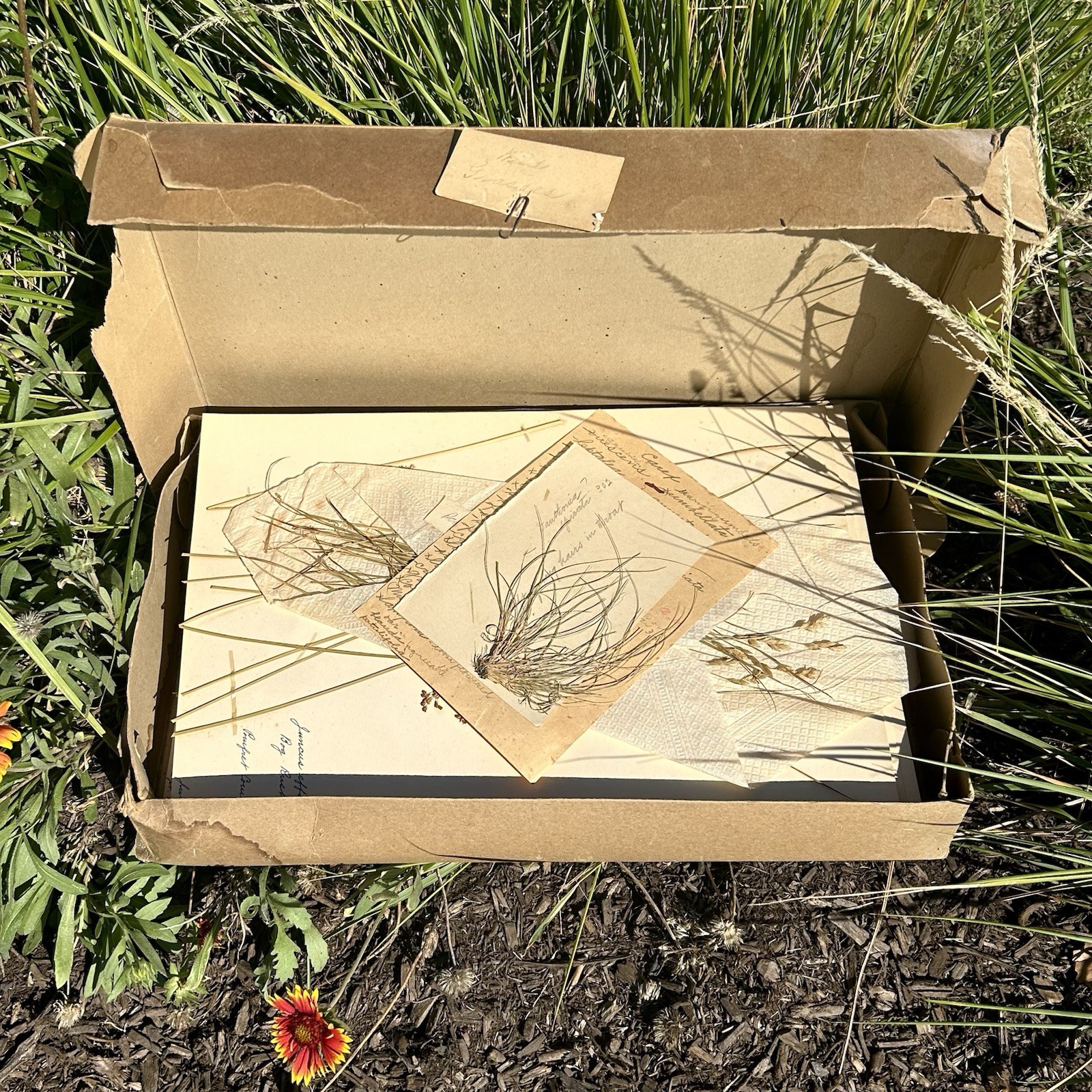
The original cardboard storage box measures approximately 18 x 12 inches and shows considerable age and wear, as expected. Paper-clipped to the box is an old card handwritten “Wild Grasses” on one side. The reverse is the business card of F. H. Paine of Abington, Connecticut, identified on the card as an inspector for the Dairy and Food Commission, State of Connecticut. Paine is believed to be the collector or former owner of the specimens.
In addition to the 45 large mounted specimens, the archive includes one smaller mounted specimen measuring approximately 7 x 4 1/2 inches, a handwritten list of botanical names which appears to relate to the specimens in the collection, as well as additional loose grasses preserved inside folded paper measuring approximately 18 x 6 inches, accompanied by a small handwritten identification note.
Included in the collection:
The mounted specimens are in remarkably good overall condition for material approaching 90 years old. The dried botanical material naturally varies from sheet to sheet, with occasional loose, broken or displaced portions, old mounting tape, age toning, spotting, creasing and other expected evidence of age and handling. The original cardboard box is considerably more worn, with tears, bends, losses and general deterioration. Nothing has been restored or modernized.
Please examine all photographs carefully. The group photographs show the breadth and variety of the collection, while the individual photographs illustrate representative specimens, handwritten identifications, dates, mounting methods and condition.
This is being offered as one intact collection, exactly as found. The continuity of the dates, Connecticut locations, period handwriting, original storage box and accompanying papers gives the archive a coherence that would be lost if the specimens were separated.
A beautiful and unusually extensive surviving American botanical collection—equally compelling as an herbarium archive, Connecticut natural-history material, an assemblage of 1930s botanical specimens, or a remarkable group for individual framing and display.