When you click on links to various merchants on this site and make a purchase, this can result in this site earning a commission. Affiliate programs and affiliations include, but are not limited to, the eBay Partner Network.
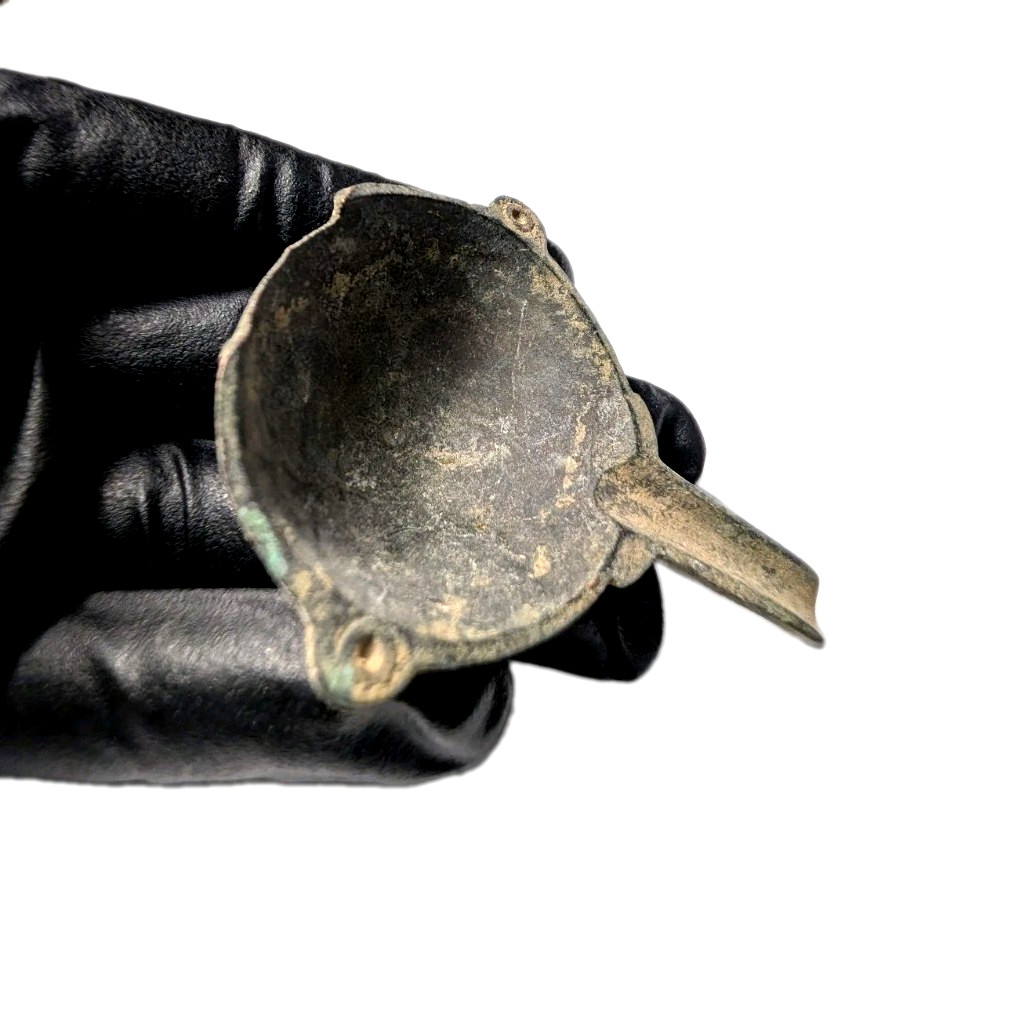
Herodian / Early Roman Levantine Cast Bronze Oil Lamp & Lamp Filler (Approx. 8.5cm — c. 1st Century BC – 1st Century AD)
Authenticity & Guarantee
Certification: Certified Authentic — includes signed Certificate of Authenticity (COA) with full provenance documentation.
Provenance: Ex-private European collection, legally acquired from international sales; Herodian / Levantine Roman Sphere.
Item Specifications & Estimated Dimensions
Object: Cast Bronze Open-Reservoir Oil Lamp / Filler Vessel (Infundibulum)
Culture / Period: Herodian Period / Early Roman Imperial Levant (Judaea / Galilee)
Date Range: Circa 30 BC – 100 AD (c. 1st Century BC – 1st Century AD)
Estimated Dimensions: Approx. 8.5 cm total length (Bowl Diameter: ~6.0 cm) (Extrapolated from hand scale)
Material: Cast Bronze (Copper Alloy)
Form & Architecture: Cast hemispherical reservoir bowl with an open top and outward-flanged rim; flanked by two opposing side lugs pierced with mounting/suspension eyelets; features an extended open trough nozzle/spout engineered for pouring oil or supporting a burning wick; solid bronze construction
Condition: Exceptional, complete ancient condition. Full structural silhouette intact, complete spout and side suspension lugs, preserved under an authentic dark charcoal-olive bronze patina with light green malachite highlights and pale earthen burial encrustations. Free of modern restoration or tooling.
HISTORICAL CONTEXT & TYPOLOGICAL LORE
Herodian & Early Roman Bronze Metalwork in the Holy Land
During the Herodian era and early Roman provincial rule in Judaea (c. 1st C. BC – 1st C. AD), cast bronze lighting vessels were high-status luxury goods compared to common earthenware terracotta lamps. Produced in urban foundry workshops in Jerusalem, Sepphoris, and coastal ports, bronze lamps with open reservoirs and suspension ears served both elite domestic households and public/religious settings.
Dual Functionality: Suspension Lamp & Infundibulum
The two pierced lateral lugs flanking the rim allowed this vessel to be suspended by delicate metal chains or fitted with a swinging bail handle for portable lighting. Vessels of this open trough-spouted geometry also functioned as infundibula (lamp fillers)—specialized oil dispensers used to top up terracotta lamps during banquets, temple services, or evening household routines without extinguishing the flame.
Typological Analysis & Exact Classification
Primary Class: Ancient Levantine Lighting & Bronze Metalwork / Oil Lamp
Sub-Class: Pierced-Lug Open Reservoir Lamp / Filler Vessel Class
Manufacturing Technique: Lost-wax cast copper alloy with cold-drilled suspension lugs.
Comparable Archaeological Examples & Museum Accession Numbers
Israel Museum, Jerusalem: Herodian period cast bronze open oil lamps with suspension lugs recovered from Judaean sites.
Rockefeller Archaeological Museum (Jerusalem): Early Roman Levantine bronze lamp fillers and open-bowl lamps.
British Museum (Accession No. 1873,0820.210): Roman provincial bronze open lamp with side lugs and trough nozzle.
A4