When you click on links to various merchants on this site and make a purchase, this can result in this site earning a commission. Affiliate programs and affiliations include, but are not limited to, the eBay Partner Network.
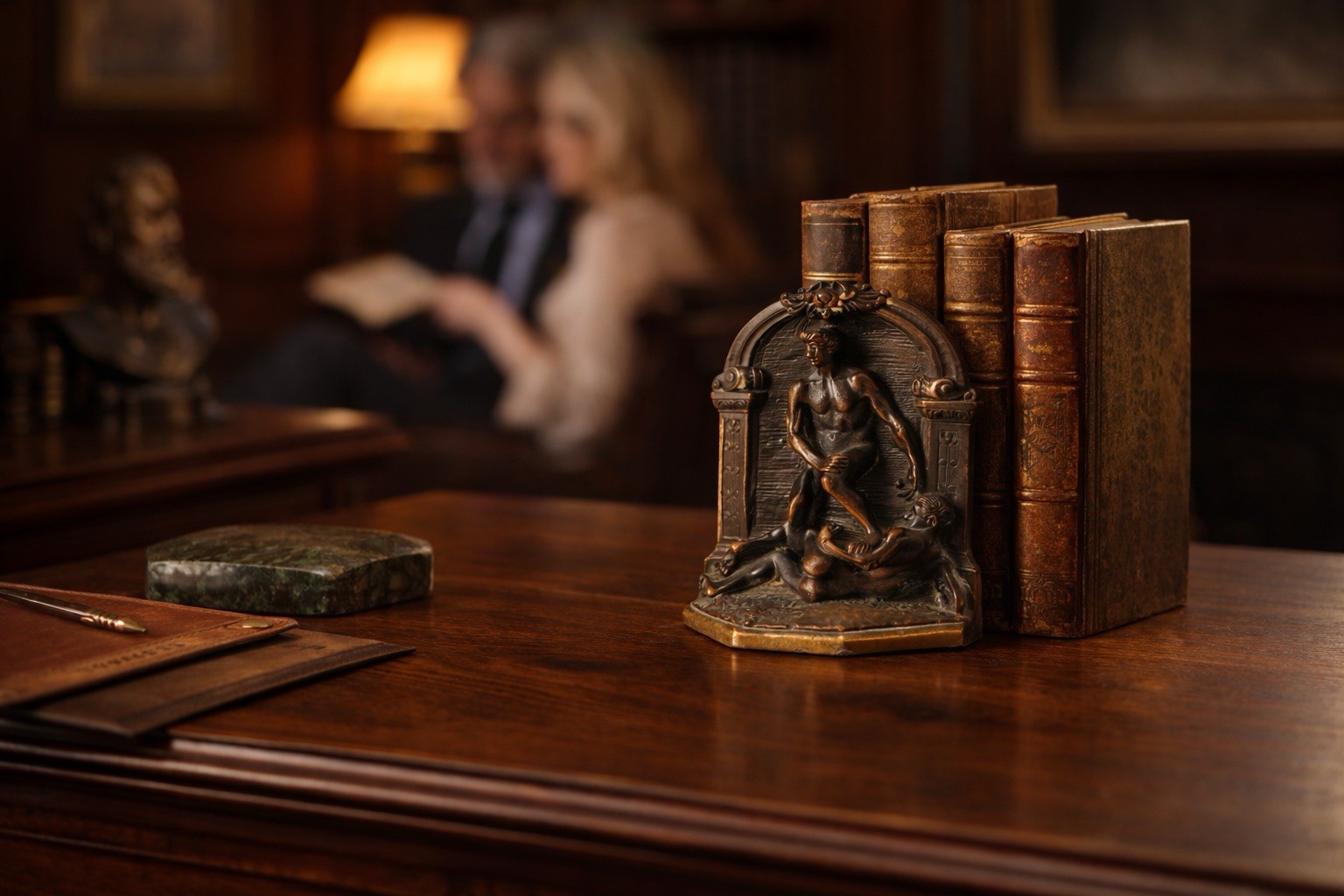
Offered here is a matched pair of genuine antique figural bookends, dating to the early 20th century (circa 1900–1925) and executed in cast spelter (zinc alloy) with a rich, original dark bronze-style patina.
Each bookend depicts a dramatic classical mythological scene, widely interpreted as Hercules overpowering the centaur Nessus, presented within an architectural niche influenced by Art Nouveau and Beaux-Arts design. The modeling is expressive, sculptural, and far more sophisticated than typical mass-market bookends of the period.
These were purpose-made as decorative bookends, with weighted bases and flat backs, and are equally suitable for display in a library, study, office, or traditional interior.
Material & Attribution (Important)
Material: Cast spelter (zinc alloy), not solid bronze
Finish: Original period bronze-style patina
Origin: Likely Continental European (French or Austrian), typical of early 20th-century decorative metalwork
Attribution:
These are not by Hubley and are not marked. Hubley bookends are typically cast iron and clearly marked; the material, style, and construction of this pair align instead with European decorative foundry work, which was often sold unmarked.
This transparency is intentional and offered for buyer confidence.
Condition
Very good antique condition overall
Structurally solid with no cracks or repairs observed
Even, attractive wear to patina consistent with age
Oxidation visible on backs only (normal for spelter; not visible when displayed)
📌 Please review all photos carefully — they form part of the description.
Approximate Dimensions (each)
Height: approx. 6 inches
Width: approx. 5 inches
Depth: approx. 3 inches
Substantial and well-balanced for functional book use.
Why These Are Desirable
Genuine antique, not a reproduction
Matched pair (significantly more desirable than singles)
Classical mythological subject — favored by collectors and decorators
Strong sculptural presence with architectural framing
Ideal for masculine libraries, studies, and traditional interiors