When you click on links to various merchants on this site and make a purchase, this can result in this site earning a commission. Affiliate programs and affiliations include, but are not limited to, the eBay Partner Network.
HANDBOOK
OF THE
UNITED STATES OF AMERICA
AND
GUIDE TO EMIGRATION
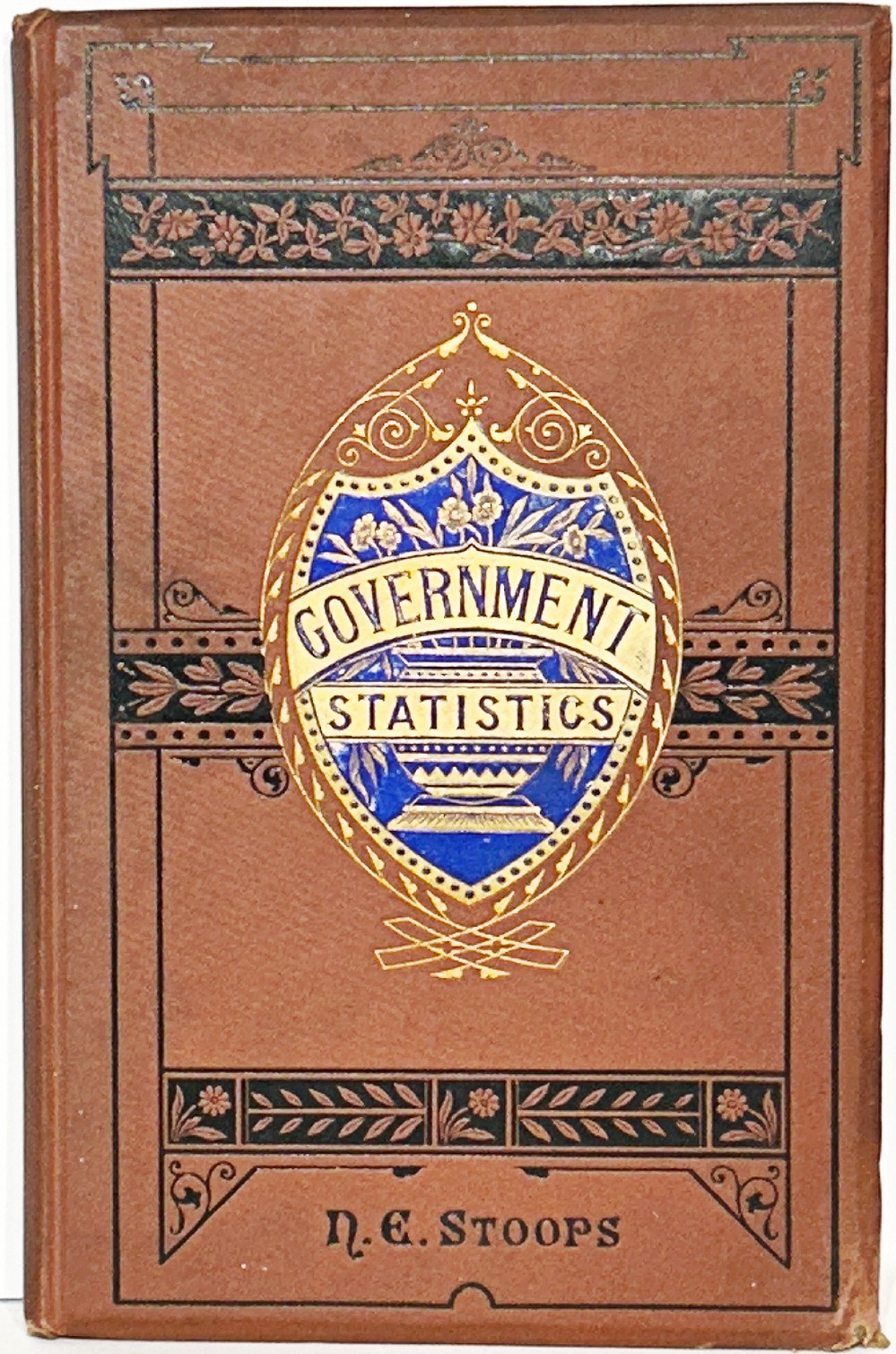
This sale is for an original1881FIRST EDITION of
"HANDBOOK OF THE UNITEDSTATES OF AMERICA,
AND GUIDE TOEMIGRATION,"
compiled by L. P. Brockett
and published by Gaylord Watson of New York.
WHAT A RARE & WONDERFUL HISTORICAL PIECE
REGARDING OUR EARLYSETTLEMENTSAND GOVERNMENTAL STATISTICS!!
Included in this book are two very important documents each citizen needs to
posses: THE DECLARATION OF INDEPENENCEand THE CONSTITUTION OF THE
UNITED STATES! What I find most interesting and very helpfulis a
chronologicalhistory of the United States from 1761 until 1882.
This book offers what was the "latest and most complete" statistics back in 1883
concerning the following:
THE GOVERNMENT
ARMY
NAVY
DIPLOMATIC RELATIONS
FINANCE, REVENUE, TARIFF
LAND SALES
HOMESTEAD AND NATURALIZATION LAWS
DEBT
POPULATION OF THE UNITED STATES
EACH STATE AND CONSIDERABLE CITY
AGRICULTURAL CONDITION
AREA FOR CULTIVATION
FOREIGN COINS AND THEIR VALUE
FOREIGN AND DOMESTIC POSTAGES AND LABOR TABLES
EDUCATION
RAILWAYS
....AND SO MUCH MORE!
This book furnishes all the necessary information concerning the COUNTRY for
the SETTLER, THE BUSINESS MAN, THE MERCHANT, THE FARMER, THE
IMPORTER AND THE PROFESSIONAL MAN. Truly, it lives up to its name as
America's "Handbook." I'm sure it was well utilized for its time during the late 19th
Century.
WHY WAS THERE A NEED FOR THIS GUIDE?
This worked served solely as an accompaniment to Watson's New Railroad Map
ofthe United States. A largedemand was made due to the expansion of the West
and South, availing itself to new customers who especially were seeking
homesfor themselves in our new country for its time.
To the tourist, commercial traveler, and emigrant such a work must be especially
desirable, - embodying, as it does, a vast fund of information necessary for his
convenience, and without which it is impossible to proceed understandingly on
his journey.
The object of the publication is to give a succinct account of the states and
territories into which it was divided during that time period, and exhibit to the
reader such information respecting their present condition and prospects as is
necessary to a right understanding of the great interest of the region; and also to
supply the public with a book of travel on which they may rely.
This assisted the intending settler to decide which is the best region for him to
select, how he may get there most comfortably and economically, what steps he
must take to secure a perfect title to his lands, and what are in each case the best
crops for him to raise, or the best business to pursue.
Great experience have been employed in its compilation, and it is confidently
anticipated that there will be found in its pages more extensive information, and a
more accurate and far fuller list of routes than in any like publication. Both
departments of the work have been compiled frommaterial adapted to the
THENpresent state of things during the era of publication.
📘 Synopsis of the Handbook of the United States of America and Guide to Emigration
Published in the late 19th century,The Handbook of the United States of America and Guide to Emigration, compiled byL.P. Brockett, was a comprehensive reference designed to inform andassistimmigrants—particularly those from Europe—who were considering or had recently arrived in the United States.
📖 Content Overview
The handbook served as both adescriptive guideand apractical manual, covering a wide range of topics:
Geography and Climate: Detailed descriptions of the physical geography of the U.S., including states and territories, climate zones, and natural resources.
Economic Opportunities: Information on agriculture, industry, mining, and commerce, highlighting regions with job prospects and land availability.
Government and Laws: An overview of the U.S. Constitution, political institutions, and legal rights of immigrants.
Social and Cultural Life: Insights into American customs, education, religion, and social norms to help immigrants assimilate.
Transportation and Communication: Guidance on railroads, postal services, and telegraph systems to help newcomers navigate the country.
Practical Advice: Tips on travel, settlement, employment, and dealing with immigration authorities.
🌍 Significance of the Handbook
This handbook was more than a travel guide—it was anation-building tooland acultural bridge. Its significance lies in several key areas:
🧭 1. Emigration Promotion
Aimed toencourage European migrationto the U.S. by portraying it as a land of opportunity.
Often distributed by U.S. consulates and immigration agencies abroad.
🏛️ 2. National Identity and Propaganda
Presented anidealized image of Americaas a democratic, prosperous, and welcoming nation.
Helped shapeperceptionsof the U.S. among potential immigrants.
📚 3. Historical Documentation
Offers asnapshot of 19th-century America, including its demographics, economy, and political structure.
Valuable for historians studying immigration, national development, and public policy.
🧳 4. Immigrant Integration
Served as apractical resourcefor new arrivals, easing their transition into American society.
Provided essential knowledge to help immigrants become productive citizens.
⚖️ Treatment of Immigration Laws in Brockett’s Handbook
🛂 1. Welcoming Tone Toward Immigrants
The handbook presents the U.S. as aland of liberty and opportunity, emphasizing that immigrants are welcomed and can quickly become part of American society.
It reassures readers thatno special restrictionsapply to most European immigrants, especially those who are healthy, industrious, and law-aoffering.
📜 2. Legal Rights and Protections
Brockett outlines thebasic legal rightsafforded to immigrants, including:
The right to own property
Protection under U.S. laws
Access to courts and due process
He emphasizes that immigrants arenot second-class citizens, and many rights are granted upon arrival, with full citizenship available through naturalization.
🧾 3. Naturalization Process
The handbook explains thesteps to become a U.S. citizen, including:
Filing a declaration of intent
Residingin the U.S. for a required period (typically five years)
Demonstrating good moral character and allegiance to the Constitution
Brockett encourages immigrants to pursue citizenship as a path to full participation in American civic life.
🚫 4. Minimal Restrictions (at the time)
At the time of publication, U.S. immigration laws wererelativelylenient, especially compared to later decades.
The handbook notes few barriers to entry, aside from health inspections and basic documentation.
It does not reflect the more restrictive policies that wouldemergein the 20th century (e.g., Chinese Exclusion Act, quotas).
🧭 5. Practical Guidance
Brockett providesadvice on navigating immigration procedures, including:
Where to land and register (e.g., major ports like New York)
How to avoid exploitation or fraud
Whom to contact forassistance(e.g., consulates, immigration agents)
🕰️ Historical Context
At the time Brockett compiled the handbook, the U.S. was actively encouraging immigration to fuel its expanding economy and populate its frontier. The legal framework was designed to beaccessible and supportive, especially for European settlers. The handbook reflects this ethos, portraying immigration laws astools of empowermentrather than barriers.
🕰️ From Open Doors to Gatekeepers: Evolution of U.S. Immigration Law
📘 19th Century (Brockett’s Era)
Policy Climate:Largely open-door, especially for European immigrants.
Legal Framework: Minimal federal regulation; immigration was mostly managed at the state or port level.
Naturalization: Accessible and straightforward for white immigrants—typicallyrequiredfive years of residency and a declaration of intent.
Exclusions:Few, butgrowing. ThePage Act of 1875andChinese Exclusion Act of 1882began targeting specific groups, especially Asians.
🧱 Early 20th Century: Rise of Restriction
Ellis Island Era:Federalgovernment took control of immigration processing.
Quota System Introduced:
ImmigrationAct of 1924establishednational origin quotas, heavily favoring Northern and Western Europeans.
Southern and Eastern Europeans, Asians, and Africans were severely limited or excluded.
Public Sentiment: Increasing fears of “undesirable” immigrants, driven by xenophobia, eugenics, and economic anxiety.
🌍 Mid-20th Century: Reform and Rebalancing
Immigration and Nationality Act of 1952 (McCarran-Walter Act):Retainedquotas but allowed some Asian immigration.
1965 Immigration and Nationality Act (Hart-Celler Act):
Abolished national origin quotas.
Prioritized family reunification and skilled labor.
Marked a turning point toward more diverse immigration.
🧾 Modern Era: Complex and Contentious
Legal Complexity: Immigration law today is a dense web of statutes, regulations, and executive actions.
Key Features:
Family-based and employment-based visas
Refugee and asylum protections
DACA (Deferred Action for Childhood Arrivals)and other humanitarian programs
Enforcement and Border Security: Increased focus on undocumented immigration, border control, and national security.
Public Debate: Immigrationremainsa polarizing issue, with debates over reform, enforcement, and humanitarian obligations.
This is a RARE book so…GET IT WHILE YOU CAN!!!