When you click on links to various merchants on this site and make a purchase, this can result in this site earning a commission. Affiliate programs and affiliations include, but are not limited to, the eBay Partner Network.
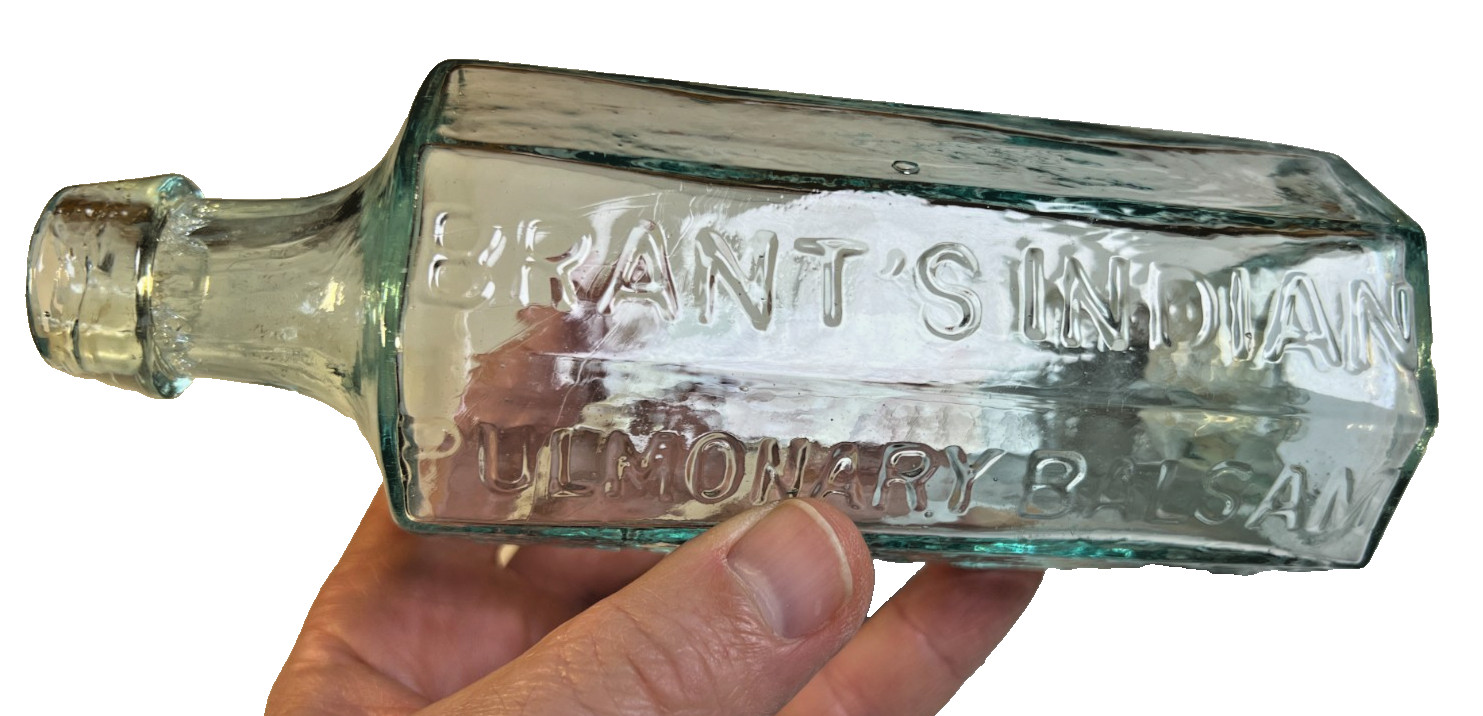
c.1850–1855 Brant’s Indian Pulmonary Balsam New York Pontil Bottle M.T. Wallace 8-Sided Aqua
Intro:
Straight out of mid-19th century New York City, this bottle is pure, unfiltered early American commerce—hand-blown, boldly embossed, and built in an era when medicine was equal parts hope, hustle, and high-proof spirits.
Description:
Offered here is a superb open pontil, 8-sided (octagonal) aqua medicine bottle, embossed:
“BRANT’S INDIAN PULMONARY BALSAM / M.T. WALLACE PROPRIETOR”
Standing 7 inches tall, this is a classic New York–market patent medicine bottle from the early 1850s, loaded with character. The glass is alive with stretch marks through the neck, seed bubbles, crude texture, and flowing annealing lines. A large internal air bubble near the pontil scar adds serious visual appeal and authenticity.
The pontil scar is sharp and clean, indicating the base has not been ground or altered—this is exactly how it left the glasshouse nearly 175 years ago.
Condition:
- Bright aqua color, displays beautifully
- No chips, cracks, nicks, or dings
- Light interior haze, mostly in the neck
- All bubbles are intact (not burst)
- Strong, crisp embossing
An honest, untouched example with excellent shelf presence.
Maker & New York Connection:
M.T. Wallace, Proprietor, was almost certainly part of the bustling New York City patent medicine trade, where entrepreneurs branded and distributed remedies through apothecaries, general stores, and traveling agents.
In the 1850s, NYC was the undisputed hub of American medicine marketing—products like this were formulated, bottled (often in nearby New Jersey or New York glasshouses), and shipped nationwide.
The use of “Indian” in the name reflects a popular NYC marketing strategy—suggesting natural, ancient healing knowledge to appeal to urban consumers.
What Was “Pulmonary Balsam”?
A lung remedy aimed at:
- Tuberculosis (then called consumption)
- Chronic cough
- Bronchitis
Typical ingredients often included:
- Alcohol (frequently the main “active” ingredient)
- Herbal extracts like wild cherry or horehound
- Sometimes opiates for cough suppression
In short: a soothing syrup that made you feel better—whether or not it cured anything.
How It Was Sold (NYC Style):
Picture this bottle in a crowded Lower Manhattan apothecary or general store:
- Marketed as safe, natural, and powerful
- Sold to families desperate for relief from lung diseases
- Promoted through bold claims and word-of-mouth
No regulations, no ingredient lists—just branding and belief.
Life in New York (1850s):
When this bottle was made:
- Population explosion—NYC was rapidly becoming America’s largest city
- Medicine: Germ theory not yet accepted; patent medicines flourished
- Technology: Railroads and steamships expanding distribution networks
- Politics: Rising tensions leading toward the Civil War
- Public health: Tuberculosis rampant—fueling demand for lung remedies like this
This bottle wasn’t a novelty—it was part of everyday survival.
Why This Example Matters:
- Early true pontil bottle (pre-1855)
- Strong New York–style embossing and branding
- Desirable 8-sided form
- Exceptional crude glass character
- Clean, untouched pontil base
A genuine artifact from the peak of NYC’s patent medicine era.