When you click on links to various merchants on this site and make a purchase, this can result in this site earning a commission. Affiliate programs and affiliations include, but are not limited to, the eBay Partner Network.
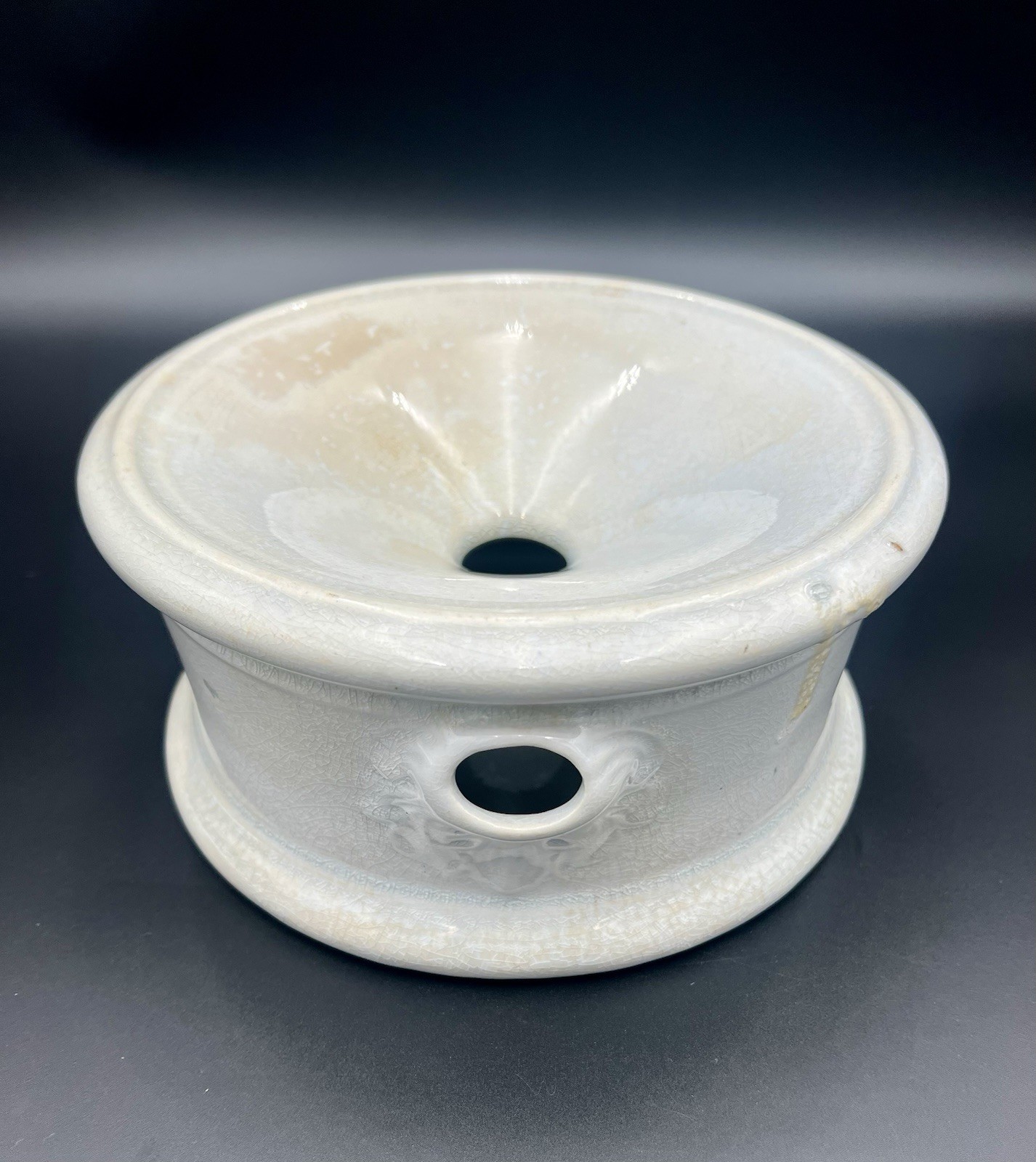
A wonderful French Antique 1800's Ironstone Cuspidor from the mid 1800's. At one time cuspidors like this were very popular, this one has a great shape. There are two side embellishments with spouts, and the top slopes inward to the intake opening.
Antique cuspidors are used today for wine tasting, at wineries and private wine tasting events. The wine is tasted, swirled around in the mouth, then spit out into the cuspidor. Then on to tasting the next wine! These also make a great stand, or a very unusual piece of antique ironstone to add to your collection. Rare to find, good condition with aging as shown.
IRONSTONE SPITTOONS & CUSPIDORS
Tobacco was commonly chewed in the mid 18th century and spittoons or cuspidors were provided. Before 1840 spitting was done on the floor, streets and sidewalks. The spittoon was created to stop that unsanitary habit. Between 1800 and the 1920's spittoons or cuspidors were a common feature in all saloons, hotels, stores, banks and every public place where people, especially men, gathered
A spittoon or cuspidor is a receptacle made for spitting into. Today the terms are interchangeable. Spittoon is the more usual term and has been said the name was in part onomatopoeia. A page from an 1890's catalog shows their difference in form. The two at the top are spittoons and the one below with a pinched neck and a wide funnel-shaped opening - is a cuspidor. Cuspidors were more often made in brass or even iron. Spittoons were designed with flat-bottoms to minimize tipping over. They sometimes had an interior lip to prevent spilling. Some have holes with a plug to aid in draining and cleaning. They could be found made in fine cut glass or even porcelain for fancy hotels.
Advocates of hygiene and etiquette organized to ban public use of spittoons. Chewing tobacco went out of fashion when cigarettes and chewing gum were introduced in the 1920's. They were considered more hygienic than spit-inducing chewing tobacco. Also, the public disdain for spitting (even in spittoons) during the great flu and TB epidemics that were a serious health problem in the early 1900s brought an end to the use of spittoons.
The Justices of the Supreme Court each has one next to his or her seat in the present-day courtroom. (How's that for tradition?) The only remaining modern use of spittoons is by wine tasters who must use them between tastings to avoid getting drunk.