When you click on links to various merchants on this site and make a purchase, this can result in this site earning a commission. Affiliate programs and affiliations include, but are not limited to, the eBay Partner Network.
Monumental Artistry
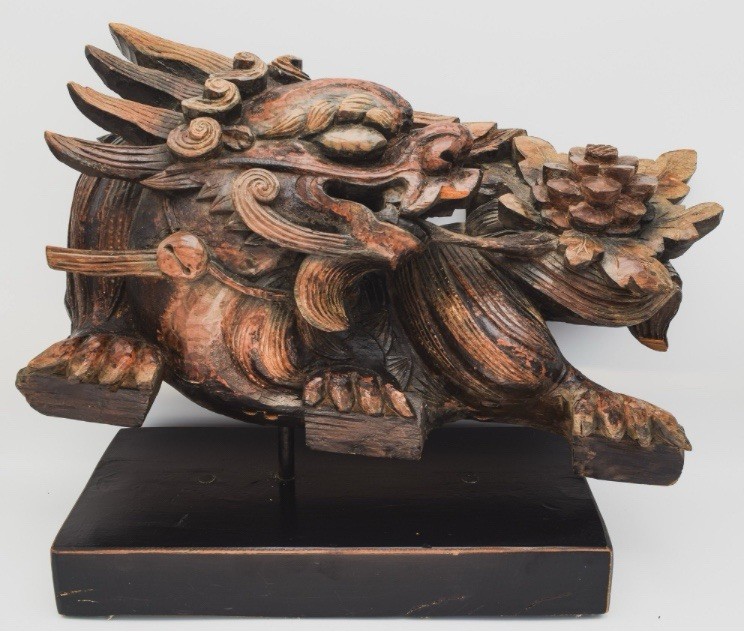
Available for your collection is an authentic, museum-quality 18th-century Japanese wood carving (Kibana). This is a formidable architectural fragment salvaged from a high-ranking Buddhist temple or Shinto shrine. Depicting the mythical Karashishi (Guardian Lion) nestled against a blooming Botan (Peony), this piece represents the pinnacle of Mid-Edo period craftsmanship.
Rarity & Massive Scale
This is not the typical small-scale carving found in private residences. Standing at a commanding 18 inches wide, the sheer scale of this fragment suggests it originated from a major religious structure. Finding a Kibana of this size, particularly one that has survived the centuries with its powerful "Karashishi-Botan" motif intact, is extraordinarily rare.
The sculpture possesses a "monumental" feel—the muscularity of the lion and the deep, high-relief carving of the peony are hallmarks of an 18th-century master carver. The wood (likely Keyaki) has aged beautifully, with centuries of exposure under temple eaves creating a deep, "rilled" grain and a rich, dark patina that modern reproductions simply cannot replicate.
Exceptional Details
• The Motif: The "King of Beasts" paired with the "King of Flowers" represents a sacred balance of power, protection, and beauty.
• Engineering: The reverse features the original, hand-chiseled mortise joint where it once capped a massive structural beam.
• Patina: Note the incredible texture of the weathered wood and the traces of ancient pigments still visible in the deep recesses of the mane.
Dimensions
This piece is heavy and makes a significant visual impact.
• Width: 18 inches
• Depth: 15 inches
• Height: 8 inches
(Comes mounted on a professional, minimalist black museum display stand)
Condition
Excellent antique condition. The wood exhibits natural "checking" (age-related cracks) and a weathered surface consistent with its 200+ year history. These characteristics verify its authenticity as a genuine Edo-period temple fragment.